
argest model within your budget. The right cooker should fit your household size, the meals you prepare, your available kitchen space, and your expectations for cleaning and maintenance.
Start by choosing the right capacity, then compare the cooking functions you will actually use. Before buying, check the manufacturer’s safety instructions, lid-locking and pressure-release mechanisms, warranty terms, and availability of replacement parts.
This guide explains what to compare, which features are worth paying for, and how to evaluate the long-term cost of owning an Electric Pressure Cooker.
Scope note: This page is a buying guide. It does not present repair statistics, failure-rate rankings, model rankings, user testimonials, or a fixed lifespan, and it does not claim or predict search rankings. It also does not claim a personal repair history or product-test experience for the author. Internal design details are mentioned only where a buyer can verify them from the manufacturer’s documentation. Where a step depends on the specific model, the owner’s manual takes precedence.
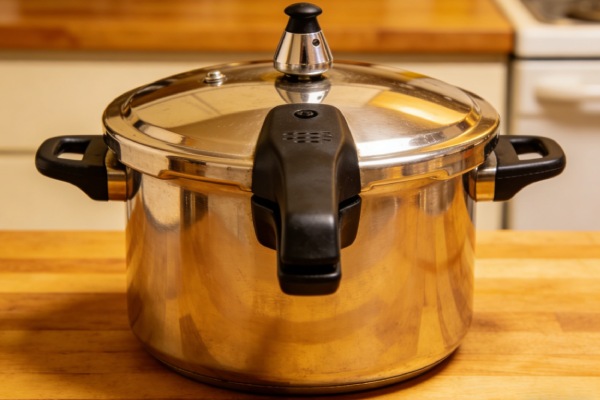
One distinction before you start: A Multi-Cooker combines several cooking functions, and pressure cooking is one of them. An Electric Pressure Cooker is the pressure-cooking part. A Pressure Cooker in the stovetop sense is a different category again: it sits on a burner rather than plugging into the wall. A Slow Cooker cooks at low heat over hours and does not build pressure at all. If your main use is slow cooking, a Slow Cooker Buying Guide will serve you better than a pressure cooker buying guide. If you mainly want pressure cooking, a dedicated Electric Pressure Cooker is simpler; if you want one appliance for several methods, a Multi-Cooker is the relevant category.
How to Choose an Electric Pressure Cooker
Work through these five questions in order. Each one narrows the field before you look at features.
| Question | What it decides | Where to verify |
|---|---|---|
| How many people are you cooking for? | Capacity (4, 6, or 8 qt) | The capacity table below |
| What do you actually cook? | Whether high/low pressure, slow cook, steam, or sauté matter | The feature table below |
| How much counter and storage space do you have? | Footprint and weight | The product dimensions |
| How much cleaning and maintenance will you accept? | Lid and sealing-ring design, dishwasher-safe parts | The manual’s cleaning section |
| What is your total budget, including parts? | Purchase price plus seals, inner pot, and out-of-warranty repair | The ownership-cost section below |
What Size Electric Pressure Cooker Do You Need?
| Capacity | Typical use | What to consider before buying |
|---|---|---|
| 4 qt | One or two people, small batches, side dishes | Whether it holds the quantity you actually cook in one session |
| 6 qt | Most households, everyday cooking | Whether it covers staples, meat, and stews without crowding |
| 8 qt | Larger families, batch cooking, entertaining | Counter space, storage space, unit weight, and how easy it is to clean |
This table is a starting reference, not a rule for every household.
The maximum fill line. Pressure cookers have a maximum fill line stated in the manual, and it is lower for foods that expand or foam. As a general reference used in pressure-cooking guidance, foods that expand or foam — rice, beans, grains, and some soups — are often limited to about half the pot, while liquids and foods that do not expand are often limited to about two-thirds. These are general figures: the manual for your model states the actual limit, and it takes precedence.
Headspace for pressure. The manual states how much space must remain above the food. Ignoring it can block the pressure-release path.
Which Features Are Worth Paying For?
| Feature | Who it is worth paying for | What to check before buying |
|---|---|---|
| High and low pressure settings | People who cook beans, meat, and different ingredients that need different pressures | Whether the settings match the dishes you actually make |
| Slow cook, steam, sauté | People reducing the number of appliances in the kitchen | Whether each mode genuinely supports that cooking method, or is only a preset |
| Automatic keep-warm | Households with variable dinner times | The keep-warm logic, the maximum duration, and the manual’s limits |
| Delay start | People with a fixed meal-prep schedule | Whether it is appropriate for the ingredients you would leave in the pot |
| Removable lid components | People who care about cleaning | Whether the parts come apart easily and the manual explains cleaning |
| Available sealing ring and inner pot | People who want to keep the unit running longer | Whether official parts exist for that model, and their price |
What not to assume: more programs do not automatically mean better cooking, and fewer programs do not automatically mean a more reliable unit. The useful question is whether the functions match your cooking and whether the manual explains how to use and maintain them.
Related kitchen appliances: if you are also comparing a rice cooker, a multi-cooker, or a food processor for the same counter space, decide which appliance you actually need before comparing features across categories. A rice cooker does one job; a food processor does not pressure cook; a multi-cooker does several. Buying two overlapping appliances costs more than choosing the one that matches your cooking.
Electric Pressure Cooker Safety Features to Check
Safety in a pressure cooker comes from the lid-locking and pressure-release design, the overheat protection, and correct use as described in the manual. Check these from the documentation, not from the feel of the parts.
- Lid locking during pressure. The manual should describe how the lid locks and why it cannot be opened while the pot is pressurized. If the manual does not describe it, ask the manufacturer before buying.
- Pressure-release mechanism. The manual should describe the release method (quick release, natural release, or both) and the precautions for each.
- Overheat and over-pressure protection. The manual or specification sheet should state what protections the unit has and what the error indications mean. If it does not, ask the manufacturer before buying.
- Float valve and vent maintenance. The manual should say which parts need cleaning and how often.
- Recall and safety notices. Check the CPSC recall database (or your market’s equivalent recall authority) and the manufacturer’s safety notice page for the specific model before buying and before each season of use.
What not to do: do not try to force a lid open to test the lock, and do not judge safety from whether a part is metal or plastic. A well-designed plastic component can be appropriate, and a metal part can be poorly made. The documented interlock and release design is what matters, and the manual is the source for it.
One distinction worth knowing: an Electric Pressure Cooker is not a Pressure Canner. If you plan to can low-acid foods for shelf storage, use equipment and tested procedures intended for pressure canning, not a Multi-Cooker.
Inner Pot, Sealing Ring, and Cleaning
These three items decide most of the day-to-day ownership experience.
Inner pot. Stainless steel is durable and does not flake; non-stick and ceramic coatings are easier to clean but can degrade with high heat and abrasive cleaning. Check whether the pot is dishwasher-safe according to the manual, and whether a replacement pot is sold for the model.
Sealing ring. The silicone ring is a wear item. Check whether the manufacturer sells a replacement ring for your model, what it costs, and whether the manual specifies a cleaning method. Odor retention in the ring can occur; check the manual for the recommended cleaning method. If you need the replacement procedure itself, see the Electric Pressure Cooker Sealing Ring Replacement guide.
Cleaning access. Check whether the lid components, float valve, and pressure-release parts can be removed and cleaned as the manual describes. A unit whose steam path cannot be cleaned as instructed will not stay reliable.
Cleaning the rest of the kitchen: a countertop appliance that is hard to clean tends not to get used. The same principle applies to a Toaster Oven, a Countertop Oven, an Air Fryer, a Microwave Oven, and a dishwasher loading routine — if cleaning is awkward, the appliance stays in the cupboard. Check the cleaning instructions before you buy, not after.
How Much Does an Electric Pressure Cooker Cost to Own?
There is no fixed lifespan to assume. Estimate ownership cost from the numbers you can verify.
A simple formula: Total cost ≈ Purchase price + (Parts cost × Number of replacements you expect) + Out-of-warranty repair or replacement cost.
| Cost item | Where to find it | Why it matters |
|---|---|---|
| Purchase price | Retail listing | The starting point, not the whole cost |
| Replacement sealing ring | Manufacturer parts page | A wear item; check price and availability |
| Replacement inner pot | Manufacturer parts page | Relevant if the coating degrades or the pot is damaged |
| Warranty terms | Warranty document | Determines what is covered and for how long |
| Out-of-warranty repair or replacement | Manufacturer service policy | Determines what happens when a major part fails |
| Electricity use | Rated wattage and your local rate | Pressure cooking cycles are typically shorter than oven cooking; estimate the share from the rated wattage and your local rate |
A simple way to compare two models: put the purchase price and the parts you expect to replace into the formula above, then compare the totals. If a major electronic or lid component is not sold separately, a failure means replacing the whole unit — include that in the comparison rather than assuming it will not happen.
Comparing across appliance types: a Slow Cooker usually costs less to buy and less to run, but it cannot do pressure cooking. A Multi-Cooker costs more than a single-function appliance but may replace a rice cooker and a steamer. Compare the total cost of the appliances you would otherwise buy separately, not just the price of one unit.
Buying Checklist: What to Verify Before You Order
- Does the capacity match the number of people you cook for, within the manual’s fill limits?
- Do the pressure settings and cooking modes match the dishes you actually make?
- Does the manual describe the lid lock, the pressure-release method, and the overheat protection? Do not force the lid to test the lock.
- Does the manual describe how to clean the float valve, vent, and sealing ring?
- Is a replacement sealing ring sold for this model, and at what price?
- Is a replacement inner pot sold for this model?
- Are the warranty terms and the service policy stated clearly?
- Does the model appear in the CPSC recall database or a manufacturer safety notice?
- Is the footprint and weight suitable for your counter and storage space?
- Is the rated wattage compatible with your kitchen circuit?
- If you are also buying a rice cooker, a food processor, or a coffee maker for the same kitchen, have you confirmed you are not buying two appliances that do the same job?
If you cannot answer one of these from the product page or the manual, ask the manufacturer through the support page or customer service before ordering rather than assuming.
Frequently Asked Questions
What size Electric Pressure Cooker should I buy?
Match capacity to the number of people you cook for and the batch size you actually make: 4 qt for one or two people and small batches, 6 qt for most households, 8 qt for larger families and batch cooking. Whatever the size, follow the manual’s maximum fill line, which is lower for rice, beans, and foaming foods.
Are more preset programs better?
Not necessarily. Presets are time, temperature, and pressure combinations programmed into the control board. What matters is whether the modes you will use actually support the cooking method you need, and whether the manual explains how to use and maintain them.
Do I need to replace the sealing ring?
The sealing ring is a wear item, and the manual usually states when to inspect or replace it. Check whether a replacement ring is sold for your model and what it costs.
Should I buy a Multi-Cooker or a dedicated Electric Pressure Cooker?
If you mainly pressure cook, a dedicated unit is simpler and usually cheaper. If you want one appliance that also slow cooks, steams, or sautés, a Multi-Cooker covers more methods but adds functions you may not use. Decide from your cooking, not from the program count.
Related Topics
This page covers buying decisions only. The guides below cover faults, comparisons, and maintenance, and each keeps to its own job, so the pages do not repeat each other.
Multi-Cooker vs. Pressure Cooker – What the Modes Actually Do
Electric Pressure Cooker Won’t Build Pressure – Causes and Checks
Electric Pressure Cooker Burn Error – Causes and Fixes
Electric Pressure Cooker Lid Won’t Lock – Causes and Safety
Electric Pressure Cooker Won’t Turn On – Causes and Fixes
Electric Pressure Cooker Sealing Ring Replacement – How to Choose
Slow Cooker Buying Guide – Selection Criteria