
Ice Maker Making Cloudy Ice is one of the most common questions about countertop and refrigerator machines, and the answer is rarely a single fault. Cloudy ice is usually caused by trapped air bubbles, minerals and dissolved solids in the water, the way the machine freezes the ice, or mineral scale inside the water system. In many cases it is completely normal. In others it points to the water supply, an expired filter, or a water system that needs cleaning.
This guide explains why ice cubes have white centers, how to tell normal cloudiness from a real problem, whether distilled water actually helps, and what you can realistically do to improve clarity. It also separates two different goals that are often confused: making ordinary ice look better, and producing genuinely transparent ice for cocktails and iced coffee.
Why Is My Ice Maker Ice Cloudy? The Four Real Causes
Trapped Air Bubbles During Freezing
This is the most common cause and the most misunderstood. Water holds dissolved gases, including air. As water turns to ice, those gases are pushed out of the freezing portion and into the part that is still liquid. In a cube that freezes from the outside in, the last region to freeze is the center — and that is exactly where the pushed-out air collects.
The result is the familiar white core. It is normal physics, not a defect, and it does not make the ice unsafe. A white center inside an otherwise clear cube is the signature of trapped air, and it appears in refrigerator ice makers and portable countertop units alike.
Minerals and Dissolved Solids in Water
Tap water carries calcium, magnesium, and other dissolved solids. During freezing, many of these are pushed toward the center along with the air, where they add to the white, hazy appearance. Harder water generally contributes more visible cloudiness, which is why Ice Maker for Hard Water Area is such a common search — but minerals are one factor among several, not the single cause of every cloudy cube.
Fast or Uneven Freezing
How the machine freezes matters as much as what is in the water. Most portable countertop ice makers freeze quickly in a single short cycle, so air and impurities are trapped inside the cube instead of being pushed out. Clear ice is normally produced by controlled, directional freezing: water freezes from one direction, and air and impurities are driven ahead of the freezing front into a final section that can be trimmed away. That process takes hours, which is why a standard countertop unit cannot simply be run longer to produce clear ice.
Mineral Scale Inside the Ice Maker
If your ice used to be reasonably clear and has become cloudier over time, scale is a likely contributor. Mineral deposits build up in water lines, on freezing surfaces, and around the water system, and Ice Maker White Buildup on trays and plates is often the visible first sign. Several manufacturers of standalone ice makers list scale in the water and freezing system as a documented cause of cloudy cubes. A gradual change in clarity is the pattern where cleaning and filter checks usually make a visible difference.
Is Cloudy Ice Normal or a Sign of a Problem?
Ice Cubes With White Centers
A white core in each cube is usually normal. It reflects air and dissolved solids being pushed to the last area to freeze, and it does not by itself indicate a fault.
Entirely Cloudy or Frosty Ice
Ice that is uniformly white across the whole cube is more often tied to the freezing method, the air content of the water, water quality, or the machine’s design. Many portable units simply produce this type of ice. It is an appearance issue, not a safety issue.
Ice That Has Become Cloudier Over Time
A gradual decline is worth investigating. Check for changes in your water supply, an expired or clogged Ice Maker Water Filter, and scale in the water system. This is the pattern that responds best to maintenance.
Visible Particles or Discoloration
Cloudiness is not contamination. If you see black specks, plastic fragments, metal particles, or any discoloration, stop using the machine and inspect the water system and internal components. This is the same warning that applies to Black Gunk in Ice Maker and Ice Maker Black Gunk reports — treat it as a separate problem from ordinary haze, not as normal cloudiness.
Ice That Is Also Smaller, Softer, or Produced More Slowly
When cloudy ice arrives together with Ice Maker Making Wet Ice, Ice Maker Making Soft Ice, or Ice Maker Ice Melts Too Fast, the machine may not be freezing or harvesting normally. Ice Cubes Sticking Together in the basket is another sign of incomplete freezing. In that situation, check the water supply, the filter, and general operation against the manual rather than assuming the cloudiness itself is the fault.
Key point: cloudy ice is not automatically unsafe ice. Without off-tastes, odors, or visible contamination, haze caused by air bubbles and minerals is generally an appearance issue.
Does Distilled Water Make Clear Ice?
What Distilled Water Can Improve
Distilled water has most minerals and dissolved solids removed, so it reduces the mineral contribution to cloudiness and limits scale buildup in the water system. If your tap water is hard, Ice Maker Distilled Water is a reasonable experiment and often produces visibly better-looking cubes.
Why Distilled Water May Still Produce Cloudy Ice
Distilled water changes the water, not the freezing method. If the machine freezes quickly from all sides, dissolved gases are still trapped in the center and the cubes can still come out with white cores. Food-science explanations of clear ice, including material published by the University of Southern Queensland, make the same point: directional freezing is the key mechanism, and pure water alone does not replace it.
Filtered Water vs. Distilled Water
Carbon filters mainly reduce chlorine and some taste and odor compounds, and they generally do not remove the minerals that contribute to cloudiness. Reverse osmosis water has most minerals removed and behaves closer to distilled water. Distilled water has the lowest mineral content of the common options. Whichever you choose, check the manual first, because some manufacturers specify the water type their unit is designed for.
How to Fix an Ice Maker That Makes Cloudy Ice
Check the Water Supply
Establish what is actually in your water. If your supply is hard, or if clarity dropped after a change of source, water quality is a likely contributor. Switching to low-mineral or filtered water for comparison is a sensible diagnostic step, but treat the result as one clue among several rather than a pass/fail test of the machine.
Replace the Water Filter if Needed
If your unit or refrigerator has a filter, check its condition and replacement interval. A clogged Ice Maker Water Filter or a clogged Refrigerator Ice Maker Filter Clogged reduces water quality and can affect ice appearance. Follow the manufacturer’s schedule rather than guessing, and if the machine is new, review New Ice Maker First Use guidance before assuming a fault.
Clean the Ice Maker According to the Manual
Use the cleaning method and cleaning agents specified for your model. Do not substitute vinegar or citric acid unless the manufacturer approves them, and if you have already used vinegar and something seems off, review Did Vinegar Ruin My Ice Maker before continuing. Users who find the process awkward are not alone — Ice Maker Hard to Clean is a frequent complaint, while machines marketed as Ice Maker Easy to Clean usually differ mainly in how accessible the tank and water lines are.
Check for Mineral Scale
Look for white, chalky deposits in the tank, on the freezing surfaces, and around the water lines. If your model has a descaling program, run it as described, and review How to Descale Ice Maker steps for your specific design. Before using any commercial product, confirm Is Ice Maker Descaling Solution Safe for your machine and follow the label and manual together.
Check Whether the Ice Maker Is Working Normally
Cloudy ice alone is not a fault indicator. But if it comes with soft or wet cubes, reduced output, unusual noises, or Ice Maker Water Pump Failure symptoms such as weak water flow, the machine may not be operating correctly. Refer to the manual’s troubleshooting section and contact the manufacturer if symptoms persist.
How to Make Clear Ice With an Ice Maker
Why Directional Freezing Matters
Clear ice depends on controlling the direction of freezing. When water freezes from one direction, air and impurities are pushed ahead of the freezing front into a final region that can be cut away or discarded, leaving the rest transparent. When water freezes from all directions at once, there is nowhere for those impurities to go, so they concentrate in the center and stay there.
What Makes a Clear Ice Maker Different
Dedicated clear ice makers are built around directional freezing. They may use a cold plate on one side, circulating water, or a multi-stage freeze that runs for hours, and some use molds designed so the cloudy final section can be removed. This is what separates a Clear Ice Maker Still Cloudy complaint from a machine that is working as designed.
When a Regular Countertop Ice Maker Cannot Make Clear Ice
Most portable countertop ice makers freeze quickly and are not built for directional freezing. They can produce better-looking ice with low-mineral water, but they should not be expected to deliver bar-quality transparent cubes. That is a design characteristic, not a defect. If genuinely clear ice is the goal, the realistic route is a dedicated clear ice maker or an ice ball maker, and if you are weighing options, Ice Maker vs Ice Tray is a useful comparison for expectation setting.
Why Do Different Types of Ice Makers Produce Different Ice?
Refrigerator Ice Makers
Refrigerator ice makers commonly produce ice with some cloudiness, and several manufacturers note that cloudy cubes from refrigerator units can be normal, related to fast freezing, trapped air, and minerals. A white center in refrigerator ice is usually not a fault.
Portable Countertop Ice Makers
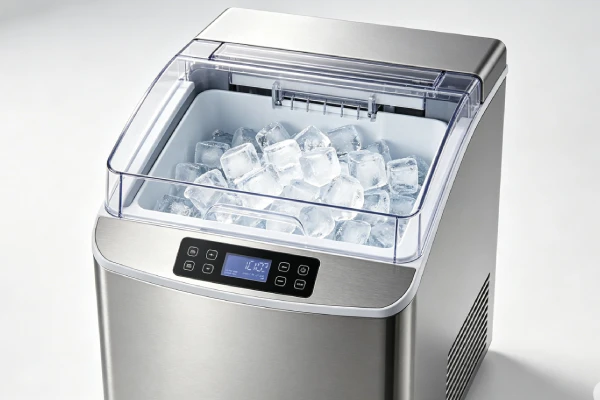
These machines prioritize speed and convenience. Their short freeze cycles tend to trap air and impurities, so Portable Ice Maker Problems around clarity are common and often expected. Water quality improvements help, but they do not change the underlying freezing method.
Built-In and Standalone Ice Makers
Standalone machines vary widely. Some produce relatively clear cubes and others do not. Scale in the water and freezing system is a documented cause of cloudy cubes here, so maintenance and water quality matter more. Built-In Ice Maker Problems around clarity usually trace back to water condition and cleaning history rather than a single failed part.
Dedicated Clear Ice Makers and Nugget Machines
Dedicated clear ice makers are designed specifically for transparency. Nugget machines are a separate category with their own behavior, and Nugget Ice Maker Problems and Nugget Ice Maker Complaints tend to involve texture, clumping, and moisture rather than transparency. If clarity is your goal, a nugget machine is not the right comparison.
Frequently Asked Questions
Why Is My Ice Cloudy?
The usual reason is trapped air and dissolved solids concentrating in the last part of the cube to freeze. Water minerals, fast freezing, and scale buildup can all add to it. In most household machines, some cloudiness is expected.
Why Is My Ice Maker Ice Cloudy Even With Filtered Water?
Carbon filtration mainly targets chlorine and taste compounds and does not remove the minerals that contribute to haze. If you want to test the water factor, distilled or reverse osmosis water is a better comparison than a standard pitcher filter.
Does Distilled Water Make Clear Ice?
Distilled water reduces the mineral contribution, so cubes often look better. It does not change the machine’s freezing method, so trapped air can still produce white cores. Ice Maker Distilled Water is a helpful step, not a guarantee.
Why Is the Center of My Ice Cube White?
The center is the last region to freeze, so air and dissolved solids are pushed there. A white center is a normal result of the freezing process.
Does a Dirty Ice Maker Cause Cloudy Ice?
Scale and buildup can contribute, especially when clarity declines over time. Cleaning according to the manual and checking the filter are the right first steps. Ice Maker White Buildup on trays and plates is often the earliest visible clue.
Can a Water Filter Make Ice Clearer?
It can help depending on filter type. Reverse osmosis and distillation remove minerals and have a larger effect, while carbon filters mainly improve taste. No filter changes the machine’s freezing method.
Is Cloudy Ice Safe to Drink?
Haze from trapped air and dissolved minerals is generally an appearance issue. If there is an off-taste, an odor, discoloration, or visible particles, stop using the ice and investigate the water supply and the machine.
Does Boiling Water Make Clear Ice?
Boiling can reduce dissolved gases, but it does not remove minerals and it does not change the freezing method. Evaporation can even concentrate minerals. It is not a reliable way to get clear ice from an ordinary ice maker.
Will Reverse Osmosis Water Make Clear Ice?
Reverse osmosis removes most minerals and can improve appearance much like distilled water. It still does not change how quickly the machine freezes, so trapped air can remain an issue.
What If My Ice Cubes Are Sticking Together?
Clumping usually points to incomplete freezing or moisture in the basket. It often appears alongside Ice Maker Making Wet Ice and Ice Maker Making Soft Ice, and it is worth checking the water supply, the filter, and whether the machine is running normally.
Does Ice Maker ECO Mode Affect Ice Quality?
ECO Mode typically adjusts fan and compressor behavior to save energy, and in some units it can slow production or change cube quality. Check whether clarity changed after enabling it before assuming a fault.
What Is the Difference Between Ordinary Ice and Ice for Cocktails?
Ordinary ice is fine for cooling drinks. Best Ice for Iced Coffee and Best Ice Maker for Cocktails searches reflect a different goal: slow-melting, transparent ice that dilutes a drink more gradually. That usually requires directional freezing, not a water change.
The Bottom Line
Ice Maker Making Cloudy Ice is usually explained by trapped air, water minerals, fast or uneven freezing, or scale buildup — often in combination. It is frequently normal, especially in portable countertop and refrigerator ice makers, and it is not automatically a safety problem.
Distilled or low-mineral water can improve appearance, but it cannot turn a fast-freezing machine into a clear ice maker. If transparency is the goal, directional freezing is the mechanism that matters, and that generally means a different class of machine.
Before assuming the machine is broken, check the water, the filter, and the cleaning schedule. Before assuming distilled water will fix everything, remember that it addresses the water, not the freezing. That single distinction resolves most of the confusion behind a Clear Ice Maker Still Cloudy complaint.