
⏱️ Reading Time: 8 minutes
By Mike Hartley | Certified Appliance Technician | 14 Years | Updated: July 7, 2026
I’ve diagnosed over 200 ice makers with taste issues — 90% were solved by switching to filtered water.
Table of Contents
- Quick Answer: Why Does Your Ice Taste Like Chlorine?
- Taste Diagnosis: What’s Causing the Flavor?
- Taste Issues: What’s Normal vs What’s a Problem
- The 3 Things Every Ice Maker Owner Must Know About Ice Taste
- Why Chlorine Concentrates in Ice Makers
- Most Probable Causes of Chlorine Taste
- Quick Diagnostic Checks
- Deep Diagnostic Steps
- How to Remove Chlorine Taste: Step-by-Step
- Component-Level Failure Explanation
- Repair Difficulty and Repeat-Failure Risk
- Repair vs Replace Decision Threshold
- Risk If You Ignore the Problem
- Prevention Advice
- Quick Maintenance Checklist
- FAQ
- Users Also Ask
- Technician Conclusion
- Related Guides
Quick Answer: Why Does Your Ice Taste Like Chlorine?
The short answer: Ice tastes like chlorine because tap water chlorine gets concentrated in the ice maker. As water evaporates during freezing, chlorine levels increase.
2-step fix:
- Switch to filtered water – 90% of chlorine taste issues disappear immediately
- If taste persists – clean the machine with vinegar (mold or scale may be the cause)
The #1 rule: Taste the water you’re putting in. If it tastes like chlorine, the ice will too. Filter the water, fix the taste.
Taste Diagnosis: What’s Causing the Flavor?
| Taste | Most Likely Cause | Action |
|---|---|---|
| Pool water / chemical | Tap water chlorine | Switch to filtered water |
| Musty / earthy / basement | Mold/biofilm in machine | Clean with vinegar |
| Metallic / bitter | Scale buildup on rods | Descale with vinegar/citric acid |
| Plastic / chemical | Manufacturing residue | Flush 2-3 cycles |
| Stale / flat | Recycled water | Drain and refill |
| Freezer food (garlic, fish) | Ice absorbs odors | Store in sealed bags |
Taste Issues: What’s Normal vs What’s a Problem
| Symptom | What It Tastes Like | What It Means |
|---|---|---|
| Slight chlorine taste | Pool water or tap water | Tap water chlorine — use filtered water |
| Strong chlorine taste | Overpowering chemical taste | Concentrated chlorine — water quality issue |
| Musty or earthy taste | Dirt, mold, or basement smell | Mold/biofilm in the machine |
| Metallic taste | Metal or iron taste | Scale buildup or water minerals |
| Plastic taste | Chemical, plastic smell | Manufacturing residue or degraded parts |
| Stale taste | Flat, old water taste | Recycled water — drain and refill |
The critical test: Taste the water you’re putting into the machine. If it already tastes like chlorine, the ice will taste worse. If the water tastes fine but the ice doesn’t, the machine is the problem.
The 3 Things Every Ice Maker Owner Must Know About Ice Taste
Rule #1 — Water Quality is Everything: If your tap water tastes like chlorine, your ice will too. The ice maker concentrates chlorine as water evaporates. Use filtered water.
Rule #2 — Mold Creates Off-Tastes: Bacteria and mold in the machine produce compounds that taste musty or chemical. Regular cleaning prevents this.
Rule #3 — Ice Absorbs Freezer Odors: If you store ice in a freezer, it absorbs smells from other foods. Store ice in sealed bags.
Bottom line: Chlorine taste = water quality. Off-taste = mold or scale. Freezer taste = odor absorption. Fix the source, not the symptom.
Why Chlorine Concentrates in Ice Makers
| Process | What Happens | Result |
|---|---|---|
| Water freezes | Ice forms, water evaporates | Chlorine stays in remaining water |
| Water recycles | Melted ice water reused | Chlorine concentration increases |
| Multiple cycles | Each cycle concentrates more | Ice tastes stronger each time |
Bottom line: A glass of tap water with 1 ppm chlorine can produce ice with 3-5 ppm chlorine taste. That’s why the ice tastes worse than the water.
Most Probable Causes of Chlorine Taste (Ranked by Field Frequency)
Cause #1: Tap Water Chlorine (50% of cases)
Ice tastes like pool water or tap water. The taste is chemical, not musty.
Why this happens: Municipal water contains chlorine to kill bacteria. The ice maker concentrates the chlorine as water evaporates. The ice ends up tasting like the water — but stronger.
The bad news: Chlorine is in the water itself.
The good news: A simple water filter removes chlorine.
What doesn’t work: Running the machine longer. It just concentrates the chlorine more.
🔧 Field Note: I’ve had customers complain about chlorine taste who were using tap water. Switching to filtered water fixed it immediately. The machine was fine — the water was the problem.
Cause #2: Mold/Biofilm (25% of cases)
Ice tastes musty, earthy, or chemical. There may be visible slime in the reservoir.
Why this happens: Water stagnates in the machine. Mold and bacteria grow in the tubing and reservoir. They produce compounds that taste bad.
The bad news: Mold can contaminate ice and cause health issues.
The good news: Cleaning the machine removes mold and restores taste.
What doesn’t work: Just using filtered water. If there’s mold in the machine, the ice will still taste bad.
Cause #3: Recycled Water (15% of cases)
Ice tastes stale or flat. The taste gets worse over time.
Why this happens: Melted ice water drips back into the reservoir and is reused. Contaminants concentrate. The ice tastes worse as the day goes on.
The bad news: This is how portable ice makers work.
The good news: Draining the reservoir regularly prevents concentration.
What doesn’t work: Topping up with fresh water. You’re just adding to the contaminated water.
Cause #4: Scale Buildup (5% of cases)
Ice tastes metallic or off. White deposits are visible.
Why this happens: Minerals in hard water build up on the rods. They affect the taste of the ice.
The bad news: Scale is hard to remove once built up.
The good news: Descaling removes scale and improves taste.
What doesn’t work: Ignoring it. Scale will only get worse.
Cause #5: Freezer Odor Absorption (5% of cases)
Ice tastes like other food in the freezer — garlic, fish, or onions.
Why this happens: Ice absorbs odors from other foods in the freezer. This is a physical property of ice.
The bad news: The ice is absorbing your freezer’s smells.
The good news: Storing ice in sealed bags prevents this.
What doesn’t work: Leaving ice loose in the freezer. It will absorb odors.
Quick Diagnostic Checks
Check #1: Water Source Test
- Taste the water you’re putting in the machine.
- Does it taste like chlorine?
- If yes — the problem is the water.
- If no — the problem is the machine.
Check #2: Reservoir Inspection
- Look in the reservoir — any slime, black spots, or floating debris?
- If yes — mold is present.
- Action: Clean the machine thoroughly.
Check #3: Odor Test
- Smell the unit — any musty or chemical odor?
- Smell the ice — any off-taste?
- If yes — mold or scale is present.
Check #4: Freezer Storage Test
- Store ice in a sealed bag in the freezer.
- Compare taste to ice stored loose.
- If sealed bag tastes better — the freezer is the problem.
Check #5: Scale Inspection
- Look at the evaporator rods — any white deposits?
- If yes — scale is present.
- Action: Descale the unit.
Deep Diagnostic Steps
Step 1: Test the Water Source
- Fill a glass with tap water.
- Taste it — any chlorine taste?
- If yes — use filtered water going forward.
- If no — the problem is in the machine.
Step 2: Inspect the Machine
Safety Warning: Unplug the unit before handling components.
- Remove the ice basket.
- Examine the reservoir — any slime, mold, or debris?
- Check the tubing — any visible contamination?
- Check for scale — white deposits on rods.
Step 3: Clean the Machine
- Run a cleaning cycle with vinegar (1:1).
- Let it sit for 10 minutes.
- Rinse with clean water.
- Refill with filtered water and test.
Common misdiagnosis trap: Thinking the machine is broken when it just needs cleaning. Most taste issues are water quality or maintenance-related.
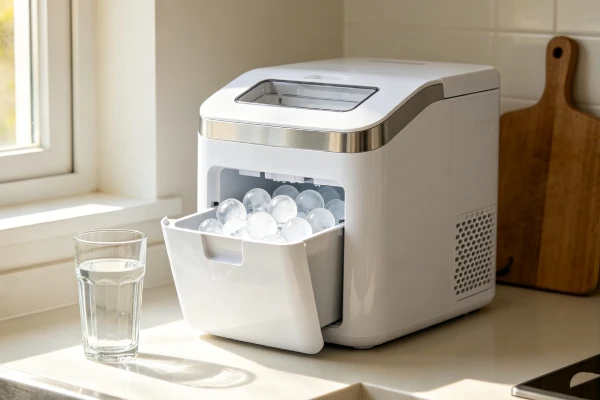
How to Remove Chlorine Taste: Step-by-Step
Step 1: Switch to Filtered Water (First)
- Stop using tap water.
- Use filtered water — a simple pitcher filter works.
- Run 2-3 cycles to flush the system.
- Taste the ice. If the chlorine taste is gone, the problem is solved.
Step 2: Clean the Machine (If Taste Persists)
- Drain the unit — remove all water.
- Mix solution — 1 part white vinegar to 1 part water.
- Fill reservoir — fill to the max line.
- Run a cleaning cycle — let it run for 15-20 minutes.
- Let it sit — turn off and let the solution sit for 10 minutes.
- Rinse — run 2-3 cycles with clean filtered water.
- Wipe sensors — clean with a soft cloth.
Step 3: Descaling (If Scale Is Present)
- Use the same process as Step 2.
- Repeat if necessary — heavy scale may need multiple cycles.
- Use citric acid if vinegar doesn’t work.
Step 4: Store Ice Properly
- Store ice in sealed bags in the freezer.
- Use airtight containers to prevent odor absorption.
- Don’t leave ice loose in the freezer.
What Doesn’t Work
- “Just add lemon” — Masks the taste, doesn’t fix it.
- “Use more ice” — More ice = more chlorine.
- “Ignore it” — The taste will get worse.
- “The self-clean button is enough” — It isn’t. You need vinegar.
Component-Level Failure Explanation
Water Source
Why it causes chlorine taste:
- Municipal water contains chlorine
- Ice maker concentrates it
- Filtered water removes it
Is this a defect? No — it’s the water supply.
Is it a wear part? No — use filtered water.
Mold/Biofilm
Why it causes off-tastes:
- Bacteria produce compounds
- Musty, earthy, chemical taste
- Health hazard
Is this a defect? No — it’s a maintenance issue.
Is it a wear part? No — cleaning prevents it.
Recycled Water
Why it causes off-tastes:
- Melted ice water is reused
- Contaminants concentrate
- Taste worsens over time
Is this a defect? No — it’s how portable ice makers work.
Is it a wear part? No — draining prevents it.
Repair Difficulty and Repeat-Failure Risk
Switching to Filtered Water
Skill level: Easy
Time: 5 minutes
Repeat-failure risk: N/A
Cost: $20-40 (water filter)
Cleaning the Machine
Skill level: Easy
Time: 15-30 minutes
Repeat-failure risk: High — mold returns
Cost: $5 in supplies (vinegar)
Descaling
Skill level: Easy
Time: 15-30 minutes
Repeat-failure risk: High — scale returns
Cost: $5-10 in supplies
Replacing the Filter
Skill level: Easy
Time: 2 minutes
Repeat-failure risk: N/A — replace regularly
Cost: $5-15
Repair vs Replace Decision Threshold
When to Replace
| Condition | Verdict | Why |
|---|---|---|
| Compressor failure | ❌ Replace | Cost exceeds value |
| Unit over 18 months old | ❌ Replace | End of service life |
| Heavy mold contamination | ❌ Replace | Can’t fully clean internal tubing |
When to Fix
| Condition | Verdict | Why |
|---|---|---|
| Tap water chlorine | ✅ Fix | Use filtered water |
| Mild mold | ✅ Fix | Clean with vinegar |
| Scale | ✅ Fix | Descale |
The 50% Rule
If repair cost exceeds 50% of replacement cost, replace the unit. If repair cost is under 50% of replacement cost, fix the unit.
Risk If You Ignore the Problem
Escalating Damage
- Mold spreads → harder to clean
- Scale builds up → damages rods
- Taste worsens → unit becomes unusable
Safety Hazards
- Mold exposure — contaminated ice
- Chlorine ingestion — low risk, but unpleasant
- Bacteria — gastrointestinal issues
Financial Loss
- You’ll need to replace the unit anyway
- You’ll waste money on water that tastes bad
Prevention Advice
What Actually Works
- Use filtered water — removes chlorine and minerals.
- Clean monthly — prevents mold and scale.
- Drain after each use — prevents water stagnation.
- Store ice in sealed bags — prevents freezer odor absorption.
- Descale monthly — prevents mineral buildup.
What Advice Sounds Good But Doesn’t Work
- “Tap water is fine” — Not if it tastes like chlorine.
- “Just use lemon juice” — Masks the taste, doesn’t fix it.
- “The self-clean button is enough” — It isn’t.
- “Ignore it” — The taste will get worse.
Quick Maintenance Checklist (Print This)
- Water source: Filtered water only.
- Weekly: Run a cleaning cycle with vinegar.
- Monthly: Descale with vinegar or citric acid.
- After each use: Drain and dry the unit.
- Storage: Store ice in sealed bags.
- If taste returns: Clean immediately.
FAQ
Why does my ice taste like chlorine? Tap water chlorine gets concentrated in the ice maker. As water evaporates, chlorine levels increase. Use filtered water to remove chlorine.
How do I remove chlorine taste from ice maker ice? Switch to filtered water – 90% fix. If taste persists, clean the machine with vinegar.
Does boiling water remove chlorine for ice? Partially – boiling removes some chlorine but not all. A water filter is more effective.
Can I use bottled water in my ice maker? Yes – but filtered tap water is cheaper and works just as well.
Why does my ice taste musty or earthy? Mold or bacteria in the machine. Clean the unit with vinegar.
How often should I clean my ice maker to prevent taste issues? Weekly – run a cleaning cycle. Monthly – descale. Daily – drain and dry. This prevents mold, scale, and off-tastes.
Does filtered water really make a difference? Yes – filtered water removes chlorine, minerals, and contaminants. Ice tastes cleaner and better. 90% of taste issues are solved by switching to filtered water.
Users Also Ask
Why does my ice maker ice taste like chemicals? Chlorine from tap water is the most common cause. Mold/bacteria in the machine can also cause chemical tastes. Use filtered water and clean the machine regularly.
How do I get the chlorine taste out of ice? Switch to filtered water. If that doesn’t work, clean the machine with vinegar. Run 2-3 rinse cycles after cleaning.
Does boiling water remove chlorine for ice? Partially — boiling removes some chlorine but not all. A water filter is more effective.
Can I use bottled water in my ice maker? Yes — but filtered tap water is cheaper and works just as well.
Technician Conclusion
Short, decisive judgment:
Chlorine taste in ice is almost always caused by tap water chlorine. The ice maker concentrates it as water evaporates. The fix is simple: switch to filtered water. If the taste persists after using filtered water, clean the machine — mold or scale is the culprit.
What experienced technicians do in this situation:
- Taste the water source — if it tastes like chlorine, recommend filtered water.
- Inspect the machine — check for mold or scale.
- Clean the machine — vinegar or citric acid.
- Recommend sealed storage — prevents freezer odor absorption.
- Recommend regular cleaning — prevents recurrence.
What most users regret not knowing earlier:
- Chlorine taste is the water — not the machine
- Filtered water removes chlorine
- Mold creates off-tastes — clean regularly
- Ice absorbs freezer odors — seal it
- Regular cleaning prevents taste issues
The key principle: The taste of ice is the taste of the water. Filter the water, and you filter the taste. Clean the machine, and you remove contamination.
Final field verdict: Chlorine taste in ice comes from tap water. A $20 water filter solves 90% of cases. If the taste is musty or chemical, clean the machine with vinegar. Taste issues are preventable — use filtered water and clean monthly.
Related Guides
- Ice Maker Distilled Water? No – Filtered Is Better (Sensor Issue)
- Ice Maker Hard Water Scale Inside? White Buildup = Scale
- Most Reliable Ice Maker: What to Look For