
Search Intent Opening
If your air purifier fails to eliminate strong odors from a litter box or pet food in a small room, performs significantly slower than a premium unit, or produces noticeable noise on high speed, you may be facing limitations in carbon filtration capacity, overall purification power, or fan design. Owners searching for “air purifier not removing odors,” “air purifier weak vs premium,” or “air purifier loud on high” are often dealing with units that are better suited for light duty than heavy odor loads.
Why HEPA Does Not Remove Odors
A common misconception is that HEPA filters remove smells. They do not:
- HEPA filters capture particles: Dust, pollen, pet dander, mold spores—these are solid particles suspended in air.
- Odors are gas-phase molecules: Smells from litter boxes, cooking, smoke, and pets are chemical vapors. HEPA media cannot trap gases.
- Only activated carbon adsorbs gases: Odor removal requires activated carbon, which uses adsorption to bind gas molecules to its surface.
If your unit lacks a substantial carbon filter, it will not remove odors regardless of how well it handles particles.
Air Purifier Performance Expectations: What’s Realistic?
Before diagnosing a unit as defective, it’s important to understand what a given air purifier can realistically achieve:
- CADR (Clean Air Delivery Rate): This measures how quickly a unit can filter particles like dust and pollen. It does not measure odor removal speed.
- Carbon filter capacity: Odor removal requires activated carbon. The amount of carbon and the thickness of the carbon layer directly affect how well and how long a unit can remove odors.
- Room size ratings: Manufacturers rate units for specific room sizes based on particle filtration at a certain number of air changes per hour. Odor removal may require more air changes or higher carbon capacity.
A unit rated for a 100 sq ft room may handle particle filtration adequately but struggle with heavy odor loads from multiple pets in that same space.
Quantified Carbon Differences
Carbon quantity directly determines odor removal capacity. Typical ranges:
| Unit Class | Carbon Quantity | Typical Odor Load Capacity |
|---|---|---|
| Budget / Small Units | 200–400 grams | Light odors, small spaces |
| Mid-Range / Standard | 500–1000 grams | Moderate odors, normal use |
| Premium / Large Room | 2–5 kilograms | Heavy odors, multiple pets |
| Commercial-Grade | 5+ kilograms | Extreme loads, continuous operation |
A unit with 200g of carbon will saturate much faster under heavy odor load than a unit with 2kg of carbon. This is physics, not a defect.
Search Query Coverage Block
People search this as:
- air purifier not removing odors
- air purifier weak odor elimination
- air purifier vs premium comparison
- air purifier loud on high setting
- air purifier plastic build quality
- air purifier for cat litter box
- air purifier carbon filter capacity
- air purifier slow to remove smells
- air purifier better than nothing
- air purifier high speed noise
- air purifier pet odor not working
- air purifier expected performance
- air purifier CADR vs carbon
- air purifier room size rating real world
What Typically Limits Performance
Field observations across multiple air purifier models show this performance hierarchy:
- Carbon filter capacity (most critical for odor removal)
- Fan speed / airflow (affects how quickly air is processed)
- Filter quality / thickness (affects particle and odor capture)
- Sealing / bypass (air leaks reduce effectiveness)
The most common performance complaints stem from insufficient carbon filtration for the actual pollutant load, not mechanical failure.
Carbon Saturation Timeline
How often you need to replace carbon filters depends entirely on odor load:
| Odor Load Level | Typical Carbon Life | Examples |
|---|---|---|
| Heavy | 1–3 months | Multiple pets, litter boxes, smoking indoors |
| Moderate | 3–6 months | One pet, occasional cooking odors |
| Light | 6–12 months | Minimal odor sources, occasional use |
Once carbon is saturated, it stops adsorbing odors. The unit will run, but smells will persist. Replacement is required, not optional.
Performance Limitation Classification
- Odor Removal Limitation: Unit cannot fully eliminate strong odors in high-load environments (multiple pets, litter boxes)
- Speed Limitation: Significantly slower odor removal than premium units
- Noise Consideration: High-speed operation produces audible noise
- Build Perception: Plastic construction may feel less premium
- Expectation Gap: Performance may be “better than nothing” but not complete
Observed Performance Patterns
Pattern 1: Insufficient Odor Elimination in Small Spaces.
- Unit operates in a ~100 sq ft room with litter box and multiple cats. Odors are reduced but not eliminated. User expected complete removal.
- Indicates: Carbon filter capacity may be insufficient for heavy odor load. Unit may be better suited for light odor maintenance.
- Escalation: User may need higher-capacity unit or additional odor sources addressed.
Pattern 2: Weak Performance vs Premium Competitor.
- When tested against a high-end purifier ($1000 range), the budget unit removes odors significantly slower and less completely in the same environment.
- Indicates: Differences in carbon quantity, fan power, and overall design directly impact performance.
- Escalation: Realistic expectation: lower price point correlates with lower performance.
Pattern 3: Noticeable Noise on High Speed.
- Unit operates quietly on low and medium settings. High speed produces audible noise that may disturb sleep or concentration.
- Indicates: Fan design prioritizes airflow over silence at highest setting. Normal for many units.
- Escalation: Users sensitive to noise may need to avoid high speed or choose quieter models.
Pattern 4: Plastic Build Perceived as Lower Grade.
- Housing made of plastic rather than metal or higher-grade materials. May feel less durable or premium.
- Indicates: Material choice to achieve lower price point. Not a functional failure.
- Escalation: Cosmetic/perceptual only; does not affect performance.
Pattern 5: Limited Odor Proof in High-Load Use.
- In environments with multiple pets and confined space, performance is partial rather than complete. “Better than nothing” but not full elimination.
- Indicates: Unit’s carbon filtration capacity exceeded by pollutant load.
- Escalation: May need supplemental odor control or higher-capacity unit.
Why Performance Limitations Happen (Engineering Cause)
Carbon Filter Capacity
- Component: Activated carbon filter
- Mechanism: Carbon adsorbs odor molecules. Limited carbon quantity means limited total adsorption capacity before saturation.
- Trigger: High odor load, continuous exposure.
- Consequence: Odor removal incomplete; filter saturates faster than expected.
Fan / Airflow Design
- Component: Fan motor, impeller
- Mechanism: Higher airflow moves more air through filters but increases noise. Lower-speed operation quieter but processes air slower.
- Trigger: High-speed operation.
- Consequence: Noise increases; trade-off between speed and quiet.
Filter Quality / Thickness
- Component: Particulate filter, carbon layer
- Mechanism: Thicker, higher-quality filters capture more particles and odors but increase cost and airflow resistance.
- Trigger: Every operation.
- Consequence: Lower-cost units have thinner, less effective filters.
Sealing / Air Bypass
- Component: Filter seating, housing seals
- Mechanism: Air leaking around filters reduces effectiveness as unfiltered air bypasses media.
- Trigger: Poor fit, worn seals.
- Consequence: Reduced purification efficiency.
Material Choice
- Component: Housing material
- Mechanism: Plastic chosen for cost-effectiveness, weight reduction.
- Trigger: Manufacturing.
- Consequence: Perceived as less premium, but functional.
Usage Patterns That May Affect Perceived Performance
High Odor Load
- Multiple pets, litter boxes in small space.
- Result: Odor removal may be incomplete; carbon saturates faster.
Continuous Operation
- Running 24/7 accelerates filter saturation.
- Result: Need more frequent filter changes.
Room Size Mismatch
- Unit rated for certain square footage may be undersized for actual air volume or odor load.
- Result: Perceived underperformance.
Filter Replacement Neglect
- Clogged or saturated filters reduce effectiveness.
- Result: Odor removal declines over time.
Comparison to Premium Units
- Direct comparison highlights performance differences.
- Result: Expectation gap based on price difference.
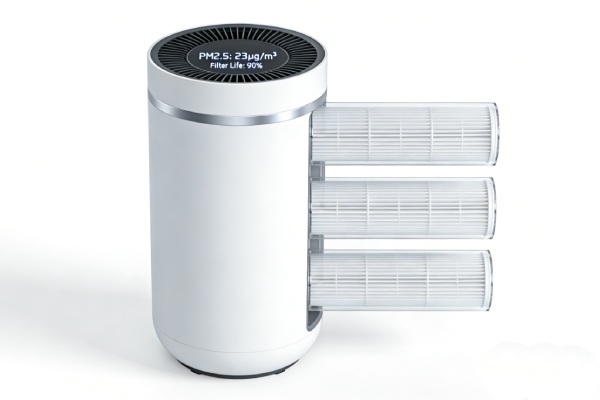
Maintenance Considerations
Consumable Parts
- Carbon pre-filter: $10-30, replace every 3-6 months depending on odor load
- HEPA filter: $20-50, replace annually or per manufacturer
- Combination filters: $30-60, replace per schedule
Areas to Monitor
- Filter saturation: Odor removal declining indicates replacement needed
- Airflow: Reduced flow may indicate clogged filters
- Noise changes: New noises may indicate fan issues
Real-World Usage Scenarios
Scenario 1: The Litter Box Room
- User places purifier in small room with litter box for 4 cats. Unit runs continuously. Odors reduced but still noticeable. User expected complete elimination.
- Observation: Carbon filter capacity exceeded by heavy odor load.
- Consideration: May need higher-capacity unit or additional odor sources addressed (more frequent litter cleaning).
Scenario 2: The Premium Comparison
- User borrows $1000 purifier from mom, places in basement with 4 cats. Odors gone within 2 hours. Budget unit in similar space performs much slower.
- Observation: Price directly correlates with performance in high-load situations. The $1000 unit likely contains 5-10x more carbon.
- Consideration: Realistic expectations based on price point.
Scenario 3: The Noisy Night
- User runs purifier in bedroom on high for maximum odor removal. Noise disrupts sleep. Switches to low, quieter but slower odor removal.
- Observation: Trade-off between speed and quiet operation.
- Consideration: Run on high when away, lower at night.
Scenario 4: The Better Than Nothing Assessment
- User acknowledges unit improves odor situation but doesn’t eliminate it completely. Considers it partial solution.
- Observation: Unit meets “better than nothing” expectation but not complete removal.
- Consideration: May need supplemental odor control.
Scenario 5: The Plastic Perception
- User notes plastic construction but accepts given lower price point. Performance acceptable for light duty.
- Observation: Material choice aligns with price.
- Consideration: Acceptable for budget-conscious buyers.
Common Misinterpretations
Misinterpretation 1: “Air purifier is defective, doesn’t remove odors” → Carbon capacity limit
- Symptom: Odors persist.
- Actual consideration: Carbon filter may be undersized for odor load.
- Verification: Check filter type and capacity; consider if load exceeds design.
Misinterpretation 2: “This unit is weak compared to expensive one” → Price/performance correlation
- Symptom: Slower odor removal.
- Actual consideration: Higher-priced units typically have more carbon, better fans.
- Verification: Compare specifications; realistic expectations.
Misinterpretation 3: “It’s loud on high, must be broken” → Normal operation
- Symptom: High-speed noise.
- Actual consideration: Many units are louder at highest setting.
- Verification: Check reviews; if consistent with others, normal.
Misinterpretation 4: “Plastic build means cheap quality” → Material choice
- Symptom: Plastic housing.
- Actual consideration: Plastic is cost-effective,不影响功能。
- Verification: Assess performance, not material.
Misinterpretation 5: “Better than nothing means it works” → Partial solution
- Symptom: Odors reduced but not eliminated.
- Actual consideration: Unit provides improvement but may not solve completely.
- Verification: Set expectations accordingly.
Misinterpretation 6: “HEPA filter should remove smells” → Common confusion
- Symptom: Expecting HEPA to handle odors.
- Actual consideration: HEPA only captures particles. Odors require carbon.
- Verification: Check if unit has carbon filtration.
Field Checks (No Tools)
Check 1: Odor Reduction Assessment
- Run unit in odor-producing space for several hours. Assess remaining odor level.
- Expected: Noticeable reduction; complete elimination depends on unit capacity and odor load.
- Observation: If reduction minimal, carbon capacity may be insufficient.
Check 2: Filter Inspection
- Remove and inspect carbon filter. Check for visible saturation, odor absorption.
- Expected: Filter should adsorb odors; may need replacement if saturated.
- Observation: If filter appears loaded, replacement may improve performance.
Check 3: Airflow Test
- Place hand near outlet. Feel airflow strength.
- Expected: Consistent airflow on each setting.
- Observation: Reduced airflow may indicate clogged pre-filter.
Check 4: Noise Level Assessment
- Run on each speed setting. Note noise level.
- Expected: Quieter on low/medium, louder on high.
- Observation: If high-speed noise excessive, consider operating patterns.
Check 5: Room Size vs Unit Rating
- Compare room square footage to unit’s rated coverage.
- Expected: Room size within rated range.
- Observation: If room at upper limit or odor load high, performance may be marginal.
Check 6: Carbon Filter Presence
- Check if unit actually contains carbon. Some “odor-reducing” units have minimal or no carbon.
- Expected: Visible carbon layer.
- Observation: If no carbon, unit cannot remove odors.
Typical Performance Expectations
| Usage Level | Expected Performance | Primary Limitation |
|---|---|---|
| Light (occasional, low odor) | Good odor reduction | Carbon life, filter changes |
| Average (daily, moderate odor) | Noticeable improvement | Carbon capacity, airflow |
| Heavy (multiple pets, strong odors) | Partial improvement, not complete | Carbon saturation, unit capacity |
Observed patterns: Units at lower price points provide noticeable improvement but may not completely eliminate strong odors in high-load environments.
Upgrade vs Replace Considerations
Consider upgrade if:
- Odor load consistently exceeds unit’s capacity
- You need complete elimination in high-load space
- Current unit’s carbon filter saturates too quickly
- Noise on high speed is unacceptable
Consider keeping if:
- Performance meets “better than nothing” expectation
- You’re willing to supplement with other odor control
- Unit adequately handles light to moderate odor loads
- Price/performance ratio acceptable for your needs
Design Traits to Evaluate
For odor removal, consider units with:
- Substantial carbon filters (thicker, more media) – aim for 1kg+ for heavy loads
- Higher CADR ratings (faster air processing)
- Multiple filter stages (pre-filter, carbon, HEPA)
- Sealed design (minimizes air bypass)
- Variable speed (balance noise and performance)
Be aware of:
- Carbon filter size and replacement cost
- Rated room size vs real-world odor load
- Noise levels on higher settings
- Build materials (plastic normal at this price)
Features That Support Odor Removal
- Activated carbon quantity – More carbon = more adsorption capacity
- Carbon filter thickness – Deeper bed = better contact time
- Pre-filtration – Extends carbon life by capturing larger particles
- Airflow rate – Higher CADR moves more air through carbon
- Filter sealing – Prevents unfiltered air bypass
Technician Observations
- “Odor removal is all about carbon. If the carbon layer is thin, it saturates fast and stops working. Budget units often have 200-400g; premium units have 2-5kg.”
- “HEPA does nothing for smells. If your unit only has HEPA, it will never remove odors.”
- “Price directly correlates with carbon quantity. A $1000 unit has 5-10x more carbon than a $100 unit.”
- “High speed is always louder. That’s physics—more air movement makes more noise.”
- “Plastic is fine at this price point. The filters matter more than the housing.”
- “‘Better than nothing’ is a realistic expectation for budget units in heavy odor environments.”
- “Carbon saturation timeline: heavy load = 1-3 months, moderate = 3-6 months, light = 6-12 months. Mark your calendar.”
- “If you have multiple pets in a small room, you may need a commercial-grade unit or multiple units.”
- “Filter replacement is not optional. A saturated carbon filter stops removing odors entirely.”
Heavy-Use Reality
For users with multiple pets in confined spaces:
- Expect partial odor reduction, not complete elimination, from budget units
- Carbon filters may need replacement every 1-3 months
- May need to run on higher speeds, accepting more noise
- Cost perspective: $80-150 unit + $30-60/year in filters = $110-210/year
Suggestion for heavy odor loads: Consider units with larger carbon filters (1kg+) or commercial-grade units designed for high pollutant loads.
Cost Factors
Consumables:
- Replacement filters: $20-60 per year depending on usage
- Carbon pre-filters: $10-30 every 3-6 months
Upgrade costs:
- Higher-capacity unit: $200-1000 depending on features
3-Year Cost Estimate (Average Use):
- Purchase: $100
- Filter replacements: $30 x 3 = $90
- Total approximate: $190 over 3 years
Early Indicators of Filter Saturation
Performance changes:
- Odor removal effectiveness declines
- Takes longer to clear smells
- Odors return faster after running
Visual checks:
- Filter visibly dirty or discolored
- Carbon layer appears saturated
- Dust accumulation on pre-filter
Operational:
- Unit runs longer to achieve same result
- More noticeable odors between cycles
Suitability Considerations
This type of air purifier may suit you if:
- You have light to moderate odor loads
- You accept “better than nothing” performance
- You’re willing to replace filters regularly
- You understand price/performance trade-offs
- Your unit actually contains carbon
You may need a higher-capacity unit if:
- You have multiple pets in a small space
- Strong odors need complete elimination
- You’re unwilling to compromise on performance
- You can invest in commercial-grade equipment
- Your current unit lacks sufficient carbon (200-400g range)
Frequently Asked Questions
Why doesn’t my air purifier eliminate litter box odors completely?
The carbon filter may be undersized for the odor load. Budget units often have only 200-400g of carbon and may only reduce, not eliminate, strong odors in high-load environments. Also verify that your unit actually contains carbon—HEPA alone does nothing for odors.
How much carbon do I need for pet odors?
For light odor loads, 200-400g may suffice. For moderate loads, aim for 500-1000g. For heavy loads (multiple pets), look for 2kg or more. Commercial units can exceed 5kg.
Is it normal for a budget purifier to perform worse than a $1000 unit?
Yes. Higher-priced units typically have 5-10x more carbon, better fans, and higher overall capacity. Performance differences directly reflect price differences.
Why is my air purifier so loud on high speed?
High-speed operation moves more air, which inherently creates more noise. This is normal for most units. Run on lower speeds when noise is a concern, accepting slower odor removal.
Is plastic construction a problem?
No. Plastic is a common, cost-effective material for air purifiers. It does not affect performance. Focus on filter quality and capacity instead.
How often should I replace the carbon filter?
Heavy odor load: 1-3 months. Moderate load: 3-6 months. Light load: 6-12 months. Replace when odor removal effectiveness declines.
Can I use this for multiple pets in a small room?
It will help, but may not completely eliminate odors. Consider it a partial solution and supplement with good pet hygiene and ventilation. Check your unit’s carbon quantity—if it’s under 500g, expect limited performance.
What’s the difference between HEPA and carbon?
HEPA captures particles (dust, pollen, dander). Carbon adsorbs gases (odors, VOCs, smoke). You need both for comprehensive air purification.
Why does my unit have a HEPA filter but still smells?
HEPA does not remove odors. If your unit lacks carbon, it will never eliminate smells regardless of how well it handles particles.
Summary Assessment
| User Type | Consideration Level | Primary Factors | Suggestion |
|---|---|---|---|
| Light User (occasional, low odor) | Low | Acceptable performance | Good value for light duty |
| Average User (daily, moderate odor) | Moderate | Partial improvement, filter costs | Acceptable with realistic expectations |
| Heavy User (multiple pets, strong odors) | High | Limited odor elimination, frequent filter changes | Consider higher-capacity unit with 1kg+ carbon |
| Noise-Sensitive User | Moderate | High-speed noise | Run on lower speeds; accept slower performance |
General perspective:
- Air purifiers at this price point provide noticeable odor reduction but may not completely eliminate strong odors in high-load environments.
- Performance is directly related to carbon filter capacity. Budget units have 200-400g carbon; premium units have 2-5kg. This difference is measurable and predictable.
- HEPA filters do not remove odors. If your unit lacks substantial carbon, it will never eliminate smells.
- Carbon saturation timeline depends entirely on odor load: heavy = 1-3 months, moderate = 3-6 months, light = 6-12 months.
- “Better than nothing” is a realistic expectation. Complete elimination may require higher-end units or supplemental odor control.
- Noise on high speed is normal. Balance speed and noise based on your needs.
- Plastic construction is appropriate for this price range and does not affect function.
- Filter replacement is essential and ongoing. Factor replacement costs into your purchase decision.
- For heavy odor loads (multiple pets, confined spaces), consider investing in a unit with larger carbon capacity (1kg+) or commercial-grade equipment.