
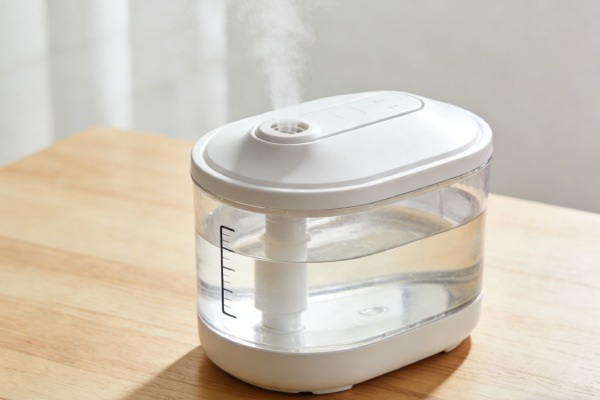
How to Avoid Buying Mistakes When Choosing: A Facial Steamer
Most facial steamer injuries are not caused by misuse, but by poor thermal regulation and sealed designs that allow uncontrolled boiling.
This guide is not about relaxation or skincare claims. It is about avoiding a 2nd-degree burn and water damage. It is based on documented failure patterns from real-world use: uncontrolled boiling, scalding water eruptions, leaking, internal contamination, and thermal regulation failures that turn a wellness device into a hazard. We evaluate a steamer not by its mist output, but by its ability to safely convert water to vapor without ever putting you in the emergency room.
Most Common Buyer Mistakes
- Prioritizing “Fast Heat-Up” Over Temperature Regulation: Choosing a steamer that promises steam in 30 seconds without verifying its thermal control system. Failure Outcome: Violent boiling and eruption of scalding water, as the heating element overheats the small water volume too quickly for a safety thermostat to react.
- Ignoring the Internal Fluid Path Design: Not considering how water travels from the tank to the heating chamber and out the nozzle. Failure Outcome: Internal corrosion, peeling coatings flaking into the steam, and mineral scale buildup that blocks flow, leading to pressure spikes and unpredictable water ejection.
- Buying Based on Aesthetics or “Spa-Like” Features: Choosing a sleek, minimalist design that hides all access points. Failure Outcome: A completely sealed, non-serviceable unit. When mineral scale inevitably builds up (even with distilled water), you cannot descale it, rendering the device useless within months.
- Assuming All Steam is Equal: Believing that any device that produces visible vapor is functioning correctly. Failure Outcome: Inconsistent, sputtering steam that alternates with liquid water discharge, caused by poor pump design or an overheating element boiling the water instead of vaporizing it steadily.
- Overlooking the Physical Safety Geometry: Not considering the direction and reach of the steam outlet. Failure Outcome: Having to lean dangerously close over the unit to feel the steam, directly in the path of a potential hot water eruption.
Marketing Claims That Mislead Buyers
- “Nanosteam” or “Microfine Mist”: Pseudoscientific terms with no engineering standard. They distract from the fundamental question: Is the steam output pure, consistent vapor, or is it an intermittent mix of vapor and hot water droplets? The latter is a scalding risk.
- “Fast Heat-Up” (e.g., “Steam in 30 Seconds!”): This is often achieved by applying excessive wattage to a small, poorly regulated heating element. True safe heat-up requires a controlled ramp and a feedback loop to prevent overheating.
- “Auto Shut-Off” or “Overheat Protection”: These are often basic, one-time thermal fuses, not intelligent regulation. They are a last-ditch safety measure that may activate after a dangerous over-pressure event has already begun. A well-regulated system should never trigger them.
- “Easy to Clean”: Usually means you can wipe the exterior and maybe rinse the tank. It never means you can access and descale the heating chamber and internal steam pathways, which are the critical points of failure.
Specs That Matter vs. Specs That Don’t
| Specs That Matter (Investigate First) | Specs That Don’t (Distract Later) |
| :— | :— | :— |
| Wattage & Heating Element Type: Lower wattage (200-400W) with a regulated thermostat is safer than ultra-high wattage (600W+). It indicates controlled heating, not brute force. | Number of “Spa Settings”: Modes like “humidify” or “aromatherapy” are software gimmicks that add complexity (and failure points) to the control board. |
| Water Tank Capacity: A smaller tank (100-200ml) is often safer than a large one. It limits the amount of water that can be overheated and erupted. Large tanks require more sophisticated pressure and level management. | LED Color Displays: Adds cost and a point of moisture-related electronic failure. A simple power light is sufficient. |
| Material of Internal Steam Path: The heating chamber and nozzle should be stainless steel or high-temperature glass. Avoid any model with painted or coated internal surfaces. | Included “Accessories” (e.g., silicone face mask): Low-cost add-ons used to inflate perceived value. Judge the core steamer on its own merits. |
| Access for Descaling: Are there user-accessible openings to the heating chamber? Is there a dedicated descaling mode or port mentioned in the manual? | Branding as “Professional”: An unregulated term. True professional steamers are serviceable, repairable devices, not sealed plastic consumer units. |
| Safety Certifications: Look for a recognized safety mark (UL, ETL, CSA) on the device and its power plug. This indicates independent testing for fire and electrical safety. | “Quiet Operation”: A silent steamer is a red flag. You should hear a soft, steady hiss of vaporization. Silence may indicate a boiling phase before eruption. |
The Biggest Red Flag: Opaque Internal Design. If you cannot find a diagram, photo, or description of the internal water path and heating chamber, the manufacturer is hiding a cost-cut, unserviceable, and likely problematic design.
Build Quality Signals
- Heft and Material: Pick it up. It should have some weight from a metal heating chamber, not feel like hollow, thin plastic. The housing should be high-temperature resistant plastic (like PPSU or PEEK) near hot zones.
- Nozzle and Outlet: The steam nozzle should be metal or high-temperature ceramic, not plastic that can warp or melt. It should be firmly attached, not wobbly.
- Tank Seal and Connection: How does the water tank attach? A secure, threaded connection or a robust bayonet lock with a gasket is better than a simple press-fit or magnetic connection that can leak under pressure.
- Ventilation: Look for visible ventilation grilles. A sealed plastic shell with no airflow is a thermal management failure waiting to happen.
Reliability Indicators
- The Element of Thermal Mass: A steamer with a small, exposed metal heating plate will cycle on/off violently and overheat quickly. A design with a larger, immersed heating element in a metal chamber provides more thermal stability, leading to steadier steam.
- Gravity-Feed vs. Pump Systems: Simple gravity-fed systems, where water drips onto a hot plate, are less complex but can dribble if not perfectly regulated. Positive displacement pumps are more complex but can provide steady pressure; however, the pump is an additional failure point. Understand the trade-off.
- Control Simplicity: A single mechanical dial/switch for on/off is far more reliable than a capacitive touch panel or multiple electronic buttons, which are vulnerable to steam infiltration and failure.
Hidden Ownership Costs
- Consumables: Distilled or demineralized water is not a suggestion; it’s a requirement for any steamer without a serviceable heating chamber. Using tap water will drastically shorten the device’s life.
- Descaling Solutions & Downtime: Even with distilled water, some mineralization occurs. If the unit isn’t designed for descaling, it becomes a disposable item. If it is, you must purchase specific solutions and dedicate time to the process.
- Energy Inefficiency: Poorly regulated steamers that cycle the high-wattage element on/off constantly use more power than a well-regulated one maintaining a steady state.
- Forced Replacement: The ultimate cost: a steamer with a scaled or failed internal chamber is almost never economically repairable. You are buying a 6-18 month consumable appliance, not a durable tool.
When Cheaper Is Actually Worse
In facial steamers, low price is a direct purchase of danger and disappointment:
- Unregulated Heating Element: A cheap, unpaired resistive coil with no proper thermostat or thermal fuse.
- Plastic Internal Pathways: The heating chamber and steam channels are made of low-temperature plastic that degrades, leaches chemicals, and can melt or warp.
- Absence of Safety Engineering: No pressure relief, no redundant thermal cutoffs, no grounded (3-prong) plug.
- Sealed, Disposable Construction: Designed to be thrown away at the first sign of scale, making long-term ownership impossible.
You are not saving $40; you are buying a liability.
When Premium Is Justified
A higher price is only justified if it buys tangible safety and longevity engineering:
- Medical-Grade or Stainless Steel Fluid Path: Ensures no chemical leaching, resistance to scaling, and ability to be properly cleaned and disinfected.
- Proper Thermal Regulation: A feedback-controlled heating system with a visible thermostat and a redundant thermal fuse.
- Serviceable Design: A unit that can be disassembled (with screws, not glue) to access and descale the heating chamber or replace a worn gasket.
- Third-Party Safety Certification: UL/ETL listing, not just a “CE” self-declaration.
Premium is NOT justified for: mood lighting, Bluetooth speakers, aromatic oil attachments, or designer branding on an otherwise sealed plastic unit.
Pre-Purchase Inspection Checklist
In-Store / Physical (If Possible):
- Examine the nozzle and outlet. Is it metal or high-quality ceramic? Is it firmly attached?
- Look for ventilation. Are there vents to allow heat to escape?
- Check the power plug. Is it a 3-prong (grounded) plug? (A 2-prong plug on a high-wattage heating device is a concern).
- Feel the build quality. Does it feel substantial or cheap and hollow?
Online Research (Mandatory):
- Search for “[Model Name] boiling water” or “[Model Name] burn”. Read long-term safety reports.
- Find the official instruction manual PDF. Read the warnings, cleaning, and descaling sections. If descaling isn’t mentioned, it’s a disposable device.
- Search for “[Model Name] teardown” or “disassembly”. Can you see the internal construction? Is the heating chamber metal?
- Look for safety certification marks in product images (UL, ETL, CSA).
Quick Elimination Checklist
No visible safety certification (UL / ETL / CSA)
Plastic or coated internal steam path
Completely sealed body with no descaling access
Marketing emphasizes “fast heat-up” over regulation
Decision Framework
- Classify Your Priority: Is it absolute safety and durability or atmospheric experience? Start with safety; the rest is irrelevant if the device is hazardous.
- Apply Elimination Logic:
- Eliminate any model with multiple user reports of ejecting boiling water.
- Eliminate any model with painted or coated internal surfaces.
- Eliminate any model that is completely sealed with no user-serviceable access described in the manual.
- Eliminate any model lacking a visible safety certification mark (UL/ETL/CSA) on its plug or label.
- Make the Protective Choice: The best facial steamer for you is the simplest, most serviceable, and safest model you can find. It is the one designed with metal internal pathways, proper thermal regulation, and a clear path for maintenance. Any device that obscures its internal workings or prioritizes fast heat-up over controlled operation is not a skincare tool—it is a poorly regulated kettle pointing at your face. Your skin’s health is less important than preventing a trip to the burn unit.