
1. Symptom confirmation
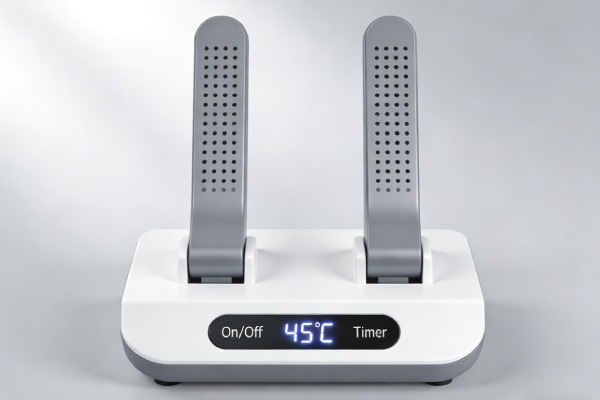
During or after a normal drying cycle, you notice a strong, acrid odor of burning plastic or hot electronics coming from the unit. Upon inspection, you find physical deformation—specifically, one or more of the plastic extension arms are warped, softened, or have visible melted spots. The plastic may feel sticky or have lost its rigidity. The deformation prevents the arms from folding properly or causes them to sag under the weight of a boot.
This often occurs during overnight drying or when drying heavy, insulated boots.
Confirm it’s this failure: This is not just a warm plastic smell from first use. The key identifier is physical material change (melting) paired with the odor. The melting is typically localized to areas closest to the heater box or along the arm’s hinge points. If the unit still powers on, the affected arm(s) will be noticeably hotter to the touch than others.
2. Most probable failure causes (ranked)
- Cause #1 (80% of field cases): Failed Thermal Cutoff or Safety Thermostat. The primary bi-metallic thermostat, which should cycle the heater off around 120-140°F, has failed in the “closed” (always on) position. This allows the PTC heating element to run continuously, escalating temperatures beyond the plastic’s melting point (often exceeding 200°F).
- Cause #2 (15%): Blocked Airflow Leading to Thermal Runaway. The air intake or internal fan path is clogged with lint, dust, or debris. This reduces cooling airflow over the heater, causing heat to build up inside the plastic housing instead of being blown into the boots, leading to localized overheating and melting.
- Cause #3 (5%): Faulty PTC Heater or Wiring Insulation Failure. The Positive Temperature Coefficient (PTC) heating element itself has a internal fault, causing it to self-heat beyond its designed limit. Alternatively, a wiring short against the plastic housing creates a direct hot spot.
3. Quick diagnostic checks (no disassembly)
- The “Cold Start” Test: With the unit unplugged and completely cold, plug it in and turn it to heat mode without placing any boots on it. Place your hand near the air outlets. Within 2-3 minutes, you should feel warm air. If you feel excessively hot air (painful after 3-5 seconds) or smell burning plastic quickly, the thermostat has failed (Cause #1).
- The “Airflow Check”: With the unit on fan-only mode (no heat), feel the airflow from each outlet. It should be consistent and forceful. If one arm has significantly weaker airflow, it indicates an internal blockage in that arm (Cause #2).
- Visual Inspection of Vents: Check all air intake grilles on the main body for a dense layer of dust, pet hair, or fabric lint. Significant blockage points to Cause #2.
4. Deep diagnostic steps
WARNING: Unplug the unit and let it cool for at least one hour. Melted plastic can be hot and release toxic fumes. Work in a well-ventilated area.
- Access the Heater Chamber: Remove the main body’s rear or bottom panel (usually held by screws under rubber feet). Locate the thermal cutoff and primary thermostat. They are small, disc-shaped components clipped to or near the metal heater housing.
- Continuity Test: Using a multimeter, test the thermal cutoff and thermostat for continuity. They should be “closed” (show continuity) when cold. If they show “open” (no continuity) when at room temperature, they have failed and are the cause. However, a failed “closed” is more dangerous but harder to detect with a simple meter; it requires observing the heater’s uncontrolled operation.
- Inspect the Fan and Ducts: Check the internal fan for obstructions and ensure the plastic air ducts leading to the arms are not collapsed or melted shut from previous overheating events.
- Common Misdiagnosis Trap: Do not assume a melted arm is the only problem. The root cause is inside the main unit. Replacing just the arm will result in the new arm melting.
5. Component-level failure explanation
The thermal cutoff and thermostat are safety-critical, non-wear parts that should never fail under normal use. Their failure is a catastrophic quality defect. The bi-metallic disc inside can weld itself shut due to electrical arcing across its contacts during cycling. This is a random component failure but indicates poor quality control. The plastic arms are not designed to be structural at high temperatures; they are typically ABS or polystyrene with a low glass transition temperature. When exposed to sustained heat over 180°F, they deform under their own weight or minimal load. This is an irreversible material degradation.
6. Repair difficulty and repeat-failure risk
- Skill Level: Moderate. Replacing a thermal cutoff is simple if you can source an exact replacement with the correct temperature rating. Clearing blockages is easy.
- Repeat-Failure Risk: Extremely High. If the original safety device failed, the replacement from the same batch may have the same flaw. More critically, the uncontrolled overheating event likely degraded the PTC heater’s internal structure, meaning even with a new thermostat, the heater may not regulate properly. The melted plastic ducts also permanently impair airflow.
- Hidden Secondary Damage: The excessive heat has likely embrittled wiring insulation throughout the unit, created stress cracks in solder joints on the control board, and degraded the fan motor bearings.
7. Repair vs replace decision threshold
Do not attempt repair if:
- There is any visible melting or deformation of plastic components. This proves the unit has already operated in an unsafe state, and its entire thermal management system is compromised.
- The unit is over 1 year old. The cost of a proper repair (new thermostat, new PTC heater, new arms) will exceed the cost of a new unit, and reliability will be unknown.
- You are not comfortable working with mains-voltage components and diagnosing safety circuits.
Replacement is the only safe recommendation. This is a critical safety failure. The unit cannot be trusted.
8. Risk if ignored
Extreme fire hazard. A unit that has already melted plastic has demonstrated an ability to reach ignition temperatures for common household materials (paper, dust, carpet). Continued use risks electrical short circuit, ignition of the unit itself, or ignition of nearby combustibles. It also poses a burn hazard and will certainly ruin any gear placed on it.
In fire investigations involving small appliances, prior plastic deformation is a common precursor.
9. Prevention advice (realistic)
- What Actually Works: Nothing, once this failure has occurred. Prevention is only possible with a non-defective unit. For a new unit, ensure intake vents are cleaned of dust before each use and always run it on a hard, non-flammable surface.
- What Doesn’t Work: “Using it on a lower setting” does not help if the thermostat is failed closed. “Only using the fan” avoids heat but ignores that the failure is mechanical/electrical. “Bending the arm back into shape” does not restore material integrity.
10. Technician conclusion
On-site, when we see melted plastic, we immediately declare the unit a safety hazard and recommend disposal. We do not offer repairs for this failure due to liability and the impossibility of verifying the integrity of the remaining components. The most common regret we hear is, “I thought it was just a weird smell from breaking it in.” The smell of melting plastic is a definitive warning sign that should never be ignored. Our decisive judgment is absolute: A boot dryer that has melted or deformed due to overheating is unfit for service and unsafe to plug in again. Unplug it, cut the cord to prevent reuse, and dispose of it. Your only subsequent action should be to seek a refund or replacement from the retailer/manufacturer, understanding that this model line has a demonstrated safety defect. Do not purchase the same model again.