
Why Is My Electric Blanket Blinking Light?
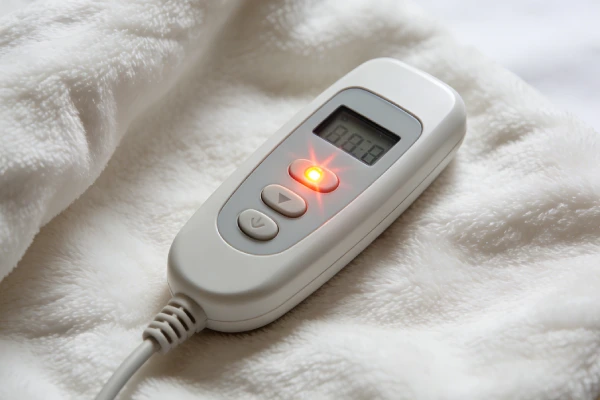
A blinking light on an electric blanket usually indicates a controller fault, loose connection, or safety shutdown due to overheating. Unplug the blanket for 10 minutes to reset it. If blinking continues, the controller may need replacement.
Search Intent Opening
If your electric blanket’s controller light is blinking erratically, heating coils have stopped working in sections, or the heat weakens during use, you’re dealing with common issues that affect these products over time. Owners searching for “electric blanket blinking light,” “electric blanket not heating,” or “electric blanket cold spots” are often trying to figure out whether the problem is in the controller or the blanket itself—and whether repair or replacement makes more sense.
This guide is based on appliance repair technician reports, consumer reviews across major retail platforms, and product design observations from multiple electric blanket models. Heating element failures and controller issues are frequently reported in brands including Sunbeam and Biddeford, particularly after extended use.
Author: Appliance Repair Technician | Experience: 12 years in small appliance diagnostics
Electric Blanket Blinking Light Causes
1. Controller Electronics Failure
The most common reason for a blinking light is failure of the control unit’s internal electronics.
- Component: Control unit PCB, capacitors, microcontrollers
- Mechanism: Component failure, poor solder joints, or power surges can cause erratic behavior
- Trigger: Normal use, power fluctuations, age (1-3 years)
- Result: Blinking light, unresponsive buttons, inability to adjust settings
What users report: Controller issues often manifest as blinking lights or complete unresponsiveness, sometimes after only months of use.
2. Loose Connection Between Controller and Blanket
A loose or poor connection can cause intermittent power and blinking indicators.
- Component: Connector pins, socket contacts
- Mechanism: Poor contact triggers fault detection in the controller
- Trigger: Movement, tugging on cords, partial disconnection
- Result: Blinking light, intermittent heating, complete shutdown
3. Safety Shutdown Indication
Some electric blankets blink to indicate a safety-related shutdown.
- Component: Thermal sensors, control logic
- Mechanism: Overheating detection or internal fault triggers shutdown with blinking indicator
- Trigger: Blocked airflow, folded blanket, internal fault
- Result: Unit stops heating, light blinks to indicate fault
4. Power Interruption Recovery
Brief power outages can cause some controllers to enter a fault state with blinking lights.
- Component: Power supply, control logic
- Mechanism: Loss of power corrupts controller state
- Trigger: Power outage, unplugging while running
- Result: Blinking light upon power restoration
Electric Blanket Not Heating (Cold Spots)
Partial Heating Failure
After months or years of use, sections of the blanket may stop heating while other areas continue to work.
- Component: Resistive heating wires embedded in the blanket
- Mechanism: Wires can break due to repeated flexing, folding, or age. Once broken, that section will not heat.
- Trigger: Frequent folding for storage, body weight and movement, washing
- Result: Cold spots or zones where the blanket no longer heats
What users report: “After a couple of months the heating coils begin to stop working.” “Now 1/3 of the twin size blanket becomes heated.”
Incomplete Heating Coverage (Design)
Some blankets are designed with heating wires that don’t extend to the edges, leaving large unheated areas.
- Component: Heating wire layout design
- Mechanism: Manufacturing choice to reduce cost or simplify construction
- Trigger: From first use
- Result: Large portions of the blanket remain cold
What users report: “The Full size blanket only has heating wires through roughly the middle half of the blanket.” “About 18 inches on each side have no heating wires.”
Electric Blanket Heat Weakens Over Time
Heat Degradation During Use
Some blankets gradually lose heat intensity during continuous use, requiring restart to restore warmth.
- Component: Heating element, controller regulation
- Mechanism: Temperature regulation may drift; controller may reduce power over time
- Trigger: Extended continuous use
- Result: Noticeable decrease in warmth after hours of use
What users report: “The longer it is on, the heat becomes not as noticeable.” “When I notice the heat lowering in temp, I just turn it off, & then back on.”
Insufficient Heat Output
Some users find the blanket simply doesn’t get warm enough, even when functioning normally.
- Component: Overall heating element wattage
- Mechanism: Lower-power elements produce less heat
- Trigger: Design choice
- Result: Blanket feels less warm than expected
What users report: “I wish it was a little much more heat.” “What the previous reviews say about it not holding the heat seems to be a tad bit true.”
Electric Blanket Controller Issues
Awkward Controller Position
The location where the controller connects can make the blanket inconvenient to use.
- Component: Cable attachment point
- Mechanism: Design choice places connection at foot of bed
- Trigger: Every use
- Result: Cables must be routed across the bed; controls hard to reach
What users report: “The warming controls… connect in at the foot of the bed and have to be brought up to the head of the bed.” “I think it would be more convenient to have the connection near the top.”
Button Responsiveness Problems
Some controllers require multiple presses or become completely unresponsive.
- Component: Tactile switches, control board
- Mechanism: Switch wear, poor contacts, electronics failure
- Trigger: Normal use, age
- Result: Difficulty changing settings, frustration
Electric Blanket Fabric and Durability Issues
Fabric Pilling / Surface Wear
The fabric surface can pill or deteriorate quickly during normal use.
- Component: Fabric material
- Mechanism: Low-quality fibers break and ball up on surface
- Trigger: Normal use, washing
- Result: Unsightly pilling, reduced comfort
What users report: “The fabric picked all over it within the first 2 days.” “I would not purchase this one again due to how the fabric gets picked so quickly.”
Fabric Thickness Reduced
Newer versions of some blankets may be thinner than older models.
- Component: Fabric construction
- Mechanism: Cost reduction measures
- Trigger: Design change
- Result: Less plush, potentially less durable
What users report: “The newer one… is very thin.” “It’s not heavy and thick like the other one.”
Chemical Odor When New
New blankets may emit chemical smells when first unpacked.
- Component: Manufacturing residues, packaging materials
- Mechanism: Off-gassing from materials
- Trigger: First use
- Result: Unpleasant odor that typically fades
What users report: “There was a small amount of a chemical scent.”
How to Fix Electric Blanket Blinking Light
Step 1: Perform a Hard Reset
- Unplug the blanket completely from the wall outlet
- Wait 10-15 minutes for internal capacitors to discharge
- Plug back in and check if blinking stops
Step 2: Check All Connections
- Disconnect the controller from the blanket
- Inspect connector pins for damage or debris
- Reconnect firmly until you hear/feel a click
- Ensure the wall plug is fully inserted
Step 3: Test on a Different Outlet
- Try a different wall outlet to rule out power issues
- Avoid extension cords or power strips
Step 4: Inspect for Physical Damage
- Check the cord for cuts, kinks, or fraying
- Look for burn marks on the controller
- Examine the blanket for visible damage
Step 5: Check for Overheating
- Ensure the blanket isn’t folded or bunched
- Allow it to cool completely before retrying
- Some models have automatic reset after cooling
Step 6: Contact Manufacturer for Warranty
- If the blanket is under 3 years old, check warranty coverage
- Many brands offer replacement for controller failures
- Have model number and purchase date ready
Electric Blanket Lifespan
| Usage Level | Expected Lifespan | Common Failure Mode |
|---|---|---|
| Light (occasional, seasonal) | 5-8 years | Age-related wire fatigue |
| Moderate (nightly, cold months) | 3-5 years | Heating element failure |
| Heavy (year-round, nightly) | 2-4 years | Controller issues, wire breakage |
What affects lifespan:
- Frequency of use
- Storage practices (folding vs rolling)
- Body weight and movement
- Washing frequency and method
- Quality of components
Repair or Replace Electric Blanket
When to Replace the Controller
Consider replacing just the controller if:
- The blanket is less than 3 years old
- The blanket itself heats evenly with no cold spots
- The manufacturer sells replacement controllers ($20-50)
- The problem is isolated to the control unit
When to Replace the Entire Blanket
Consider full replacement if:
- Heating elements have failed (cold spots, partial heating)
- Multiple issues are present
- The blanket is more than 3-5 years old
- Replacement controllers are unavailable
- Fabric has significant pilling or damage
- The cost of a new controller is over 60% of a new blanket
Warranty Considerations
- Most electric blankets have 1-3 year warranties
- Some premium brands offer 5-year coverage
- Keep receipts and register your product
- Contact manufacturer first for in-warranty issues
How to Prevent Electric Blanket Failure
Proper Storage
- Roll the blanket loosely; never fold sharply
- Store in a cool, dry place
- Avoid placing heavy items on top of stored blankets
- Use the original packaging or a fabric storage bag
Correct Use
- Always lay the blanket flat; never bunch or fold while in use
- Avoid sitting or lying on the blanket with sharp objects
- Keep pets off the blanket to prevent claw damage
- Don’t use with an infant, elderly, or immobile person
Washing Guidelines
- Follow manufacturer instructions exactly
- Use gentle cycle with mild detergent
- Air dry or use low heat; never high heat
- Ensure completely dry before use
Regular Inspection
- Check cords and controller for damage before each season
- Test all settings periodically
- Feel for cold spots developing
- Replace at first sign of wire breakage
Electric Blanket Safety Shutoff
Many electric blankets have built-in safety features that can cause blinking lights:
Overheat Protection
- Trigger: Blanket folded, bunched, or covered
- Response: Unit shuts off, light may blink
- Reset: Unfold, allow to cool, restart
Timer Shutoff
- Trigger: Automatic shutoff after set time (often 2-4 hours)
- Response: Unit turns off, light may behave normally
- Reset: Press power button to restart
Fault Detection
- Trigger: Internal malfunction detected
- Response: Unit shuts off, light blinks in pattern
- Reset: Unplug 10 minutes; if persists, replace
Electric Blanket Heating Wire Layout
Understanding how heating wires are arranged helps diagnose problems:
Full Coverage Design
- Wires extend across entire blanket surface
- No unheated edges
- Cold spots indicate wire breakage
Partial Coverage Design
- Wires only in center portion
- Several inches on each side unheated
- This is intentional, not a defect
- Check specifications before buying
Zoned Heating
- Different zones for different areas
- May have more wires in foot area
- Can create perceived unevenness
Field Verification Tests (No Tools)
Test 1: Blinking Light Reset Test
- Unplug blanket completely for 10 minutes
- Plug back in and observe light behavior
- Expected: Light returns to normal operation
- Failure: Blinking persists—controller issue
Test 2: Connection Test
- Disconnect and reconnect controller from blanket
- Ensure firm click when connecting
- Expected: Secure connection, normal operation
- Failure: Loose connection may cause blinking
Test 3: Heat Distribution Test
- Run blanket on high for 30 minutes
- Feel across entire surface systematically
- Expected: Even warmth throughout heated area
- Failure: Cold spots indicate wire breakage
Test 4: Heat Sustain Test
- Run blanket for 3-4 hours
- Note if warmth decreases over time
- Expected: Consistent warmth
- Failure: Significant drop indicates regulation issue
Test 5: Button Response Test
- Press all buttons multiple times
- Note any unresponsiveness
- Expected: Consistent response
- Failure: Some settings unavailable—controller wear
Real-World Usage Failure Scenarios
Scenario 1: The Blinking Controller
- User: Nightly use
- Timeline: 14 months
- Issue: Controller light started blinking; blanket won’t turn on
- Cause: Controller electronics failure
- Outcome: Replaced under warranty; new controller worked
Scenario 2: The Partial Heating Failure
- User: Couple, nightly use
- Timeline: 8 months
- Issue: One-third of blanket stopped heating
- Cause: Heating wire breakage
- Outcome: Blanket replaced
Scenario 3: The Heat Weakening Problem
- User: Single user, overnight use
- Timeline: 6 months
- Issue: Heat decreases after 2-3 hours; restart fixes temporarily
- Cause: Controller regulation issue
- Outcome: Returned; bought different model
Scenario 4: The Cold Edges Surprise
- User: New owner
- Timeline: First use
- Issue: 18 inches on each side don’t heat
- Cause: Design choice (incomplete wire coverage)
- Outcome: Returned; bought full-coverage model
Scenario 5: The Fabric Pilling Problem
- User: Regular use
- Timeline: 2 days
- Issue: Fabric pilled all over surface
- Cause: Low-quality material
- Outcome: Returned; chose different brand
Scenario 6: The 18-Month Failure
- User: Seasonal use
- Timeline: 18 months
- Issue: Blanket completely dead
- Cause: Heating element or controller failure
- Outcome: Replaced with new blanket
Common Misdiagnosis Patterns
Misdiagnosis 1: “Blinking light means broken controller” → Connection issue
- Symptom: Blinking light
- Actual cause: May be loose connection between controller and blanket
- Verification: Unplug and reconnect securely; test
Misdiagnosis 2: “Partial heating means defective blanket” → Design limitation
- Symptom: Some areas don’t heat
- Actual cause: May be intentional design with unheated edges
- Verification: Check if cold areas are at edges (design) or random (failure)
Misdiagnosis 3: “Heat weakening means blanket is failing” → Normal regulation
- Symptom: Heat decreases over time
- Actual cause: Some blankets are designed to cycle temperature
- Verification: Monitor pattern; if restart restores heat, may be normal
Misdiagnosis 4: “Not warm enough means broken” → Low wattage design
- Symptom: Less heat than expected
- Actual cause: Blanket has lower wattage than previous models
- Verification: Check specifications; may be working as designed
Misdiagnosis 5: “Fabric pilling means defective” → Normal wear
- Symptom: Pilling on surface
- Actual cause: Low-quality fibers; common in budget blankets
- Verification: Compare to expectations; may be cosmetic only
Technician Notes
Based on repair observations:
- Blinking lights most often indicate controller electronics failure. Try resetting first; if persistent, replacement is usually needed.
- Partial heating is almost always broken wires in the blanket. This cannot be repaired.
- Heat that weakens over time may be normal regulation. Some blankets cycle temperature to prevent overheating.
- Fabric pilling is cosmetic but indicates lower quality. Higher-end blankets use better materials.
- Controller replacements are worth checking. Some manufacturers sell them separately, extending blanket life.
- When one section fails, the whole blanket needs replacement. Heating elements can’t be patched.
- For heavy use, expect 2-4 years. Budget accordingly.
Early Warning Signs
Controller behavior:
- Lights start blinking intermittently
- Buttons become less responsive
- Settings don’t match actual heat
Heating changes:
- Takes longer to warm up
- Cold spots developing
- Heat drops during use
Fabric condition:
- Pilling starting
- Thinning noticeable
- Washing instructions confusing
Frequently Asked Questions
Why is my electric blanket light blinking?
The most common causes are controller electronics failure, loose connections, or safety shutdown. Try unplugging for 10 minutes to reset. If blinking persists, the controller may need replacement.
How do I reset my electric blanket controller?
Unplug the blanket completely for 10-15 minutes. This allows internal capacitors to discharge and often resets the controller. Plug back in and test.
Why does only part of my electric blanket heat up?
This usually indicates broken heating wires in the unheated sections. If the cold areas are at the edges, it may be intentional design with incomplete wire coverage.
Why does my electric blanket heat weaken over time?
Some blankets are designed to regulate temperature and may cycle heat. If restarting restores warmth, this may be normal operation. If heat consistently drops, the controller may be failing.
Can I replace just the controller on my electric blanket?
Some manufacturers sell replacement controllers separately. Check your model number and contact the manufacturer. Replacement typically costs $20-50.
How long do electric blankets last?
Typically 3-5 years with regular use. Heavy nightly use may reduce lifespan to 2-4 years. Controller issues can happen earlier; heating element failures usually occur after 2-3 years.
Is it safe to use an electric blanket with a blinking light?
A blinking light often indicates a fault. Unplug the blanket and diagnose the issue before continued use to avoid potential safety risks.
Why are the washing instructions so complicated?
Electric blankets have specific care requirements to protect the wiring. Follow them carefully to avoid damaging the heating elements.
What should I look for in a new electric blanket?
Look for full-surface heating, good reviews for longevity, quality fabric, convenient cord placement, and available replacement controllers.
How do I store my electric blanket in summer?
Roll loosely, never fold sharply. Store in a cool, dry place away from heavy items that could compress the wiring.
Summary
Electric blankets typically fail in predictable ways:
- Blinking light → controller electronics failure or connection issue → try reset; replace controller if available
- Partial heating → heating wire breakage → replace blanket
- Heat weakens over time → normal regulation or controller issue → monitor; replace if worsening
- Not warm enough → low wattage design → choose higher wattage next time
- Fabric pilling → low-quality material → cosmetic issue; choose better quality
- Unheated edges → design choice → check before buying
Most electric blankets last 3-5 years with regular use. Controller issues can happen earlier. When heating elements fail, the blanket needs replacement. If the controller fails and replacements are available, that’s a more economical fix.
Quick Reset Procedure:
- Unplug blanket for 10-15 minutes
- Check all connections
- Plug back in and test
- If blinking persists, controller likely needs replacement
Understanding these patterns helps you diagnose problems quickly and decide whether to repair or replace your electric blanket.