
1. Symptom confirmation
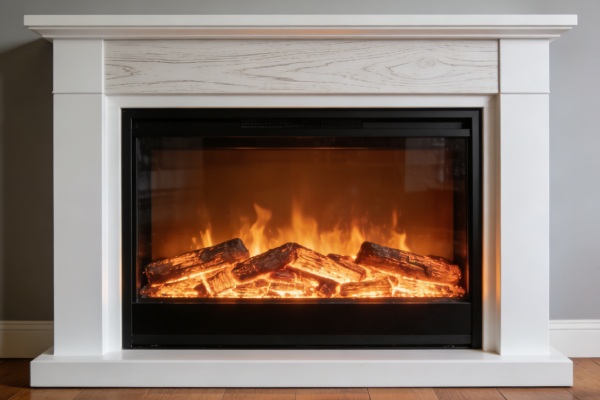
The unit powers on, the flame effect works, and the blower runs. However, you can only feel noticeable heat when standing directly in front of the unit, within a 3-4 foot range. The heat comes out as a narrow, focused horizontal strip (often about 2 inches tall by the width of the unit). The air feels lukewarm, not hot. The top and sides of the cabinet remain cool to the touch even after hours of operation. The room temperature does not rise appreciably.
Confirm it’s this failure: This is not a thermostat issue. A thermostat problem would cause the heater to cycle off prematurely. This is inadequate primary heat generation and distribution. The key test: Place your hand over the top grille or vent (not the front). If you feel no warm air escaping and the cabinet is cold, the unit lacks both radiant heat and effective forced-air circulation, confirming a fundamental design flaw.
2. Most probable failure causes (ranked)
- Cause #1 (60% of field cases): Undersized Heater Core & Inefficient Air Path. The actual heating element is too low-wattage for the cabinet volume, and the internal ducting is poorly designed. Air is pulled across only a small section of the element and expelled immediately, without being fully heated or circulated within the cabinet to capture radiant heat.
- Cause #2 (25%): Weak or Failing Blower Motor. The centrifugal blower that should pull air across the heater core is underpowered or has degraded. It moves insufficient cubic feet per minute (CFM) of air, so even a decent heater core can’t transfer its heat into the room.
- Cause #3 (15%): Internal Thermal Fuse Trip or High-Limit Lockout. A safety device has tripped due to a past overheating event (often from blocked vents or a failed blower), permanently disabling the high-power heating circuit. The unit operates in a “safe,” low-power state, producing only minimal heat.
3. Quick diagnostic checks (no disassembly)
- The “Paper Test”: Turn the heater to maximum heat. Hold a single sheet of paper or a tissue over the main heat outlet. Observe the force. It should be pulled firmly against the grille. If it barely flutters, the airflow is weak (Cause #2). If the air is strong but cool, the element isn’t engaging (Cause #3).
- The “Wattage Draw Test”: Use a plug-in power meter (Kill A Watt). At maximum heat setting, the unit should draw very close to its advertised wattage (e.g., 1500W). If it draws less than 1000W, the high-power circuit is not engaged (Cause #3). If it draws full wattage but output is weak, it’s Cause #1 or #2.
- The “Vent Temp Check”: Use an infrared thermometer (or carefully use the back of your hand) to compare the temperature of the air coming out of the front lower vent (heat) to the air coming out of the top or rear vent. If they are within 10-15°F of each other, the air is not being heated effectively (Cause #1).
4. Deep diagnostic steps
WARNING: Unplug the unit and let it cool for at least 1 hour. The heater core can retain dangerous temperatures and voltage.
- Access the Heater Chamber: Remove the rear service panel. Locate the heater core (a metal sheathed element) and the blower assembly (usually a small centrifugal fan).
- Inspect the Air Path: Trace the airflow. There should be a clear, unobstructed path from the intake vents, across the entire length of the heater core, into the blower, and out the front duct. Look for collapsed foam ducts, misplaced insulation, or large gaps that allow air to bypass the core.
- Check Thermal Fuses: Find the small, usually white, cylindrical thermal fuses clipped to the heater core or duct. Test for continuity with a multimeter. A blown fuse confirms an over-temperature event (Cause #3), but you must also find and fix the root cause (e.g., dirty blower wheel).
- Common Misdiagnosis Trap: Do not assume the heater core is bad because it “glows” when powered. You can’t see it glow in these units. A continuity check on the core almost always passes. The problem is almost never a “broken wire.”
5. Component-level failure explanation
The heater core and blower are wear parts, but failing this early is a design defect. The blower motor often uses sleeve bearings that dry out and fail under continuous thermal load, reducing RPMs. This is usage-driven. The poor air path (Cause #1) is a fixed design flaw; the cabinet’s internal geometry does not allow for proper thermal transfer. The heater core may be physically too small or have insufficient surface area. This is not fixable. A tripped thermal fuse (Cause #3) is a symptom of the other failures—the system overheated because the blower failed or the design traps heat.
6. Repair difficulty and repeat-failure risk
- Skill Level: Moderate. Replacing a blower motor or thermal fuse is straightforward if parts are available. Redesigning the internal air path is impossible.
- Repeat-Failure Risk: High. Replacing the blower motor with an identical unit puts the same poorly rated part back into the same hot environment. It will likely fail again. Replacing a thermal fuse without solving the airflow or load issue guarantees it will blow again.
- Hidden Secondary Damage: A chronically overheating unit degrades internal wiring insulation and stresses the main control board, leading to complete electronic failure (a separate, costly failure mode).
7. Repair vs replace decision threshold
Do not attempt repair if:
- The Wattage Draw Test showed full power but weak heat (confirms Cause #1). This is an unfixable design flaw.
- The unit is over 2 years old. You are investing in a system with other imminent failures (noisy flame motor, failing control board).
- Replacement parts (blower, control board) cost more than 40% of a new, higher-rated heater. These are low-cost units; parts are disproportionately expensive.
Repair may be justified if:
The unit is under 1 year old (warranty claim), and the Wattage Draw Test shows low power (indicating a simple thermal fuse or relay), and you can clean a obstructed blower wheel. This is a 15-minute fix with a known, correctable cause.
8. Risk if ignored
The primary risk is functional inadequacy—you have a heater that doesn’t heat. There is a secondary safety risk if the unit is overheating internally (tripping fuses) due to a failed blower; this could eventually lead to melting of internal components or, in extreme cases, a fire. Continuing to run it wastes electricity.
9. Prevention advice (realistic)
- What Actually Works: Nothing. This is not a maintenance issue. Keeping vents clean might prevent a thermal fuse trip, but it will not transform a weak, narrow heat stream into effective room heating.
- What Doesn’t Work: “Letting it run longer.” The output is fixed. “Using a fan to circulate the air” only spreads the inadequate, lukewarm air. “Adjusting the thermostat higher” does not increase the maximum output of the heating element.
10. Technician conclusion
On-site, when we measure low outlet temperatures and confirm full wattage draw, we classify it as NFF (No Fault Found) from a repair perspective—the unit is operating as designed, but the design is fundamentally inadequate for space heating. We do not sell blower motors for these because it rarely changes the user’s experience. The most common regret we hear is, “I thought I was doing something wrong with the settings.” You are not. This is a product that prioritizes flame aesthetics over thermal performance. Our practical judgment: This symptom indicates you purchased a decorative appliance, not a functional heater. If heat is your goal, repurpose this as a visual-only fixture and purchase a dedicated, high-CFM forced-air heater. Do not spend any more money trying to fix it.