
1. Symptom confirmation
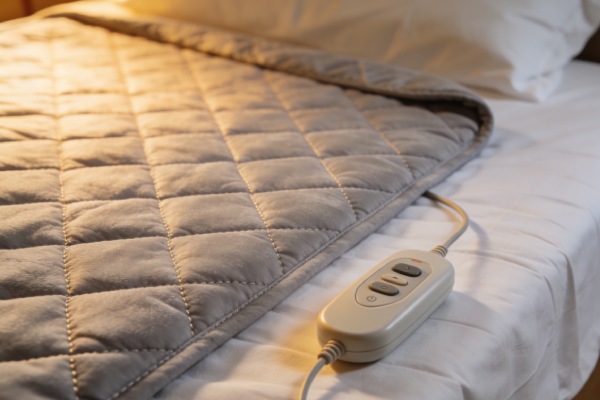
You notice a strong odor of hot plastic or burning electronics near the controller unit. The plastic case of the controller feels excessively hot to the touch—too hot to hold comfortably—even when the pad is set to a low heat or has been powered off for some time. You may see physical distortion of the plastic (warping, bubbling) or find a clear, sticky, or oily fluid that has leaked from the controller onto the floor or nightstand.
Confirm it’s this failure: This is not normal warm operation. The key identifier is excessive heat generation independent of the pad’s setting. If the controller is hot while the pad itself remains cool, the fault is isolated to the controller. The smell is distinct from a dusty heater smell; it is the scent of overheating capacitors or melting plastic insulation.
2. Most probable failure causes (ranked)
- Cause #1 (70% of field cases): Failed Triac or Power Relay. The solid-state component that switches AC power to the heating pad fails in a partially “on” state or develops a high-resistance short. This causes it to dissipate massive heat internally, overheating the entire controller board and surrounding plastic.
- Cause #2 (20%): Electrolytic Capacitor Failure. Large filter capacitors on the controller’s power supply board have dried out, bulged, and leaked their electrolyte (the sticky fluid). This causes a short circuit, increasing current draw and heat, and can lead to further component failure.
- Cause #3 (10%): Poor Internal Thermal Design / No Heat Sinking. The high-current switching components are mounted directly to the circuit board without a proper metal heat sink, causing heat to build up and eventually desolder connections or melt adjacent components.
3. Quick diagnostic checks (no disassembly)
- The “Unplug Test”: Unplug the controller from both the wall and the mattress pad. Let it cool for 2 hours. If it still smells strongly of burnt electronics when cold, internal components are permanently damaged (Cause #1 or #2).
- The “Independent Heat Check”: Feel the low-voltage cable running from the controller to the pad. If the controller is extremely hot but this cable is cool, the fault is absolutely within the controller, not the pad.
- Visual Inspection: Examine the controller casing for hairline cracks, bulging sides, or discoloration (yellow/brown spots). These are signs of prolonged internal overheating.
4. Deep diagnostic steps
WARNING: DO NOT OPEN THE CONTROLLER IF YOU SUSPECT LEAKING FLUID OR BURNT SMELL. The leaked electrolyte is corrosive and potentially toxic. If you must proceed, wear gloves and safety glasses.
- Internal Visual (If No Leak): Carefully open the controller case (usually snaps or screws). Look immediately for bulging or leaking cylindrical capacitors (Cause #2). Look for charred or discolored areas on the green circuit board, especially near large, flat components with three leads (the Triac – Cause #1).
- Smell Location: The source of the burnt smell will often be a single, visibly damaged component. A blown capacitor smells fishy or sugary. A burnt semiconductor (Triac) smells acrid and sharp.
- Common Misdiagnosis Trap: Do not assume the problem is a “bad connection at the pad.” A high-resistance connection there would cause a hot plug, not an overheated controller. The controller’s own internal failure is the primary culprit.
5. Component-level failure explanation
The Triac/relay and electrolytic capacitors are wear parts with a finite lifespan dictated by thermal cycling. Failure is usage-pattern and age-driven. Each time the thermostat cycles the pad on/off, the Triac switches a high inrush current (8-12 amps). Cheap Triacs have inadequate current ratings and fail under this repetitive stress. Electrolytic capacitors dry out over time, especially when mounted near these heat-generating components. This is a thermal runaway failure: heat degrades the capacitor, which fails and causes more heat, killing the Triac.
6. Repair difficulty and repeat-failure risk
- Skill Level: High. Requires component-level electronics repair, soldering skills, and sourcing the exact replacement semiconductor and capacitors.
- Repeat-Failure Risk: Very High. Replacing the failed components does not address the root cause: an under-specified Triac and poor board layout that traps heat. The new parts will be subjected to the same hostile environment and often fail within 6-12 months.
- Hidden Secondary Damage: The excessive heat can degrade wiring insulation inside the controller, weaken solder joints on other components, and damage the thermostat sensing circuitry, leading to inaccurate temperature control.
7. Repair vs replace decision threshold
Do not attempt repair if:
- There is any visible leaking fluid or melted plastic. The board is contaminated and future reliability is zero.
- You are not proficient with mains-voltage electronics. This is a 120V AC device; mistakes can cause shock or fire.
- The controller is more than 2 years old. The pad itself is likely nearing the end of its safe service life, and investing in the controller is a sunk cost.
Replacement of the entire controller/pad set is the only safe and economical path. A standalone OEM controller often costs 50-70% of a new pad. Aftermarket universal controllers are not recommended for safety reasons.
8. Risk if ignored
Extreme fire hazard. A failed Triac can progress to a dead short, drawing maximum current continuously, overheating wires, and potentially igniting the controller casing or nearby combustibles (bedding, carpet). The leaked electrolyte is also conductive and can create short circuits on the board. Continuing to use or plug in a controller displaying these symptoms is dangerous.
9. Prevention advice (realistic)
- What Actually Works: Nothing. This is a component quality and design flaw. User behavior cannot prevent it.
- What Doesn’t Work: “Using a lower setting” does not reduce stress on the power-switching components; they still carry full current when on. “Unplugging it after use” may reduce total on-time but does not prevent the failure from eventual thermal cycling fatigue.
10. Technician conclusion
On a service call for this, we immediately unplug the controller, tag it as a fire hazard, and recommend disposal. We do not open or repair these units due to liability and the high recurrence rate. The most common regret we hear is, “I unplugged it and let it cool down, then used it again until it got hot the next night.” This is how fires start. Our decisive judgment: An overheating controller is a critical failure. It is not a repairable item for the end-user. Your only actions are: 1) Unplug it permanently. 2) Contact the manufacturer for a warranty claim if eligible. 3) If out of warranty, purchase a new mattress pad from a different brand/model line, as this indicates a systemic fault. Do not risk reusing it.