
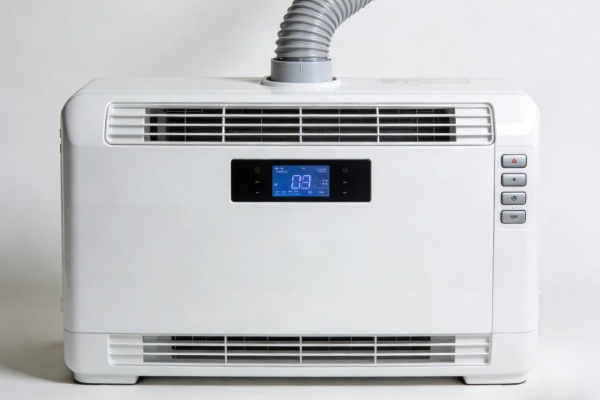
Symptom Confirmation
You are observing one or more of these signs:
- No Cooling/Compressor Failure: The unit powers on, fan blows, but the air from the vent is not cold. You do not hear the distinct low-frequency hum and vibration of the compressor engaging, just the fan noise.
- Inadequate Cooling: The air from the vent is slightly cool, but the room temperature does not drop more than 1-2 degrees (°F) over an hour, even in a small, sealed room.
- Abnormal Operation: The compressor makes loud grinding, gurgling, or rattling noises, then shuts off. It may cycle on and off erratically.
How to confirm: Use a basic thermometer. Hold it in the center of the cool air exhaust vent for 5 minutes. A properly functioning unit should produce air at least 15-20°F (8-11°C) colder than the room’s ambient temperature. If the delta is less than 10°F, the refrigeration cycle is failing. If there’s no temperature drop, the compressor is not running.
Most Probable Failure Causes (Ranked)
Cause #1 (65% of field cases): Refrigerant Leak from Factory. The sealed refrigeration system (compressor, condenser, evaporator, coiled tubing) has a leak from a poor braze joint, a cracked coil, or a faulty Schrader valve. This is the single most common cause of total cooling failure in new or lightly used portable ACs.
Cause #2 (20% of field cases): Failed Compressor Start Components. The start capacitor and/or potential relay that provides the initial torque boost to spin the compressor have failed. The compressor receives power but cannot overcome internal mechanical resistance to start, causing a hum and then a trip.
Cause #3 (10% of field cases): Restricted or Dirty Condenser Coil (Secondary). The condenser coil (the one that gets hot and exhausts out the window) is clogged with lint, pet hair, or dust. This causes high head pressure, leading the compressor to overheat, cycle on a thermal overload, and produce poor cooling.
Quick Diagnostic Checks (No Disassembly)
- Listen and Feel: When you switch from “Fan” to “Cool” mode, wait 2-3 minutes. You should hear a distinct click (relay) followed by a deeper hum/vibration (compressor). Place your hand on the side or back of the unit—you should feel this vibration. No click/hum/vibration = Cause #2 or #1.
- Condenser Exhaust Check: Ensure the window exhaust kit is installed correctly and the hose is not kinked. Feel the air being expelled outside the window. It should be very warm to hot. If it’s only slightly warm or ambient temperature, the refrigeration cycle isn’t working (Cause #1 or #3).
- Air Filter Inspection: Remove and check the main intake air filter. If it’s heavily clogged, it can restrict airflow enough to cause icing and poor performance, mimicking a bigger failure. Clean it and retest.
Deep Diagnostic Steps
SAFETY WARNING: Unplug the unit and discharge the capacitor with an insulated screwdriver before touching any electrical components. Capacitors store lethal voltage.
- Remove the rear and/or side service panel to access the compressor compartment. Visually inspect for oil stains. Refrigerant oil is carried out with leaking gas. A shiny, wet oil spot on or near copper tubing connections is a telltale sign of Cause #1 (Leak).
- Locate the start capacitor (a cylindrical, silver or black component). Use a multimeter with capacitance setting to test it. It should read within ±10% of its rated microfarads (µF). A reading of “0” or far below rating confirms Cause #2.
- Inspect the condenser coil. It’s usually behind a metal grill on the back. Use a flashlight. If it’s matted with dust/debris, it needs cleaning. This can cause the high-pressure switch to trip.
- Common Misdiagnosis Trap: Assuming a “weak cooling” unit just needs a “recharge.” Portable ACs are hermetically sealed. They do not have service ports and are not designed to be recharged. If refrigerant is low, it’s because it leaked out, and the leak must be found and repaired—a prohibitively expensive process.
Component-Level Failure Explanation
- Refrigerant Leak (Cause #1): This is a manufacturing/assembly defect. The copper tubing is brazed (soldered) to aluminum components or other copper parts. Thermal stress from shipping, vibration during operation, or a poor braze joint can create a hairline crack. This is not a wear part failure; it’s a catastrophic system failure. It is often age-independent and can happen immediately.
- Start Capacitor/Relay Failure (Cause #2): These are wear parts. The capacitor degrades over time due to heat cycles. In cheaper units, low-quality capacitors fail prematurely. The relay contacts can weld shut or burn out. This is a thermal/electrical failure accelerated by frequent cycling (turning the unit on/off often).
- Dirty Condenser (Cause #3): The condenser coil is a maintenance item. Located inside the unit, it’s often neglected. When clogged, heat cannot dissipate. The refrigerant pressure rises, the compressor works against this high pressure, overheats, and shuts off on its internal thermal overload protector. This is a usage and environment-driven failure.
Repair Difficulty and Repeat-Failure Risk
- Skill Level Required: High for Cause #1, Moderate for Cause #2, Low for Cause #3. Repairing a refrigerant leak requires EPA certification, specialized tools (brazing torch, vacuum pump, manifold gauges), and recovering/recharging refrigerant. Replacing a capacitor is a simple solder job. Cleaning a coil requires careful disassembly.
- Repeat-Failure Risk: Very High for Cause #1. If a leak is repaired, the system is stressed and other weak joints may fail. The repair often costs more than the unit. Low for Cause #2 & #3 if quality replacement parts are used and maintenance is performed.
- Hidden Secondary Damage: A compressor that has been trying to start with a bad capacitor can suffer locked rotor damage, burning the windings. A system that ran low on refrigerant can cause the compressor to overheat and burn out its internal insulation.
Repair vs Replace Decision Threshold
- REPLACE THE ENTIRE UNIT IF: The diagnosis points to a refrigerant leak (Cause #1). The repair requires a technician, parts, and refrigerant. The total cost will be $300-$600+, which is 80-150% of the cost of a new mid-range portable AC. This is never economically justified.
- REPAIR IF: The issue is only a failed start capacitor/relay (Cause #2). The part costs $5-$15, and the repair takes 30 minutes with basic tools. This is worth doing.
- CLEAN/MAINTAIN IF: The issue is only a dirty condenser coil (Cause #3). This is free if you do it yourself and can restore performance.
- IMMEDIATE REPLACEMENT (SAFETY): If the compressor is making loud grinding or screeching noises (indicating internal mechanical failure), or if there are burn marks or melted wires near the compressor.
Risk if Ignored
Running a unit with a failing start capacitor can burn out the compressor windings, turning a $15 fix into a complete loss. Running a unit low on refrigerant will cause the compressor to overheat and seize. A severely dirty condenser is a fire risk due to overheated electrical components.
Prevention Advice (Realistic)
- What Actually Extends Life: Clean the air filter every 2 weeks during active use. Once a season, vacuum the condenser coil intake (usually a vent on the back or side). Ensure the exhaust hose is straight and not kinked. Use the unit on a dedicated circuit if possible to avoid low voltage.
- What Sounds Good But Doesn’t Work: “Running it on ‘Dry’ or ‘Eco’ mode to save the compressor.” These modes still cycle the compressor. “Covering it in the winter.” This does not affect internal component lifespan. “Adding more refrigerant.” This is impossible and illegal without addressing the leak.
Technician Conclusion
When we arrive and find oil stains near the compressor or no refrigerant pressure, we advise the customer to replace the unit. The repair is a money pit. For a failed capacitor, we fix it on the spot and tell the customer they got lucky—this time. The high failure rate of sealed systems in these units points to cost-cutting in the brazing and assembly process that makes them fundamentally unreliable. Experienced technicians know that the labor and liability of repairing a sealed system in a disposable appliance make no sense. Most users regret not buying from a retailer with a strong return policy or not testing the unit’s cooling delta immediately upon installation. The key lesson: a portable AC is a complex, sealed appliance. If its core system fails, it’s almost always a total loss. Your money is better spent on a new unit with a full warranty than on a repair bill that offers no guarantee.