
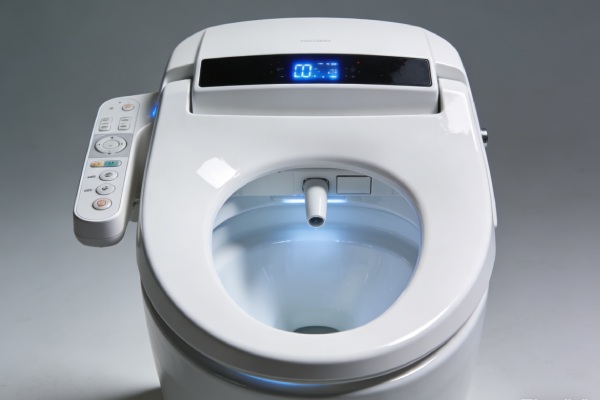
This guide is built from field failure data: repair logs, teardown analysis of failed units, and long-term performance degradation patterns, particularly in hard water environments. We de-prioritize marketing claims about luxury or wellness. Instead, we judge a bidet seat by what fails first: its internal hydraulics, its heating system, and its ability to withstand real-world water conditions. The goal is to equip you with the engineering logic to reject designs that are destined for early, non-serviceable failure.
Most Common Buyer Mistakes
Mistake 1: Focusing on Feature Count Over Core Hydraulic Design
Buyers compare lists of features (oscillation, pulsation, deodorizer) but ignore the pump technology, nozzle retraction mechanism, and water path materials. The failure outcome is Failure Mode 4 (Progressive Pressure Loss). A unit with a weak, non-serviceable diaphragm pump and narrow internal channels will lose pressure permanently within a year in hard water areas, rendering all features useless.
Mistake 2: Assuming “Easy Installation” Means Reliable Connections
The promise of a DIY install distracts from inspecting the quality of the water connection hardware. Accepting plastic T-valves and plastic inlet nuts to save 5 minutes of installation time is a critical error. The failure outcome is Failure Mode 1 & 2 (Hose Leakage & Plastic Hardware Failure). Plastic threads crack under cyclical stress from household water pressure fluctuations, leading to slow leaks that damage flooring and subfloor.
Mistake 3: Prioritizing Aesthetic “Cleanability” Over Actual Hygiene Design
A smooth, seamless exterior is marketed as “hygienic.” However, this often means the entire spray nozzle assembly is enclosed in a sealed shroud. The failure outcome is Failure Mode 12 (Hygiene-Unfriendly Geometry). Waste splash and mineral deposits accumulate in the inaccessible cavity around the nozzle, creating a permanent bacterial reservoir and foul odors (Failure Mode 11). The seat looks clean but is contaminating its own spray.
Mistake 4: Believing All Heating Systems Are Equal
Buyers see “warm water” and “warm air” as checkboxes. They fail to distinguish between tank-based and tankless (on-demand) water heating, and between a simple fan and a proper heating element for the dryer. The failure outcome is Failure Mode 6 (Short Warm Water Duration) and Mode 13 (Heating Component Failure). A small tank provides 30 seconds of warmth, followed by cold water. A cheap heating element for the dryer or water system burns out, leaving you with cold functions.
Marketing Claims That Mislead Buyers
- “Self-Cleaning Nozzle”: This almost always refers only to a superficial rinse of the nozzle surface before/after use. It does not mean the internal water pathways or pump are cleanable or protected from scale. This claim distracts from the terminal issue of internal calcification.
- “Energy Efficient”: In the context of heated seats and water, this often signals the use of a small thermal reservoir tank to reduce standby power. It hides the compromise of very limited warm water duration.
- “Luxury Spa Experience”: A purely emotional claim that obscures quantitative performance data. It says nothing about actual water pressure (measured in GPM or PSI), temperature consistency, or airflow volume from the dryer.
- “Advanced Deodorization”: Usually a small, replaceable carbon filter or an ozone generator. These are consumables with limited capacity. The claim distracts from fundamental hygiene design flaws that cause odor, trapping buyers in a cycle of buying replacement filters instead of solving the root cause.
Specs That Matter vs. Specs That Don’t
Specs That Matter (And Are Often Omitted):
- Water Pressure (GPM/PSI at the nozzle): The true output, not the input household pressure. It should be measurable and stated. Absence of this spec suggests weak performance.
- Heater Type (Tank vs. Tankless): Must be explicitly stated. Tankless (instantaneous) heating is superior for continuous warm water.
- Inlet Water Temperature Minimum/Maximum: The unit should list a safe operating range (e.g., 40°F – 104°F). Lack of this suggests poor thermal management of components.
- Power Consumption (in Watts) for Heated Functions: Not just “energy saving,” but the actual draw of the water heater and seat heater. This allows you to gauge capacity.
- Filter Micron Rating: If a water filter is included, what particle size does it stop? If not stated, it’s likely a basic sediment screen, not a meaningful filter.
Specs That Don’t (The Inflated Distractions):
- Number of Nozzle Positions: More positions are useless if the fundamental pressure is weak or the nozzle targeting is inaccurate (Failure Mode 10).
- Remote Control vs. Side Panel: An interface preference, not a reliability indicator. Both can be poorly made.
- “Several” User Profiles: A software feature on a control board. If the board loses memory (Failure Mode 14), profiles are meaningless. Reliability of the memory circuit is what counts.
- Seat Material (“PP Plastic”): This is standard. What matters is the thickness of the plastic and the rigidity of the seat hinge assembly to prevent Failure Mode 8 (Seat Instability).
Build Quality Signals
- Inlet Connection Hardware: The T-valve and the nuts that connect the hose to the seat must be metal (brass or stainless steel). Plastic here is an immediate disqualifier for long-term reliability.
- Weight: A heavier seat often indicates a larger, more substantial internal water tank (if tank-type) or more metal in the frame and heating elements. Light weight can signal hollow, thin construction.
- Hinge Sturdiness: With the seat detached, grip the seat and lid at the hinge and try to flex it laterally. There should be zero wobble or creaking. Play here leads to instability and misalignment.
- Nozzle Access/Visibility: Can you easily see the spray nozzles when extended? Is there a large, cleanable gap around them? A tightly sealed shroud is a future hygiene hazard.
Reliability Indicators
- Tankless Water Heating: Eliminates the small-tank duration problem and the constant thermal cycling of a tank heater, which is a common failure point.
- Separate, Field-Replaceable Pump Assembly: The water pump is a wear item. It should be a discrete module accessible by removing a panel, not molded into the seat’s main body.
- Mechanical Nozzle Retraction: A simple spring-driven retraction is more reliable than a micro-motor-driven mechanism, which can fail and leave the nozzle stuck out.
- Physical Control Buttons (on the side panel): Though less “high-tech,” dedicated physical buttons for core functions (wash, stop, seat heat) are more reliable over a decade than a touch-sensitive panel or a complex remote that can be dropped or lose battery contact.
Hidden Ownership Costs
- Consumables: Replacement carbon filters for deodorizers ($15-$30 each, 2-4 times per year), replacement water filters (if equipped).
- Maintenance: Professional descaling services are impossible for sealed units. You may be buying chemical kits in a futile attempt to address Failure Mode 4.
- Replacement Part Availability: For most units, the pump, heater, and main control board are not sold separately. Failure of any means replacing the entire seat.
- Energy Inefficiency: A tank-type heater maintaining 2-3 cups of water at 105°F 24/7 uses more energy than a tankless system, despite “efficiency” claims.
- Downtime & Inconvenience: When it fails, you have no bidet function. Repair turn-around is typically “replace the unit,” leaving you without the feature you paid for during the process.
When Cheaper Is Actually Worse
In bidet seats, low cost is achieved through specific, failure-prone engineering choices:
- Plastic Inlet Hardware: Saves $2. Guarantees a leak point within 2-3 years.
- Small, Sealed Diaphragm Pump: Saves space and cost. Cannot be descaled or repaired. Hard water destroys it.
- Tiny Thermal Tank for Water: Uses a small, low-watt heater. Results in Failure Mode 6.
- Non-Heated Air Dryer: Just a fan, which is useless for actual drying (Failure Mode 9). The “dryer” feature is a checkbox, not a function.
- Thin, Flexible Seat Plastic: Leads to Failure Mode 8 (Instability) and feels cheap.
When Premium Is Justified
A higher price is only justified if it buys tangible engineering that prevents the core failure modes:
- Tankless (Instantaneous) Water Heating: For unlimited warm water and a more reliable heater component.
- Full Metal Inlet Connections and Heavy-Duty Hose: Eliminates the most common physical failure point.
- Serviceable/Replaceable Pump and Filter Housings: Acknowledges that these parts wear and need replacement.
- Effective, Heated Air Dryer: With a dedicated heating element and sufficient airflow (CFM should be stated) to actually dry.
- Open, Cleanable Nozzle Bay: Designed for easy access and wiping to prevent biofilm and odor.
If the premium price only buys more LED lights, a fancy remote, or gimmicky spray patterns, it is not justified.
Pre-Purchase Inspection Checklist
In-Store / Physical Inspection (if possible):
- Ask to see the installation hardware kit. Immediately reject any seat where the T-valve or inlet nuts are plastic.
- Feel the weight. Compare two models. The heavier one likely has more robust internal components.
- Inspect the nozzle area. Can you see and touch the nozzles when extended? Is there a large gap for cleaning? If it’s a sealed hole, walk away.
- Test the hinge stiffness. Apply lateral pressure. Any flex indicates a weak point that will worsen.
- Check for a physical “stop” button. The most important safety feature should be a dedicated, hard button, not a touch icon.
Online Research (Before Buying):
- Search for “[Model Number] pump replacement”. If no results or only “whole unit replacement,” it’s a disposable design.
- Search for “[Model Number] hard water”. Read the experiences. If many report pressure loss within a year, the unit is unfit for most US water supplies.
- Find the official parts website. See if they sell pumps, heaters, and control boards. No parts = no repair path.
- Verify the heater type. The product description must explicitly say “tankless” or “instantaneous” water heating. If it says “warm water” without specification, assume it’s a tiny tank.
- Ignore “feature” lists. Focus your research on “durability,” “pressure over time,” and “repair.”
Decision Framework
- Classify Your Water: This is the most critical step. Do you have hard water (>7 grains per gallon)? If yes, your primary filter must be serviceable internal components. Tankless heating and a replaceable pump are non-negotiable.
- Apply Elimination-First Logic:
- Eliminate any seat with plastic inlet connection hardware.
- Eliminate any seat that does not explicitly state “tankless” or “instantaneous” water heating.
- Eliminate any seat where the nozzle area is fully enclosed and not cleanable.
- Eliminate any brand that does not sell individual replacement pumps and heaters on its parts website.
- Reinforce Long-Term Value: A $200 seat that fails from scale in 18 months costs $133 per year. A $600 seat with a replaceable pump that lasts 10 years costs $60 per year and allows a $100 pump replacement in year 6.
- Summary for Buyers
Most electric bidet toilet seats fail not because of electronics, but because of poor hydraulic design, non-serviceable pumps, and plastic inlet hardware. If a seat does not explicitly support hard water environments with tankless heating and replaceable components, it should be considered a disposable product. - Final Protective Buying Rule:
Only consider an electric bidet seat that uses all-metal inlet plumbing, has tankless water heating, and for which the manufacturer sells a replacement water pump as a separate part. If any one of these three conditions is not met, the product is engineered for obsolescence, particularly in areas with anything but perfectly soft water. Your water quality is the ultimate test; buy a seat designed to pass it.