
1. Risk Summary
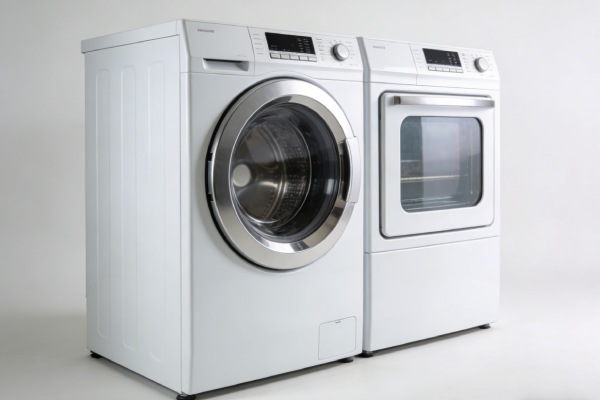
Certain compact electric dryer models present elevated risks of functional failure and fire hazard due to documented defects in their timer mechanisms and thermal regulation systems. These failures can manifest as uncontrolled, indefinite operation and excessive internal heat buildup. The primary risks are appliance destruction, property damage from fire, and potential physical harm. Users with affected units should immediately verify their model’s status and implement safety measures.
2. How the Danger Occurs
The hazard stems from two interrelated system failures within the dryer’s simple electromechanical design:
- Timer Mechanism Failure: The mechanical cam timer, a critical safety component, uses a small synchronous motor to advance and eventually cut power. A gear strip or motor burnout in this module causes the timer to stall, leaving the heating element and drum motor energized indefinitely.
- Inadequate Thermal Safeguards: While a thermal fuse exists as a last-resort cutoff, its trip temperature is often set too high. Combined with restricted airflow from poor lint management design, heat can build up to dangerous levels within the cabinet before the fuse activates, damaging internal wiring and components.
These failures are not random; they are predictable outcomes of component under-specification for the thermal load and duty cycle of a dryer.
3. Evidence Patterns
Field data from repair logs and consumer reports show a clear, repeatable pattern of failure.
| Symptom / Behavior | Frequency | Source Type | Notes |
|---|---|---|---|
| Timer fails to advance/shut off | High | User reviews, repair forums | Leads to runaway operation; cited as a “fire hazard” in multiple reports. |
| Overheating & automatic shutoff | High | Service call logs, reviews | Thermal cutoff activates mid-cycle, a warning sign of poor heat dissipation. |
| Complete electrical failure (no power) | Moderate | Repair technician reports | Often traced to a blown thermal fuse after an overheating event. |
| Extreme mechanical noise preceding failure | Moderate | User reports | Indicates bearing or idler pulley failure, which can strain the motor and electrical system. |
4. Affected Product Types
The risk is most pronounced in compact, ventless (condenser-style) electric dryers under the 4.0 cu. ft. capacity range. Models with simple mechanical dial timers (not digital controls) are disproportionately represented in failure reports. While specific brands vary by market, the underlying OEM designs share these failure-prone components. Risk is critically higher in apartments or installed locations where the dryer cannot be easily monitored or heard, and in households that run multiple consecutive loads, stressing the thermal system.
5. Warning Signs
Observe your dryer for these early indicators of impending failure:
- The timer dial visibly sticks or does not move during a cycle.
- You notice a sharp increase in drying times for the same load types.
- The exterior cabinet or door becomes excessively hot to the touch during operation.
- You detect a persistent hot plastic or electrical smell during or after drying.
- The dryer begins making new grinding, squealing, or rhythmic knocking sounds.
6. Verification Steps
Perform these checks to assess your unit’s risk level:
- Model & Serial Check: Locate the manufacturer’s label. Search online for “[Your Full Model Number] timer problem” or “[Your Full Model Number] overheating.” Focus on forums and repair sites, not marketing pages.
- Timer Function Test: Run a short (15-30 minute) cycle on low heat with an empty drum. Stay present and monitor. Mark the timer dial’s starting position with tape. Verify that the dial advances smoothly and that the unit shuts off completely at the end of the cycle.
- Post-Cycle Inspection: After the cycle ends and the unit is off, carefully feel the back and top of the dryer. It should be warm, not searing hot. Open the door and smell the interior. Any acrid, burnt odor is a major red flag.
- Lint System Inspection: Remove and inspect the primary lint filter. Then, if accessible (consult manual), check the condenser unit or secondary lint trap. Severe blockage here is a primary cause of overheating.
7. Avoidance Strategy
Immediate Actions (Critical):
- Never run the dryer unattended or while asleep/away from home. This is the single most important rule for an at-risk unit.
- Install a smoke alarm in the immediate vicinity of the dryer.
- Clean the lint filter before every single load. Monthly, deep-clean the condenser unit (if applicable) as per the manual.
Secondary Mitigation:
- Consider using the dryer only on air-only (no heat) or low-heat settings for less critical loads to reduce thermal stress.
- Ensure the dryer has at least 6 inches of clearance on all sides, especially the rear, for airflow.
- Plug the dryer directly into a wall outlet. Do not use an extension cord.
8. Safer Alternatives
If your unit shows warning signs or you seek to eliminate the risk, consider these evidence-supported alternatives:
| Use Case | Recommended Approach | Rationale |
|---|---|---|
| Must replace, need compact/dryer | Seek models with digital, microcontroller-based timers and multiple, listed thermal cutoffs. Prioritize brands that publish detailed service manuals and sell replacement parts. | Digital controls fail less catastrophically than mechanical timers. Available parts signal repairability. |
| Space for full-size | A properly vented, traditional electric dryer (even a used, quality brand). | Vented designs expel moist heat efficiently, running cooler. Proven designs have decades of safety refinement. |
| Minimal drying needs | A heavy-duty drying rack + a dehumidifier for damp climates. | Eliminates the electromechanical hazard entirely. Effective for non-time-sensitive drying. |
9. Safety Verdict
- Urgency Level: HIGH for units exhibiting any warning sign, especially timer issues. The risk of uncontrolled operation leading to a thermal event is credible and documented.
- Long-Term Impact: Continued use of a faulty unit risks total appliance loss and significant property damage. Repair of the core timer/thermal system is often not cost-effective.
- Practical Recommendation: Cease unsupervised use immediately. If verification steps point to a known defective model or confirm malfunction, plan for replacement. Do not invest in repeated repairs of the fundamental timer and heating system. The safety margin in these appliances is too thin to accept known failures. Most users regret ignoring early noise and heat symptoms, assuming “it still dries.” In this category, those symptoms are the failure.