
1. Why the Original Product Type Is Risky
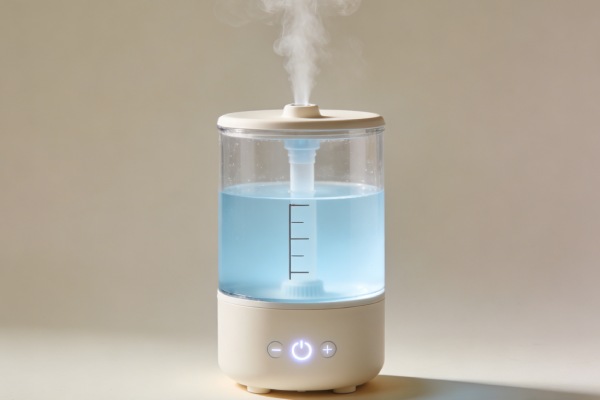
The modern “smart” ultrasonic humidifier is architecturally risky for long-term reliability and indoor air quality. Its design hinges on a miniaturized, high-frequency transducer that vibrates to create mist, paired with a complex electronic control board for digital displays, hygrostats, and connectivity. This architecture creates three systemic vulnerabilities:
- Scale Sensitivity: The piezoelectric transducer is highly susceptible to mineral scaling, which degrades performance and output unpredictably. The “demineralization cartridge” is an add-on filter, not a solved engineering problem.
- Electronic Lifespan Mismatch: The humidifying function (boiling or evaporating water) is a simple, decades-old task. Adding digital controls, LEDs, and Wi-Fi introduces failure-prone components with a much shorter lifespan than the core humidification mechanism, often rendering the entire unit useless.
- Aerosolized Contaminants: Ultrasonic units aerosolize everything in the water tank—minerals, biofilm, plasticizers from the tank—into breathable particles. Without a true boiling phase to sterilize the water, they can become vectors for dispersing impurities into room air, a documented source of “white dust” and potential respiratory irritation.
2. Failure Patterns Summary
Field analysis reveals consistent, predictable failure modes for this category:
- Premature Electronic Failure: Control boards die (Error E1, no power) or fans become noisy/bind within 2-3 years.
- Performance Degradation: Mist output declines due to transducer scaling or filter clogging, regardless of cleaning.
- Hygiene & Air Quality Issues: Development of pink mold (serratia marcescens) biofilm in tanks and dispersal of mineral dust (PM2.5).
- Maintenance Complexity: Intricate tank shapes and non-removable components make proper cleaning difficult, accelerating biological growth.
- Proprietary Lock-in: Replacement filters, cartridges, or tanks are model-specific, expensive, and often discontinued, forcing replacement.
3. What Makes a Safer Alternative
A safer humidifier is defined by design choices that prioritize hygiene, mechanical simplicity, and user serviceability over digital features and silent operation.
- Sterilizing Output Method: Uses thermal (boiling) evaporation or wick-based evaporation with a fan. Both methods inherently inhibit microbial growth and do not aerosolize minerals.
- Simple Control Logic: Manual dials or basic switches instead of microcontroller-based boards. Fewer electronic components mean fewer points of failure.
- Accessible & Cleanable Design: All water-contact surfaces are smooth, removable, and dishwasher-safe. No internal baffles or molded plastic labyrinths.
- Standardized Consumables: Uses generic, widely available wicks or requires no disposable filters at all.
- Transparent Operation: The humidification process is physically understandable and observable, not hidden inside a sealed plastic shell.
4. Recommended Safer Design Types
Type A: Warm Mist (Boiling) Humidifier
- How it Works: Heats water to a boil, releasing sterile steam vapor that cools slightly before leaving the unit. It’s a simple kettle-with-a-fan design.
- Risks Eliminated: Eliminates mineral dust and biological aerosol risks (boiling kills microbes). Very simple circuitry: a heater, a fan, and a float switch. No transducers or complex filters to fail.
- Trade-offs: Uses more energy. Introduces a warm surface and hot steam, requiring caution around children/pets. Can slightly increase room temperature.
Type B: Evaporative Humidifier with a Removable Wick & Fan
- How it Works: A fan blows air through a saturated absorbent wick. Water evaporates naturally from the wick’s surface, adding humidity. Minerals and impurities remain trapped in the wick or the base tank.
- Risks Eliminated: Inherently hygienic (evaporation does not aerosolize minerals or bacteria). Mechanically simple: just a fan, a water pump (or capillary action), and a motor. The wick is the primary consumable.
- Trade-offs: The fan is audible. Wicks require replacement every 1-2 months. Output is dependent on ambient humidity (slower in already-humid air).
Type C: Basic Impeller Humidifier
- How it Works: A rotating disc flings water at a diffuser, which breaks it into a cool mist. More mechanical than ultrasonic.
- Risks Eliminated: Fewer sensitive electronics than ultrasonic models. Generally easier to disassemble and clean.
- Trade-offs: Still produces mineral dust if used with hard water. The impeller motor can wear out. Often noisier than ultrasonic.
5. Best Options by Use Case
- For Health Priority & Hard Water Areas: Type A (Warm Mist). The definitive choice if air quality and sterile output are the primary concerns, especially for those with allergies or respiratory conditions.
- For Whole-Room, Low-Maintenance Reliability: Type B (Evaporative). Best for long-running, set-and-forget operation in bedrooms or living areas. Effectively self-regulates (evaporation slows as humidity rises).
- For Child’s Room or Cool Mist Preference: **Type C (Impeller) OR a basic Type B. Avoids the heat of warm mist but seek models with easy cleaning to manage scale.
- For Minimalist, No-Filter Costs: Type A. No wicks, no cartridges. Only consumable is distilled water (recommended) or periodic descaling with vinegar.
6. Best Options by Durability
- Highest Expected Service Life (10+ years): Type A. The heating element and fan are robust, serviceable components. Lack of complex boards extends functional life.
- High Expected Service Life (5-10 years): Type B. The fan motor is the primary wear item and is often replaceable. The simple design has fewer failure points.
- Moderate Expected Service Life (3-7 years): Type C. The impeller motor and gears are wear items subject to mineral buildup.
7. Best Options by Repairability
- Type A & B: Typically offer the best repairability. Heating elements, fans, and pumps are generic parts. Casing is often held with standard screws for internal access.
- Type C: Varies, but more repairable than sealed ultrasonic units. Impeller assembly may be accessible.
- All Safer Types: Avoid any model where the water tank or base is not designed to be fully disassembled for cleaning. Repairability starts with access.
8. Buyer Matching Guide
- Choose Type A if: Your top concerns are air purity and sterilization, you have hard water, or you need humidification for health reasons. You accept higher energy use and safety precautions.
- Choose Type B if: You want a “set it and forget it” whole-room humidifier, prioritize low operating cost over absolute silence, and don’t mind replacing a wick.
- Choose Type C if: You strongly prefer cool mist and are committed to using distilled water and rigorous weekly cleaning to prevent scale and biofilm.
- Consider a Simple Pan-on-Radiator if: Your needs are very small (single room, low humidity boost). This is the ultimate in low-tech, zero-electronics humidification, though output is minimal.
9. Final Safer Choice Summary
For the broadest combination of safety, durability, and predictable operation, the evaporative humidifier with a removable wick (Type B) represents the architecturally safest alternative. It leverages a passive physical process (evaporation) that inherently avoids the key risks of aerosolized contaminants and electronic complexity. While it introduces the minor ongoing cost of wick replacements, this trade-off provides a clear maintenance indicator and eliminates the risk of hidden internal degradation common in sealed ultrasonic units. By choosing a design based on physical principles, mechanical simplicity, and full user access, you exchange the silent, feature-rich—but fragile and potentially problematic—operation of a modern humidifier for long-term control, improved air quality, and a much higher likelihood of a decade of service.