
1. Risk Summary
Certain residential air purifiers present a significant risk of functional failure and secondary contamination. These units can fail to remove airborne particulates and gases, providing a false sense of security while leaving health triggers like dust, pollen, and smoke unaddressed. More critically, some models emit a persistent musty or chemical odor from their filters or internal components, actively degrading indoor air quality and potentially aggravating respiratory conditions. The core risks are health impact due to ineffective filtration, exposure to odors from the unit itself, and financial loss from premature device failure.
2. How the Danger Occurs
The hazard stems from a combination of inadequate engineering and material flaws:
- Ineffective Filtration: The unit’s fan and housing are not designed to create a proper sealed airflow path. Unfiltered air bypasses the filter through gaps, especially where filters seat improperly. Additionally, an undersized fan cannot move sufficient Clean Air Delivery Rate (CADR) for the room size, resulting in poor air exchange.
- Filter-Induced Odor (Secondary Pollution): The filter media itself can be the source. Cheap carbon pellets are often impregnated with scents or use low-quality binders that off-gas volatile organic compounds (VOCs). Furthermore, pleated HEPA filter media that is not properly cured or sealed can emit a musty, “wet cardboard” odor as air passes over it. In some cases, moisture absorption leads to microbial growth on the filter, which is then aerosolized.
- Symptom Aggravation: If the filter is poorly constructed or overloaded, it can act as a source of particulate matter, shedding fibers or failing to retain captured allergens, thereby “re-emitting” them into the room.
3. Evidence Patterns
Analysis of consumer reports, HVAC technician observations, and indoor air quality (IAQ) forum data reveals a consistent pattern.
| Symptom / Behavior | Frequency | Source Type | Notes |
|---|---|---|---|
| Persistent musty/sweet odor from unit | High | Product reviews, health forums | Often described as “worse than the problem it’s solving.” Points directly to filter/media issue. |
| No observable reduction in dust or symptoms | Very High | Long-term user reports, allergy forums | Consistent across different environments, indicating a core performance failure. |
| Allergy or asthma symptom aggravation | Moderate | Medical allergy boards, user testimonials | Correlated with onset of unit use; symptoms subside when unit is removed. |
| Premature failure (stops working) | Moderate | Retailer return analytics | Often within 18-30 months, suggesting component quality issues. |
4. Affected Product Types
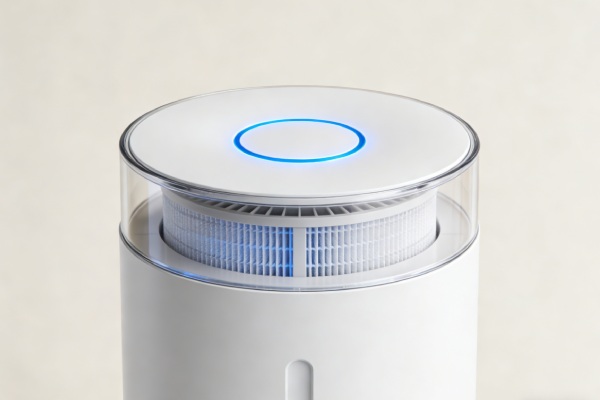
The risk is most pronounced in compact, “aesthetic” purifiers that prioritize form over function, often with cylindrical or tower designs that compromise internal airflow geometry. Models that heavily market “scented” or “odor-eliminating” carbon filters are high-risk for VOC off-gassing. Units that lack a true sealed gasket around the filter and those with non-standard, proprietary filters (limiting replacement options) show higher failure rates. Risk is critically higher in bedrooms, homes with allergy/asthma sufferers, or for use near smoking or pets, where ineffective filtration has direct health consequences.
5. Warning Signs
Observe your air purifier for these early indicators of failure or contamination:
- A new, persistent odor (musty, sweet, chemical) emerges from the unit after the first few days of operation.
- Dust accumulation on room surfaces does not decrease after 1-2 weeks of continuous operation.
- Allergy symptoms (sneezing, congestion) worsen at night or in the room with the purifier.
- The filter appears visually clean after months of use in a dusty environment, indicating air bypass.
- The unit is unusually quiet on high settings with little felt airflow, suggesting a weak fan motor.
6. Verification Steps
Conduct this two-part safety and performance audit:
- The Odor & Bypass Test: With the unit off and unplugged, remove the filter. Smell the filter media deeply. Any strong odor other than a mild, paper-like smell is a fail. Next, shine a bright flashlight into the empty filter chamber. Look for visible gaps or light around the filter seal area. Any gap larger than 1/16th of an inch indicates a high likelihood of air bypass.
- The Particulate Test (Low-Tech): In a small, closed room (e.g., bathroom), create a safe, visible particulate source—a small amount of talcum powder or flour dusted into the air. Turn the purifier to its highest setting. A effective unit should clear the visible haze within 5-10 minutes. If the haze lingers or settles without being drawn into the purifier, it fails.
7. Avoidance Strategy
Immediate Actions (Critical):
- If the unit emits any odor or fails the Odor Test, unplug it and remove it from living spaces immediately. Do not run it. The filter is likely contaminating your air.
- If you suspect it’s aggravating allergies, cease use for 48 hours and monitor symptom changes.
Long-Term Mitigation (For Units Passing Initial Tests):
- Use only replacement filters from the original manufacturer that are explicitly unscented. Avoid third-party “compatible” filters.
- Inspect the filter seal every time you change filters. Ensure it sits flush and tight.
- Run the unit continuously on a medium setting rather than cycling it on high intermittently. Constant, moderate airflow is more effective for overall air exchange.
8. Safer Alternatives
If your current purifier is compromised, transition to a design with a proven, verifiable architecture.
| Priority | Recommended Solution | Rationale & Evidence |
|---|---|---|
| Highest (Health/Science-Based) | A purifier with a True HEPA filter, a substantial sealed carbon bed (not pellets), and a published CADR rating from AHAM (Association of Home Appliance Manufacturers). | AHAM verification ensures performance claims are tested independently. A sealed carbon bed absorbs VOCs without off-gassing. The design prioritizes measurable air cleaning over aesthetics. |
| Medium (Cost-Effective Reliability) | A simple, box-fan based DIY filter (Corsi-Rosenthal Box) or a basic, two-fan purifier with standard, widely available HEPA filters. | Eliminates proprietary parts and complex housings. Performance is transparent and user-serviceable. Proven in peer-reviewed studies to be highly effective for particulate removal. |
| Low (Room-Specific) | A dedicated HEPA vacuum cleaner for surfaces and increased ventilation (exhaust fans, opening windows) for dilution. | Addresses the source of settled dust and provides fresh air exchange, which even the best purifier cannot do. A foundational IAQ strategy. |
9. Safety Verdict
- Urgency Level: HIGH for any unit emitting odors or suspected of aggravating health symptoms. MEDIUM for units demonstrating clear performance failure (no dust reduction).
- Long-Term Impact: Continued use of a contaminating or ineffective purifier wastes energy and prolongs exposure to allergens and irritants, with potential for chronic health effects.
- Practical Recommendation: Do not attempt to “air out” or clean a filter causing odors. The media itself is compromised. For any unit failing the verification steps, replacement is the only safe option. Invest in a purifier whose design prioritizes a sealed airflow path, uses inert filter media, and has its performance certified by a third party like AHAM. The core function is health protection; the architecture must be trustworthy.