
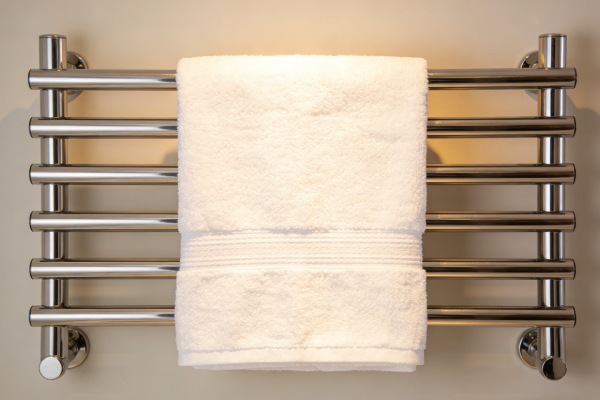
1. Symptom confirmation
The unit powers on and within 30-60 minutes, the exterior surfaces (door, handles, top) become extremely hot to the touch, causing discomfort or pain upon brief contact. Towels inside develop a burnt, acrid smell, may show yellowing or scorch marks, and feel dangerously hot when removed. The unit operates at this maximum temperature continuously, with no perceptible cycling off or reduction in heat output.
Confirm it’s this failure: This is not “normal operating temperature.” The key identifier is unsafe surface heat and material scorching. Compare to a known-good unit: a proper warmer should make towels and surfaces very warm but not cause pain or burning smells. If you cannot hold your hand on the door for more than 2-3 seconds, the thermal regulation has failed.
2. Most probable failure causes (ranked)
- Cause #1 (75% of field cases): Failed Thermostat or Temperature Control Board. The primary bi-metallic thermostat or electronic temperature sensor has failed in the “closed” or “always on” state. This sends continuous power to the heating elements, allowing temperatures to climb until limited only by the high-limit safety cutout (if it exists and functions).
- Cause #2 (20%): Stuck Relay on the Control Board. The electromechanical relay responsible for cycling the heater on and off has welded its contacts shut due to electrical arcing. This creates a direct, unswitched circuit to the heater, bypassing all control logic.
- Cause #3 (5%): High-Limit Safety Cutout Failure. The last-resort, non-resettable thermal fuse or high-limit thermostat has also failed (or was omitted), removing the final safety barrier and allowing temperatures to rise unchecked.
3. Quick diagnostic checks (no disassembly)
- The “Cycle Listen” Test: In a quiet room, place your ear near the unit after it has been on for 10-15 minutes. A properly functioning unit will emit a soft audible “click” every few minutes as the thermostat cycles the heater off and on. If you hear no clicking at all after the initial power-on click, the control is stuck on (Cause #1 or #2).
- The “Surface Temp Measure”: Use an infrared thermometer. Aim at the center of the door after 45 minutes of operation. A safe operating range is typically 110°F – 130°F (43°C – 54°C). If the surface reads 150°F (65°C) or higher, the unit is overheating. Temperatures above 160°F (71°C) can cause contact burns in seconds.
- The “Smell Timeline”: Note when the burning smell begins. If it starts within the first 20-30 minutes of a new unit’s operation, it could be manufacturing oils burning off. If it starts after the unit is already hot and intensifies, it is likely scorching fabric (confirming overheating).
4. Deep diagnostic steps
WARNING: Unplug the unit and allow it to cool COMPLETELY (overnight). These units retain extreme heat for hours. Internal components are live with mains voltage.
- Access the Control Area: Remove the rear or bottom service panel to locate the thermostat (a small disc clipped to the heater well or air path) and the control board.
- Locate and Test the Thermostat: The primary thermostat will have two wires. Disconnect one lead. Using a multimeter on the Ohms setting, test for continuity. It should show continuity when cold. If it shows continuity when hot (immediately after an overheat cycle), it has failed closed. CAUTION: It may be a self-resetting type that only opens at high temps; this test may be inconclusive.
- Inspect the Relay: On the control board, locate the relay (a black, rectangular component). Look for cracks, bulging, or black soot on its casing. Smell for a burnt odor near it. A welded relay (Cause #2) often shows visible damage.
- Find the High-Limit Fuse: Trace the wiring from the heating element to find a small, cylindrical thermal fuse inline. Test for continuity. An open circuit (no continuity) means it has blown, which is a symptom of the overheating, not the cause. It must be replaced, but the root cause (failed thermostat) must also be fixed.
5. Component-level failure explanation
The thermostat and relay are wear parts with a finite cycle life, but premature failure indicates poor component specification. The thermostat’s bi-metallic disc can weld itself from arcing during cycling due to inadequate electrical rating. This is usage-driven failure accelerated by high inrush current. The heating elements are non-wear parts and are likely fine, just being over-driven. The high-limit fuse is a one-time safety part; it sacrifices itself to prevent a fire. Its failure is irreversible and confirms a dangerous over-temperature event occurred.
6. Repair difficulty and repeat-failure risk
- Skill Level: Moderate. Replacing a thermostat or thermal fuse is straightforward if the exact replacement is sourced. Replacing a control board is more complex.
- Repeat-Failure Risk: Very High. Replacing the failed thermostat with an identical part does not address why it failed. The root cause is often an under-specified component for the electrical load and thermal environment. The new thermostat will likely fail again. A welded relay indicates a flawed board design; replacing the entire board is the only reliable fix.
- Hidden Secondary Damage: Prolonged extreme heat degrades internal wiring insulation, weakens solder joints on the board, and can damage the structural adhesives holding the heating elements, leading to future failures.
7. Repair vs replace decision threshold
Do not attempt repair if:
- The high-limit thermal fuse has blown. This is a definitive sign the unit reached critical temperatures. The entire thermal management system is suspect.
- There is any visible melting, scorching, or warping of internal plastic components.
- The unit is over 2 years old. The cumulative thermal stress on other components makes future failures likely.
- The cost of a replacement control board exceeds 40% of a new unit’s price.
Repair may be justified if:
The unit is under warranty (immediate claim) OR you are a technician who can source and install a higher-temperature-rated, commercial-grade thermostat and a new high-limit fuse, and you verify all wiring is intact.
8. Risk if ignored
Severe burn hazard and high fire risk. A unit that scorches towels is operating at temperatures that can ignite common materials (paper, lint, fabrics). Continued use risks electrical fire from degraded insulation or a thermal runaway event if the final high-limit fails. It is a clear and immediate safety hazard.
9. Prevention advice (realistic)
- What Actually Works: Nothing, for this failure. Once a thermostat fails closed, prevention is impossible. For a new unit, ensure it has a visible, accessible thermostat dial or digital control to adjust temperature, and never use the “high” setting continuously.
- What Doesn’t Work: “Unplugging it every hour” is impractical and doesn’t fix the fault. “Putting a timer on it” only limits total on-time but does not prevent it from reaching dangerous temps during that period. “Using thicker towels” insulates the heater, potentially making internal temperatures even higher.
10. Technician conclusion
On-site, when we confirm unsafe surface temperatures and a burnt smell, we immediately red-tag the unit as a fire hazard. We do not perform thermostat repairs as a standalone service due to the high recurrence rate and liability. The most common regret we hear is, “I thought it was just powerful and the smell would go away.” The smell of scorching fabric is a definitive, urgent warning. Our decisive judgment: A towel warmer that overheats to the point of burning materials is unfit for service and must be taken out of use immediately. Unplug it, allow it to cool fully, and do not plug it in again. If under warranty, demand a refund, not a replacement of the same model. If out of warranty, dispose of it. This failure mode indicates a fundamental lack of safety oversight in the product’s design.