
Your ice maker is not always broken when it stops making ice. Sometimes a simple sensor issue, blocked water path, or cleaning problem can bring it back. But other failures — such as compressor problems, repeated mold growth, or poor-quality designs — are usually not worth repairing.
This guide covers 35 common ice maker problems reported by owners, explains what you can fix yourself, and helps you decide whether to repair, replace, or avoid buying the same type of machine again.
Table of Contents
- Ice Maker Not Making Ice
- Portable Ice Maker Problems
- Ice Maker Leaking Water
- Cleaning, Mold and Odor
- Noise Problems
- Electrical and Control Problems
- Nugget and Specialty Ice Maker Problems
- Ice Maker Brand Problems
- Repair or Replace?
- Before Buying a Replacement Ice Maker
- FAQ
Quick Troubleshooting Table
| Problem | Most Likely Cause | Quick Solution | Detailed Guide |
|---|---|---|---|
| Not making ice | Dirty sensor, water supply, compressor | Check sensor and water first | Read guide |
| Not turning on | Power supply, control board, fuse | Try reset, then diagnose board | Read guide |
| Leaking water | Cracked tank, loose drain, pump seal | Inspect water path | Read guide |
| Loud noise | Fan obstruction, motor failure | Identify sound type first | Read guide |
| Grinding sound | Motor/gear failure | Usually cheaper to replace | Read guide |
| Small ice cubes | Scale buildup, low water | Descale unit | Read guide |
| Ice melts fast | Normal for portable units | No fix available | Read guide |
| Bad taste / smell | Mold, scale, dirty tank | Deep clean with vinegar | Read guide |
| Black gunk / mold | Design flaw | Replace if returns in 24 hours | Read guide |
| Keeps running | Dirty sensor or thermostat | Clean sensor first | Read guide |
| Frozen up | Frozen water line | Defrost and insulate | Read guide |
| Not getting water | Water valve, clogged filter | Check supply line | Read guide |
| Display flashing | Control board issue | Diagnose error code | Read guide |
| Add water error (when full) | Dirty sensor | Clean sensor | Read guide |
| Cloudy ice | Normal | Not a defect | Read guide |
Ice Maker Not Making Ice
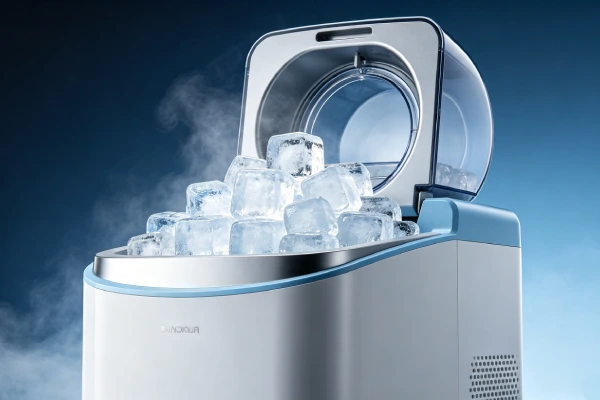
Among the ice maker problems commonly discussed by owners, “not making ice” is one of the most frequent complaints. In many cases, the unit is not actually broken — it just needs sensor cleaning or a simple reset.
Check These First:
- Is the machine getting water? Listen for pump operation.
- Is the compressor running? Feel for vibration.
- Is the ice basket sensor blocked? Wipe it clean.
- Is the unit frozen? Defrost and try again.
What Owners Report Most Often:
“My ice maker runs all night but makes no ice.”
This usually points to a dirty sensor or frozen evaporator. Clean the sensor first — it costs nothing and fixes many cases. If the compressor is running but no ice forms, the refrigerant system may have failed, which means replacement.
Most common causes:
- Dirty sensor — clean with soft cloth, often solves the problem
- No water supply — check pump and water line
- Frozen evaporator — defrost and insulate line
- Compressor failure — unit needs replacement
Related Guides:
- Ice Maker Not Making Ice? (80% Are Not Worth Repairing) — why most portable units are not worth fixing.
- Portable Ice Maker Not Making Ice? (9 Problems – 8 Fixes) — step-by-step for countertop units.
- Ice Maker Running But Not Making Ice? (Cycles but No Ice) — when the unit runs but produces nothing.
Portable Ice Maker Problems
Portable countertop ice makers are convenient but come with trade-offs. Many owners report failures within the first few years, especially with budget units designed for occasional rather than daily use.
Check These First:
- Is the drain plug secure? Loose plugs cause leaks.
- Is there adequate ventilation? Overheating is common.
- Is the unit level? Vibration causes noise and wear.
- Is the water tank clean? Mold grows quickly.
What Owners Report Most Often:
“The machine works for one month and then stops.”
This often points to a sensor issue or pump failure. Portable units use small, inexpensive pumps that are not designed for heavy use. If the pump has failed, check whether a replacement part is available — many budget units have no parts support.
Most common causes:
- Dirty sensor — clean it first
- Pump failure — listen for unusual sounds
- Overheating — ensure 4-6 inches clearance
- Drain blockage — check the plug and hose
Portable vs Built-in vs Nugget Ice Maker Reliability
| Type | Common Problems | Best For |
|---|---|---|
| Portable | Pump failure, mold buildup, sensor issues | Occasional use (parties, camping) |
| Built-in refrigerator | Water valve failure, frozen lines | Daily household use |
| Nugget | Mold issues, expensive repairs, short lifespan | Ice enthusiasts willing to maintain |
Related Guides:
- Portable Ice Maker Problems: 7 Common Failures (Fix Guide) — complete guide to portable unit issues.
- Portable Ice Maker Problems? 7 Issues Buyers Regret — real problems reported by owners.
- How Long Do Portable Ice Makers Last? (1-2 Years Normal) — actual lifespan data from owner reports.
- Countertop Ice Maker Water Line? (There Isn’t One) — why portable units don’t have water lines.
Ice Maker Leaking Water
Leaks are frustrating and can damage countertops and floors. Most leaks come from a cracked tank, loose drain plug, or failed pump seal.
Check These First:
- Is the water tank cracked? Look for visible damage.
- Is the drain plug tight? Tighten or replace.
- Is the pump seal intact? Check for water around the pump.
- Is the water valve stuck open? Test and replace if needed.
What Owners Report Most Often:
“I keep finding water under my ice maker but can’t see where it comes from.”
Slow leaks often come from a cracked water tank or a pump seal that has failed. Inspect the bottom of the tank and the pump area. In built-in units, a stuck water valve is a common culprit.
Most common causes:
- Cracked water tank — replace tank
- Loose drain plug — tighten
- Pump seal failure — replace pump or seal
- Stuck water valve — replace valve (built-in units)
Related Guides:
- Ice Maker Leaking Water? 7 Real Causes & Fix Guide — detailed diagnosis of every leak source.
- Ice Maker Leaking Water? (Don’t Repair – Here’s Why) — when replacement is cheaper than fixing a leak.
- Ice Maker Water Overflow? 7 Causes & Fixes — overflow from fast melting or sensor failure.
Cleaning, Mold and Odor
Mold and black gunk are common complaints with portable ice makers. The design of many units makes cleaning difficult, allowing water to sit in hard-to-reach areas. If mold returns within 24 hours of deep cleaning, the unit has a design flaw that cleaning cannot fix.
Check These First:
- Is there visible mold in the water tank or ice basket?
- Is there white scale buildup on internal parts?
- Does the ice have a plastic or chemical smell?
- Does mold return within 24 hours of cleaning?
What Owners Report Most Often:
“The ice tastes like plastic after cleaning.”
This is usually from residual cleaning solution or new plastic parts. Run several rinse cycles with fresh water. For persistent plastic taste, use a vinegar solution (1:1 with water) and run two full cycles, then rinse with fresh water.
“I clean it but mold comes back the next day.”
This is a design flaw — the unit has areas that cannot be properly cleaned. Many portable ice makers have this problem. Replacement is the only permanent solution.
Most common causes:
- Mold in water tank — clean with vinegar
- Scale buildup — descale regularly
- Poor design — if mold returns in 24 hours, replace
Related Guides:
- Black Gunk in Ice Maker? (Mold Returns in 24 Hours – Design Flaw) — why this happens and when to stop cleaning.
- Ice Maker Ice Tastes Bad? (7 Causes – Mold, Scale, Plastic) — every possible cause of bad-tasting ice.
- How to Descale Ice Maker (Vinegar Works – Don’t Buy Expensive) — descaling guide using cheap vinegar.
- Ice Maker Easy to Clean? No. 90% Have Design Flaws — why most portable units are poorly designed for cleaning.
Noise Problems
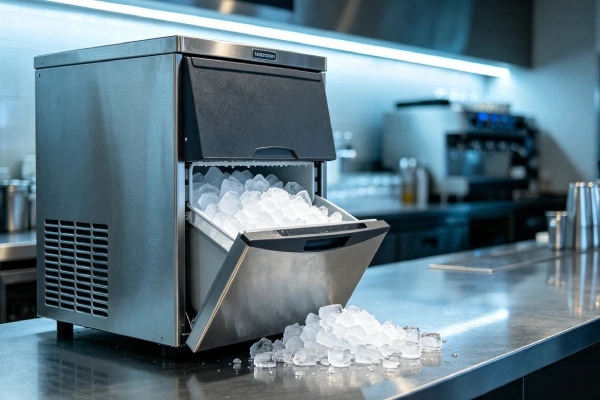
Ice makers make some noise during normal operation, but grinding, growling, or loud buzzing is never normal. The type of noise tells you what is failing.
Check These First:
- Is the noise a grinding sound? Motor/gear failure — replace.
- Is the noise a buzzing sound? Fan obstruction — clean fan.
- Is the noise a growling or humming sound? Compressor failure — replace.
- Is the unit on a level surface? Level it first.
What Owners Report Most Often:
“My ice maker started making a loud grinding noise and now won’t make ice.”
Grinding usually means the motor or gear assembly has failed. In most portable units, replacement parts are not available or cost as much as a new machine.
Most common causes:
- Motor/gear failure — replace motor or unit
- Compressor failure — replace unit
- Fan obstruction — clean fan area
- Loose components — tighten screws
Related Guides:
- Ice Maker Making Noise? 7 Causes and Fixes for Loud Units — complete guide to identifying and fixing noise problems.
- Ice Maker Making Grinding Noise? (Dying Cat Sound? Fix Guide) — specific guide for grinding noise.
- Ice Maker Pump Noise? 7 Fixes (Loud Grinding → Quiet) — pump-related noise issues.
- Ice Maker Buzzing Noise? 7 Fixes (Loud → Quiet) — buzzing causes and simple fixes.
Electrical and Control Problems
Electrical issues are frustrating because the unit may look fine but simply won’t work. Control boards, fuses, and sensors are the most common failure points.
Check These First:
- Is the unit plugged in and the outlet working?
- Does the power light come on?
- Are any error codes displayed?
- Does the unit respond to button presses?
Most common causes:
- Blown fuse — replace fuse
- Failed control board — replace board or unit
- Power supply issue — check outlet and cord
- Faulty wiring — professional repair needed
Related Guides:
- Ice Maker Won’t Turn On? 7 Power Supply Causes (Dead Unit) — why your ice maker won’t power up.
- Ice Maker Error Code E1? 7 Fixes (Fault Code Solved) — most common error code.
- Ice Maker Display Flashing? 7 Fixes (Flickering Screen) — display problems.
- Ice Maker Reset Not Working? When to Stop & Replace — why reset doesn’t always fix the problem.
Nugget and Specialty Ice Maker Problems
Nugget ice makers are popular but come with serious issues. Based on recurring owner complaints across product reviews, forums, and support discussions, mold problems, short lifespan, and high repair costs are the most frequently mentioned concerns.
Check These First:
- Does mold appear within 24 hours of cleaning? Design flaw — replace.
- Is the unit still under warranty? Check before paying for repairs.
- Is this a GE Opal unit? Many owners have reported mold and cleaning difficulties with GE Opal models, especially around areas that are difficult to access.
- Are you using the unit daily? Nugget units are not designed for daily use.
What Owners Report Most Often:
“I spent $600 on a GE Opal and it’s covered in black mold after a month.”
This is a frequently reported issue with the GE Opal series. The unit has internal areas that many owners find difficult to clean properly, allowing mold to grow rapidly. If you own one and mold is present, check whether the unit is still under warranty before paying for repairs.
Most common causes:
- Mold returns within 24 hours — design flaw, replace
- Poor build quality — common in many nugget units
- Short lifespan — 2 years maximum
- Expensive repairs — rarely worth the cost
Related Guides:
- Nugget Ice Maker Problems? 7 Issues Owners Regret Buying — real problems from nugget owners.
- Are Nugget Ice Makers Worth It? 10 Problems No One Tells You — honest assessment of nugget value.
- GE Opal Ice Maker Problems: 9 Failures – Mold, $600 Paperweight — detailed breakdown of the most popular nugget unit’s failures.
- Bullet Ice Maker Problems? It’s Wet by Design – Here’s Why — why bullet ice makers produce wet ice and why that’s normal.
Ice Maker Brand Problems
Different brands have different failure patterns. Here are the most commonly reported issues for major brands based on owner complaints across product reviews, forums, and support discussions.
GE Ice Maker
Common problems: GE Opal mold issues are among the most frequently reported complaints. The side tank design makes cleaning difficult for many owners. For built-in GE units, water valve and sensor failures are common.
First check: Clean the sensor. For Opal units, inspect hard-to-reach areas for mold.
Repair decision: If mold returns within 24 hours of cleaning, replacement is often more practical than repeated cleaning attempts.
Whirlpool Ice Maker
Common problems: Built-in units most frequently have water valve issues and frozen water lines.
First check: Inspect the water valve and check for frozen lines.
Repair decision: Valve replacement is a low-cost fix in many cases.
Frigidaire Ice Maker
Common problems: Sensor and water valve problems. Leaks are also frequently reported.
First check: Clean sensor and check water valve.
Repair decision: Sensor cleaning solves many cases. Valve replacement is moderate cost.
Samsung Ice Maker
Common problems: Refrigerator ice makers are known for freezing up and not dispensing ice. The ice bucket and auger motor are common failure points.
First check:
- Ice buildup around the ice box
- Frozen water line
- Auger movement
Repair decision: If the ice maker assembly fails repeatedly, replacement is often more practical than repeated repairs.
LG Ice Maker
Common problems: Frozen water lines and ice maker head failures.
First check: Defrost water lines and check ice maker head.
Repair decision: The ice maker head is expensive to replace, often making a new refrigerator more cost-effective.
Related Guides:
- GE Ice Maker Troubleshooting: 7 Common Problems & Fixes
- Whirlpool Ice Maker Troubleshooting: 7 Problems & Fixes
- Frigidaire Ice Maker Troubleshooting: 7 Problems & Fixes
- Samsung Ice Maker Not Working? 7 Fixes & Repair Guide
- LG Ice Maker Not Making Ice? Fix Cost vs Replace
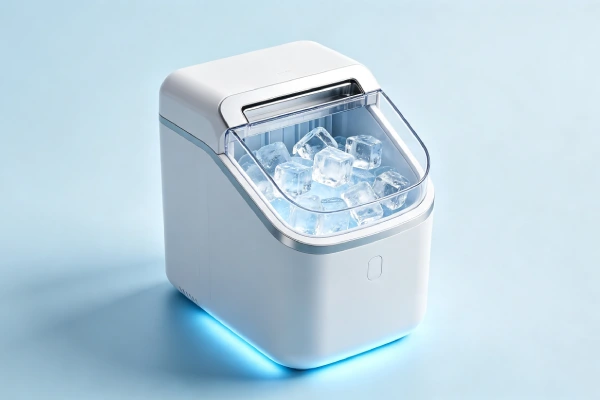
The 5 Ice Maker Problems You Should Not Waste Money Fixing
- Failed compressor — replacement costs nearly as much as a new unit
- Refrigerant leak — professional repair is expensive and often temporary
- Repeated mold growth — design flaw, cleaning will not permanently fix it
- Failed control board — replacement parts are expensive and not always available
- Expensive nugget ice maker repairs — parts are costly and often unavailable
Repair or Replace?
This is the decision most owners struggle with. Here is our rule:
Repair if:
- Unit is less than 2-3 years old
- Problem is simple (dirty sensor, clogged water line)
- Repair cost is under 50% of a new unit
- Parts are available and affordable
Replace if:
- Compressor has failed
- Mold returns within 24 hours of cleaning
- Unit has broken down multiple times
- Unit is over 2 years old (portable) or 5 years old (built-in)
- Repair cost exceeds 50% of a new unit’s price
Our 5-Minute Diagnosis Method
Before buying parts or replacing your machine:
Step 1: Check whether water enters the system — listen for the pump.
Step 2: Listen to compressor behavior — humming is normal, grinding is bad.
Step 3: Check the sensor and ice-full detection — wipe clean.
Step 4: Look for mold or mineral buildup — clean if present.
Step 5: Estimate repair cost versus replacement — if repair is over 50% of new, replace.
Repair Cost Reality Check
| Problem | Typical Decision |
|---|---|
| Dirty sensor | Repair |
| Pump replacement | Depends on unit age |
| Control board | Usually replace |
| Compressor failure | Replace |
| Mold returns within 24 hours | Replace |
| Refrigerant leak | Replace |
Related Guides:
- Ice Maker Repair vs Replace: 90+ Failures (Field Data) — real data on when repair makes sense.
- Ice Maker Replacement Cost: $80-150 (Don’t Repair, Just Replace) — actual cost breakdown for replacement.
- Is It Worth Repairing an Ice Maker? (7 Reasons to Just Replace It) — complete decision-making guide.
Before Buying a Replacement Ice Maker
If you’ve decided to replace your ice maker, avoid buying another machine with the same problems. Based on recurring owner complaints across product reviews, forums, and support discussions, here are the mistakes to avoid:
Mistake 1: Buying based only on ice production speed
Faster production often means lower ice quality and more stress on components. Many high-speed units fail quickly.
Mistake 2: Assuming expensive means reliable
Some of the most expensive units have well-known design flaws. Price does not guarantee reliability.
Mistake 3: Trusting “self-cleaning” claims
Many self-cleaning cycles do not effectively clean hard-to-reach areas. You will still need to manually clean.
Mistake 4: Ignoring cleaning access
Before buying, check how easy it is to access the water tank and internal surfaces. If you cannot clean it easily, mold will grow.
Mistake 5: Overlooking parts availability
If a unit has no replacement parts available, one failure means replacing the whole machine. Check parts availability before buying.
Mistake 6: Buying a nugget ice maker for daily use
Nugget units are not designed for daily use. They are high-maintenance and have short lifespans with frequent use.
Related Guides:
- Ice Maker Buying Guide: 10 Failure Modes & Red Flags — complete buying guide with real failure data.
- Most Reliable Ice Maker? (None – Here’s What Actually Matters) — honest answer about reliability.
- Best Countertop Ice Maker 2026: 5 Brands Ranked by Failure Rate — data-driven brand comparison.
Final Recommendation
Need occasional ice for parties or camping? A portable countertop unit will work, but understand its limits — ice melts, cleaning is required, and lifespan is 1-2 years.
Need daily ice for a household? Choose a refrigerator with a built-in ice maker or a dedicated undercounter unit. They are more reliable for continuous use.
Want nugget ice? Understand the maintenance requirements before buying. Many owners report mold issues and short lifespans. Only buy if you are willing to clean frequently and accept the trade-offs.
Need a reliable ice maker? None are perfect. But avoiding the cheapest units and checking cleaning access before buying will save you the most trouble.
FAQ
Why is my ice maker not making ice?
The most common causes are a dirty sensor, blocked water supply, or compressor failure. Start by cleaning the sensor and checking the water line.
Is repairing an ice maker worth it?
Usually not. If the repair cost exceeds 50% of a new unit, replace it. Compressor failure, refrigerant leaks, and control board issues are almost always cheaper to replace than repair.
How long do ice makers last?
Portable ice makers typically last 1-2 years. Built-in refrigerator ice makers last 3-5 years. Nugget ice makers often fail within 2 years.
Why does my ice maker have black gunk?
Mold. This is a design flaw in many portable ice makers. Clean thoroughly. If it returns within 24 hours, replace the unit.
Are portable ice makers worth buying?
Yes for occasional use (parties, camping, small gatherings). No for daily use — buy a built-in unit instead.
Why do portable ice makers fail so quickly?
Many budget portable units are designed for occasional use, not daily operation. They use small pumps and compressors that are not built for continuous use.
Are expensive ice makers more reliable?
Not necessarily. Many expensive units have well-known design flaws. Reliability depends more on the design than the price.
How do I know if my ice maker compressor is bad?
The unit runs but doesn’t freeze water, makes a growling or humming noise, or gets hot. If the compressor is bad, replacement is usually cheaper than repair.
Why does my ice maker keep breaking?
Repeated breakdowns indicate a design flaw or poor build quality. Some units are simply not built to last.
Can I fix an ice maker myself?
Yes — if the problem is a dirty sensor, clogged water line, or simple cleaning. No — if the problem is compressor, control board, or refrigerant.
How often should I clean my ice maker?
At least once a month for portable units. If you see scale buildup or mold, clean immediately with vinegar solution.
Why does my ice maker make small ice cubes?
Scale buildup, low water level, or temperature issues. Descale the unit and check water supply.
Why does my ice maker smell?
Mold, scale buildup, or dirty water tank. Deep clean with vinegar solution.
Why does my ice maker ice melt so fast?
Normal for portable units. Portable ice makers are not freezers and will melt ice within hours.
What is the most common ice maker problem?
Dirty sensor causing the unit to stop making ice. Sensor cleaning fixes it in many cases.