
Search Intent Opening
If your water filter produced great-tasting water for the first month but now water tastes foul, like plastic, or has a chemical aftertaste—even after cleaning and replacing filters—you may be facing contamination from an internal reservoir that cannot be properly cleaned. Owners searching for “water filter makes water taste bad,” “foul taste after month,” or “water filter leaking from seams” are often dealing with design limitations where filtered water is stored in inaccessible plastic reservoirs that can degrade water quality over time.
Before Replacing Your Unit: Quick Checks
Before concluding your system is permanently compromised, try these steps:
- Replace both filters (RO and carbon) — if taste improves temporarily, filters were contributing
- Run a descaling cycle — mineral buildup can affect taste
- Flush the tank 3 times with fresh water — may temporarily improve taste
- Compare to tap water — ensure the issue is actually the filter, not your source water
If taste returns to normal after these steps but degrades again within weeks, the internal reservoir is likely the root cause.
Common User Complaints
Real-world feedback from owners includes:
- “The water tasted great for about a month and a half, then quickly deteriorated.”
- “The water tasted like it had been soaking in plastic.”
- “The internal reservoir is unreachable for cleaning—it must be made of cheap plastic.”
- “Filters clogged badly under heavy use—need replacement every 2 months instead of 6.”
- “It started leaking from the seams. I think back pressure from clogged filters caused it.”
- “The UV light is at the bottom, but the clean water line is at the top—water never passes through UV.”
- “You will spend more time than you think maintaining this system.”
Quick Risk Summary
- Foul/plastic taste after 1-2 months: Water stored in internal reservoir may degrade; reservoir often inaccessible for cleaning
- Internal reservoir design consideration: Filtered water contacts plastic surfaces that cannot be cleaned, potentially affecting taste over time
- Premature filter clogging: Under heavy use, filters may need replacement every 2 months (not 6), increasing cost
- Back pressure leaks: Clogged filters can create back pressure, potentially causing water to leak from seams or tank inlets
- UV sterilization placement: In some designs, UV light at bottom may not effectively treat all water
- High maintenance burden: Requires daily rinsing, monthly cleaning, descaling, and frequent filter changes—more than some advertisements suggest
- Float sensor sticking: Internal float may stick, preventing water tank recognition
- Mineral removal: RO filtration removes beneficial minerals; some users choose to add electrolytes
Who This Guide Applies To
This analysis applies to countertop reverse osmosis (RO) water filter systems with internal storage tanks. It does not apply to:
- Under-sink plumbed RO systems
- Countertop gravity-fed systems (like Berkey)
- Pitcher-style filters (Brita, Pur)
- Systems with cleanable, accessible reservoirs
The design limitations discussed here are specific to units that store filtered water in sealed, inaccessible plastic tanks.
Search Query Coverage Block
People search this as:
- water filter makes water taste bad
- foul taste after month
- water tastes like plastic
- water filter leaking from seams
- water filter filters clog too fast
- water filter maintenance too much
- water filter UV light not working
- water filter float stuck
- water filter removes minerals
- water filter internal reservoir dirty
- water filter back pressure leak
- water filter expensive to maintain
- water filter taste deteriorated
- water filter cleaning impossible
- water filter instruction manual confusing
- countertop RO vs under sink
What Typically Fails or Limits Performance
Field observations across multiple countertop water filter systems show this failure sequence:
- Taste changes from internal reservoir (1-2 months)
- Filter clogging under heavy use (2-4 months)
- Back pressure leaks (secondary to clogged filters)
- Float sensor sticking (intermittent)
- UV sterilization effectiveness questions (design consideration)
The most common complaints stem from inaccessible internal reservoirs that cannot be cleaned, leading to inevitable taste changes over time.
Internal Reservoir Design: A Common Challenge
Many countertop water filters store filtered water in an internal reservoir before dispensing. This reservoir:
- Is typically made of plastic
- May not be accessible for cleaning in many designs
- Can accumulate biofilm, mineral deposits, or other material over time
- May be subject to plastic degradation as the unit ages
Once taste changes occur, cleaning may not be possible if the reservoir is sealed—a design consideration in many consumer units.
Performance and Reliability Concern Classification
- Hygiene Design Consideration: Internal reservoir may not be accessible for cleaning; taste can change after 1-2 months
- Filter Life Variation: Filters may clog faster than advertised under heavy use
- Secondary Effects: Back pressure from clogged filters can potentially cause leaks
- UV Design Consideration: Placement may not effectively treat all water in some designs
- Maintenance Reality: Daily, weekly, and monthly tasks may exceed initial expectations
- Operational Issues: Float sticking, refilling difficulty
- Nutritional Consideration: RO filtration removes minerals; some users add electrolytes
Observed Failure and Limitation Patterns
Pattern 1: Taste Changes After 1-2 Months.
- Water tastes acceptable initially. After 4-8 weeks, taste may change to foul or plastic-like. May temporarily improve after filter change, then worsen again.
- Indicates: Possible internal reservoir contamination or material effects. Reservoir may not be cleanable.
- Escalation: Persistent taste issues; unit may become unsuitable for quality-conscious users.
Pattern 2: Premature Filter Clogging Under Heavy Use.
- Under high daily usage (multiple gallons per day), RO and CF filters may clog before advertised 6-month lifespan. Some users report needing replacement every 2 months.
- Component: RO membrane, carbon filter
- Mechanism: High contaminant load exceeds filter capacity; flow restriction increases.
- Trigger: Heavy daily use, high TDS water.
- Consequence: Reduced flow, performance drop, increased operating cost.
Pattern 3: Back Pressure Potentially Leading to Leaks.
- Clogged filters can create back pressure. In some cases, water may leak from seams or tank inlets.
- Component: Housing seals, tank connections
- Mechanism: Pressure builds behind clogged filters, potentially finding path of least resistance at seams.
- Trigger: Filters not replaced promptly.
- Consequence: Possible water leakage; unit may need assessment.
Pattern 4: UV Sterilization Placement Considerations.
- In some designs, UV light is installed at bottom of tank while filtered water enters from top. Water may not directly pass through UV exposure; only water near bottom may be treated.
- Indicates: Design consideration—UV may not effectively treat all water in tank.
- Consequence: Potential for reduced sterilization effectiveness.
Pattern 5: Float Sensor Sticking.
- System may fail to recognize fresh tank of water. Float mechanism can stick, preventing operation.
- Component: Float switch
- Mechanism: Mineral deposits or debris can cause float to bind.
- Trigger: Hard water, infrequent cleaning.
- Consequence: Unit may not operate; requires manual intervention.
Pattern 6: High Maintenance Reality.
- Products may be marketed as convenient with minimal maintenance. Actual maintenance can include:
- Daily: Remove, empty, rinse tank
- Monthly: Clean tank with soap and water
- Every 2-4 weeks: Run descaling solution
- Every 2-6 months: Replace filters (cost varies)
- Consequence: Significant ongoing time and cost commitment for some users.
Pattern 7: Initial Setup Time.
- Setup may require multiple flush cycles, taking up to 45 minutes. Users expecting immediate use may be surprised.
- Consequence: Initial time investment higher than expected.
Pattern 8: Filter Life Variation.
- Advertised 6-month filter life may be optimistic for many users. Real-world life: 2-4 months typical under moderate use; 2 months under heavy use.
- Consequence: Higher than expected operating cost.
Pattern 9: Long-Term Operating Cost.
- Filter replacement costs can add up. Some users report spending hundreds on a system that didn’t meet expectations.
- Consequence: Value proposition may diminish over time.
Pattern 10: Reservoir Refilling Considerations.
- Removing and replacing water reservoir can be awkward in some designs.
- Consequence: User frustration, potential spills.
Pattern 11: Mineral Removal.
- RO filtration removes minerals like calcium and magnesium. Some users choose to add electrolytes.
- Consequence: Water may taste flat; personal preference consideration.
Pattern 12: Instruction Manual Quality.
- Manuals may contain unclear phrasing or appear hastily translated.
- Consequence: User confusion during setup and maintenance.
Why Issues Occur (Engineering Considerations)
Internal Reservoir Material Effects
- Component: Plastic reservoir, internal surfaces
- Mechanism: Over time, plastic may be subject to material changes or biofilm accumulation. Without access for cleaning, these effects can persist.
- Trigger: Time (1-2 months), warm environment.
- Consequence: Possible taste changes; may not be remediable in sealed designs.
Filter Capacity Exceeded
- Component: RO membrane, carbon block
- Mechanism: Filters have finite capacity for contaminants. High usage or high TDS water exhausts capacity faster.
- Trigger: Heavy daily use, high sediment load.
- Consequence: Clogging, flow reduction, need for early replacement.
Back Pressure Development
- Component: System seals, tank inlets
- Mechanism: Clogged filters restrict flow; pump continues to push, potentially increasing pressure in upstream sections. Seals may be stressed.
- Trigger: Delayed filter replacement.
- Consequence: Possible leaks at seams or connections.
UV Placement Considerations
- Component: UV lamp, tank geometry
- Mechanism: UV light at bottom may not effectively treat water that remains at top. Without circulation, only water near bottom is exposed.
- Trigger: Tank stratification.
- Consequence: Potential for reduced sterilization effectiveness.
Float Switch Binding
- Component: Float, guide rod
- Mechanism: Mineral deposits or debris can cause float to stick, preventing movement.
- Trigger: Hard water, infrequent cleaning.
- Consequence: System may fail to recognize water level.
Maintenance Requirements Disclosure
- Component: Entire system
- Mechanism: Marketing may emphasize convenience; maintenance reality may not be prominently disclosed.
- Trigger: Purchase based on advertised claims.
- Consequence: User surprise at ongoing tasks.
Maintenance Reality: What to Expect
| Task | Typical Expectation | Common Reality |
|---|---|---|
| Installation | “No installation required” | 30-45 minute flush process |
| Daily maintenance | Often not mentioned | Remove, empty, rinse tank |
| Monthly cleaning | Often not mentioned | Clean tank with soap and water |
| Descaling | Often not mentioned | Every 2-4 weeks in some areas |
| Filter replacement | Up to 6 months | 2-4 months typical; 2 months heavy use |
| Filter cost | Not emphasized | Varies by model ($30-50 per set) |
| Reservoir cleaning | Often not mentioned | May not be possible in sealed designs |
Usage Patterns That May Accelerate Issues
Heavy Daily Use (Multiple Gallons)
- Filters exhaust faster.
- Result: Replacement every 2 months possible, higher cost.
High TDS / Hard Water
- RO membrane and carbon filters load faster.
- Result: Clogging, potential back pressure, leaks.
Infrequent Descaling
- Mineral buildup affects float, potentially taste.
- Result: Sticking float, degraded water quality.
Warm Environment
- Bacterial growth may accelerate in reservoir.
- Result: Faster taste changes.
Skipping Daily Rinse
- Stagnant water in reservoir may promote issues.
- Result: Taste changes return quickly.
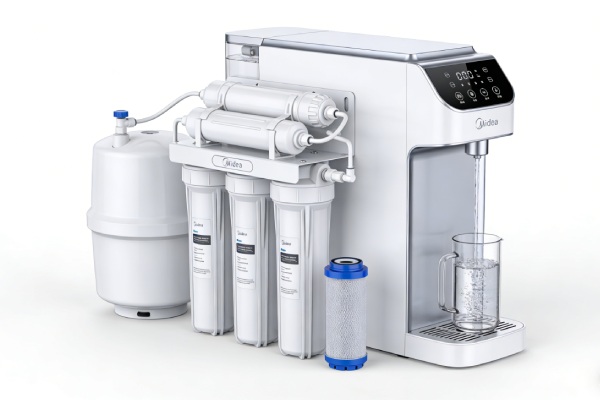
Maintenance Considerations Sellers May Not Emphasize
Daily Tasks (for some models)
- Remove, empty, and rinse the water tank
- Helps prevent stagnant water buildup
Monthly Tasks
- Clean tank thoroughly with soap and water
- Removes potential biofilm and mineral deposits
Periodic Descaling
- Run descaling solution through system
- Frequency depends on water hardness
Filter Replacement
- Every 2-6 months depending on usage
- Cost varies by model
- Both RO and CF filters typically replaced together
Internal Reservoir
- May not be cleanable in some designs
- When taste changes persist, replacement may be considered
Real-World Usage Scenarios
Scenario 1: The 6-Week Taste Change
- User buys countertop RO system. First month, water tastes acceptable. Week 5, slight off-taste. Week 6, water distinctly off. Replaces filters, taste improves for 2 days, then returns.
- Observation: Internal reservoir may be the source. Filters not the root cause.
- Consideration: If taste returns quickly after filter change, reservoir may be implicated.
Scenario 2: The Heavy User Filter Clog
- Family of four uses system for all drinking/cooking water—multiple gallons daily. After 2 months, flow slows, then unit starts leaking from seam.
- Observation: Filters clogged, back pressure may have caused leak.
- Consideration: $50 filter replacement + potential assessment for leak damage.
Scenario 3: The Stuck Float
- User fills tank, but system doesn’t recognize water. Won’t operate. After troubleshooting, finds float stuck.
- Observation: Mineral deposits on float mechanism.
- Consideration: Manual cleaning may resolve; recurring in hard water areas.
Scenario 4: The UV Consideration
- User learns about UV placement and questions whether water is effectively treated.
- Observation: Design consideration—UV at bottom may not treat all water.
- Consideration: Understanding system limitations helps set expectations.
Scenario 5: The Maintenance Surprise
- User buys system for convenience. Discovers daily rinsing, monthly cleaning, periodic descaling, frequent filter changes. Feels misled.
- Observation: Maintenance burden higher than expected.
- Consideration: Review full maintenance requirements before purchase.
Scenario 6: The Mineral Consideration
- Health-conscious user learns system removes beneficial minerals. Researches and finds some users add electrolytes.
- Observation: RO filtration removes minerals; personal preference factor.
- Consideration: Decide whether remineralization is desired.
Common Misinterpretations
Misinterpretation 1: “Bad taste means filters are bad” → Possible reservoir consideration
- Symptom: Taste changes, filter replacement helps temporarily.
- Consideration: Reservoir itself may be a factor; may not be cleanable.
- Verification: If taste returns quickly after filter change, reservoir may be implicated.
Misinterpretation 2: “Leaking means defective unit” → Possible back pressure from clogged filters
- Symptom: Leaks at seams.
- Consideration: Clogged filters can create back pressure; replace filters promptly.
- Verification: Check filter condition; if clogged, replace and monitor.
Misinterpretation 3: “UV light ensures safe water” → Placement may affect effectiveness
- Symptom: Concern about microbial safety.
- Consideration: UV at bottom may not treat all water.
- Verification: Understand your system’s design.
Misinterpretation 4: “System is low maintenance” → Reality may differ
- Symptom: Surprised by daily/weekly tasks.
- Consideration: Marketing may not emphasize full maintenance.
- Verification: Read maintenance section carefully before purchase.
Misinterpretation 5: “Filters last 6 months” → Usage-dependent
- Symptom: Filters clog early.
- Consideration: 6 months may be ideal-case, light-use estimate.
- Verification: Actual life may be 2-4 months under normal use.
Misinterpretation 6: “Installation takes minutes” → Setup time may be longer
- Symptom: Setup takes much longer than expected.
- Consideration: Flush cycles necessary but time-consuming.
- Verification: Budget time for initial setup.
Field Checks (No Tools)
Check 1: Taste Comparison
- Fill glass from system. Compare to known-good water (bottled or filtered from another source). Note any differences.
- Expected: Clean, neutral taste.
- Observation: Off tastes may indicate system issues.
Check 2: Filter Age Assessment
- Note date of last filter change. Estimate usage (gallons per day). Compare to expected life.
- Expected: Filters last 2-6 months depending on usage.
- Observation: If clogging much earlier, heavy usage or high TDS.
Check 3: Flow Rate Observation
- Time how long to fill a glass. Compare to when new.
- Expected: Consistent flow rate.
- Observation: Slower flow may indicate filter clogging.
Check 4: Leak Inspection
- Inspect base, seams, and connections for moisture.
- Expected: Dry.
- Observation: Leaks may indicate back pressure from clogged filters or seal issues.
Check 5: Float Operation Check
- Fill tank, observe if system recognizes water. If not, gently tap float.
- Expected: Float moves freely, system operates.
- Observation: Sticking float may indicate mineral deposits.
Check 6: UV Light Check (if visible)
- In dark room, observe if UV light illuminates. Note location.
- Expected: UV should be on during operation.
- Observation: UV at bottom may not effectively treat top water in some designs.
Typical Performance and Lifespan Expectations
| Usage Scenario | Filter Life | Taste Durability | Primary Considerations |
|---|---|---|---|
| Light (1-2 quarts/day) | 4-6 months | 2-3 months | Reservoir effects, then filters |
| Average (1 gallon/day) | 3-4 months | 1-2 months | Reservoir effects primary |
| Heavy (2+ gallons/day) | 2 months | 1 month | Both reservoir and filters |
| High TDS water | Shorter | Shorter | Scale buildup accelerates issues |
Observed patterns: Internal reservoir taste changes are often the primary consideration. Filter life is heavily usage-dependent.
Repair Difficulty and Cost Reality
Serviceability Considerations:
- Internal reservoir: May not be replaceable or cleanable in some designs
- RO membrane: Typically replaceable. Cost varies
- Carbon filter: Typically replaceable. Cost varies
- Float switch: May be replaceable if accessible
- UV lamp: May be replaceable if available
- Seals: Often not user-replaceable
Economic considerations:
- Filter replacement costs add up over time
- Annual filter cost can range from $100-300 depending on usage
- When taste changes persist, unit replacement may be considered
Repair vs Replace Decision Logic
Consider replacement if:
- Taste changes persist after filter replacement and descaling
- Leaks from seams recur after filter replacement
- Unit age > 2 years with multiple issues
- Cost of ongoing filters exceeds value
Consider continued use if:
- Taste remains acceptable (new unit or light use)
- Simple filter replacement restores function
- Float cleaning resolves issue
- You accept maintenance requirements
Note on taste issues: If taste changes persist and reservoir cannot be cleaned, replacement may be the practical option in many consumer designs.
Design Traits to Evaluate
For better long-term performance, consider systems with:
- Cleanable internal reservoir (accessible for maintenance)
- Glass or stainless steel water path (avoids plastic taste considerations)
- Filters sized for your actual usage
- UV placement that treats all water (flow-through design)
- Clear maintenance disclosure
- Reasonable filter replacement cost
Be aware of:
- Sealed, inaccessible reservoirs
- Plastic water paths
- Optimistic filter life claims
- UV placement that may not treat all water
- Hidden maintenance requirements
Features That Support Durability and Water Quality
- Accessible reservoir – Can be cleaned regularly
- Glass/stainless components – Avoids plastic taste considerations
- Flow-through UV – All water treated
- Filters sized for heavy use – Longer life
- Clear maintenance schedule – No surprises
- Reasonable filter cost – Sustainable ownership
Technician Observations
- “In many countertop RO systems, the internal reservoir is a design consideration. Once taste changes, cleaning may not be possible if it’s sealed.”
- “Taste changes at 6 weeks are often not a filter issue—it’s the reservoir. But filters are the first thing users replace.”
- “Back pressure leaks are a secondary effect of not changing filters soon enough. When filters clog fast, that’s an expense to consider.”
- “UV at the bottom may not effectively treat water at the top in some designs. It’s a placement consideration.”
- “The maintenance schedule can be significant. Daily rinsing, monthly cleaning, periodic descaling—that’s real time.”
- “$50 every 2 months adds up. Over a year, that’s $300 just in filters, plus your time.”
- “If you want RO with cleanable storage, under-sink systems with accessible tanks avoid the sealed reservoir design limitation.”
- “Float sticking is fixable if you catch it. But in hard water, it’s a recurring task.”
Heavy-Use Reality
For families using multiple gallons daily:
- Filter replacement every 2 months possible ($250-300/year)
- Taste may change in 1 month
- Leak risk higher due to back pressure if filters not changed promptly
- Maintenance burden significant
- Cost perspective: $200-300 unit + $250-300/year filters + ongoing time commitment
Suggestion for heavy use: Consider under-sink RO system with larger filters and cleanable storage. May offer lower long-term cost and better performance for high-volume users.
Cost Factors
Initial purchase: $200-300 (typical range)
Ongoing costs:
- Filter set: $30-50 every 2-6 months
- Annual filter cost: $100-300 depending on usage
- Descaling solution: $10-20 per year if needed
3-Year Cost Estimate (Average Use):
- Unit: $250
- Filters (4-month avg): $40 x 9 = $360
- Descaling: $15 x 3 = $45
- Total: $655 over 3 years, or $218/year
Compare to under-sink RO: $300-500 unit + $50-100/year filters = $150-250/year, with cleanable tanks and potentially better performance.
Early Indicators of Potential Issues
Taste changes:
- Slight off-taste developing
- Plastic aftertaste
- Unusual odor
Flow changes:
- Slower dispensing
- Longer to fill glass
Operational:
- Float sticking
- System not recognizing tank
- Leaks at base
Visual:
- Mineral deposits on float
- Cloudy water
- Visible debris in tank (if accessible)
Suitability Considerations
This type of countertop water filter may suit you if:
- You have light usage (1-2 quarts/day)
- You accept potential 1-2 year useful life before taste changes
- You’re willing to follow maintenance schedule
- Filter replacement cost is acceptable
- You understand the design considerations
You may prefer a different system if:
- You have heavy daily usage
- You want long-term water quality consistency
- You prefer minimal maintenance
- You’re sensitive to taste changes
- You want RO with cleanable storage
Frequently Asked Questions
Why does my water filter make water taste bad after a month?
The internal reservoir where filtered water is stored may not be cleanable in some designs. Over time, biofilm, mineral deposits, or material effects can affect taste. This is a design consideration in many consumer units.
Can I clean the internal reservoir?
In many countertop systems, the reservoir is sealed and not accessible for cleaning. Check your manual. If taste changes persist after filter replacement and descaling, the reservoir may be the source.
Why do my filters clog so fast?
Filter life depends on usage and water quality. Under heavy use or with high TDS water, filters may need replacement more frequently than advertised. Two months is possible for heavy users.
Why is my water filter leaking?
Leaks can result from back pressure caused by clogged filters. Replace filters promptly. If leaks persist after filter replacement, seals may need assessment.
Does the UV light actually sterilize the water?
In some designs, UV is placed at the bottom of the tank while water enters at the top. Without circulation, water may not pass through UV exposure. Understand your system’s design.
How much maintenance does this system really need?
More than some advertisements suggest: daily tank rinsing, monthly cleaning, periodic descaling, and frequent filter changes. Review the full maintenance schedule before purchase.
How much does this system cost to own long-term?
With filter replacements every 2-6 months at $30-50 per set, annual filter cost can reach $100-300. Add descaling supplies and your time. Three-year cost may exceed $600.
Is the water safe to drink when taste changes?
Off tastes may indicate contamination or material effects. If water quality is questionable, discontinue use. Consider replacing filters, descaling, and if issue persists, system replacement may be practical.
Can I add minerals back to the water?
Yes. Some users add electrolyte drops to remineralize RO water, as the system removes minerals like calcium and magnesium. This is a personal preference.
What’s an alternative to these countertop systems?
Under-sink RO systems with cleanable storage tanks avoid the sealed reservoir design limitation. They may offer better long-term value for regular users, though installation is required.
Summary Assessment
| User Type | Consideration Level | Primary Factors | Suggestion |
|---|---|---|---|
| Light User (1-2 quarts/day) | Moderate | Taste may change in 2-3 months, $100-150/year filters | Acceptable if you understand design limitations |
| Average User (1 gallon/day) | Moderate-High | Taste may change in 1-2 months, $200/year filters, maintenance | Consider under-sink RO for better value |
| Heavy User (2+ gallons/day) | High | Taste may change in 1 month, $300/year filters, leak risk | Not ideal—under-sink recommended |
| Taste-Sensitive User | High | Plastic taste considerations over time | May prefer systems with glass/stainless path |
General perspective:
- Countertop water filters with sealed internal reservoirs have a design consideration: water quality can change after 1-2 months due to inaccessible surfaces that cannot be cleaned.
- Filter life is heavily usage-dependent. Advertised 6-month life may be optimistic for many users; 2-4 months is common, 2 months under heavy use.
- Back pressure from clogged filters can cause leaks. Replace filters on schedule.
- UV placement may not effectively treat all water in some designs—understand your system’s configuration.
- Maintenance requirements can be significant. Review the full schedule before purchase.
- Long-term ownership cost is substantial: $100-300/year in filters alone, plus time commitment.
- When taste changes persist, replacement is often the practical option—the reservoir may not be cleanable.
- For reliable, long-term water quality, under-sink RO systems with cleanable storage tanks avoid the sealed reservoir design limitation and may offer better lifetime value for regular users.