
Filtered water that tasted fine in week one and tastes wrong in week six is a common complaint, and the cause is rarely one thing. It can be the cartridge reaching the end of its life, a new cartridge that was never flushed, a reservoir that needs cleaning, water that has sat too long, a cartridge seated wrong, a change in the supply, or the filtration type itself.
This page works through those seven, then explains how to read the taste, what to do when the taste returns after a change, and when taste alone is not enough to judge whether the water is safe.
Note on scope: this page is about a home water filter that develops an off taste after a period of normal use. It is not about leaks, installation, or choosing a system.
Note on model differences: cartridge types, flushing procedures and cleaning steps vary by brand and model. Where a step involves a part, the manual shows it. Where the manual is silent, ask the manufacturer rather than applying a routine from another model.
Why Does Filtered Water Taste Bad After a Month?
Taste changes are a signal, not a diagnosis. The first useful step is to compare the filtered water with the tap water going in, because that comparison separates a filter problem from a supply problem:
- Tap water fine, filtered water not: the cartridge or the water path after it is the place to look.
- Tap water also changed: the supply is the cause, and no cartridge change will fix it.
Everything below assumes the tap water has been checked.
7 Reasons Your Water Filter Makes Water Taste Bad
1. The Filter Cartridge Is Worn Out
What you see: a gradual change over days or weeks, often with slower flow at the same time.
Why it happens: the cartridge has reached the end of its capacity for the water it is treating. The rated life on the box is measured under stated conditions — usually a specified water quality and daily volume — and hard water or heavy use reaches the end sooner.
What to do: check the replacement date against the manual and against how much water you actually use. A cartridge past its interval is the first thing to check; it is not always the only cause, which is why the rest of this page matters.
2. The New Filter Was Not Flushed Properly
What you see: a plastic or chemical taste immediately after a cartridge change, fading over days.
Why it happens: new cartridges carry manufacturing residue and trapped air. The manual’s flush step exists to clear both.
What to do: follow the manual’s flush procedure — how much water to run and for how long — before using the water for drinking. A taste that fades over a few days is consistent with an under-flushed cartridge.
First use of a new system produces the same kind of taste as an under-flushed cartridge, and the same flush step applies. If the taste has not settled after the manual’s flush, treat it as one of the causes below rather than waiting longer.
3. The Water Reservoir Needs Cleaning
What you see: a musty or stale taste that develops over weeks, often worse after the unit has sat unused.
Why it happens: the reservoir, the spout and the removable parts that contact water can develop a film over time — mineral film from hard water, or a biological film from standing water.
What to do: the cleaning path depends on the design.
- Removable reservoir: take it out, clean it and the spout with the method the manual states, and dry fully before refilling.
- Fixed reservoir: clean only what the manual lists as user-accessible, and do not dismantle the housing to reach more.
Do not assume the reservoir is sealed and uncleanable before checking the manual; on many countertop units it is removable.
4. Water Has Been Sitting in the Tank Too Long
What you see: the first glass after a weekend or a holiday tastes stale, and later glasses are fine.
Why it happens: water standing in a reservoir or in the lines picks up taste from the materials and from anything growing in still water.
What to do: run a glass and discard it before drinking, and empty the reservoir when the unit will sit unused.
5. The Filter Is Installed Incorrectly
What you see: a taste that appears right after a cartridge change and does not fade, sometimes with slow flow or a small leak.
Why it happens: a cartridge that is not fully seated, seated the wrong way round, or fitted without its O-ring lets water bypass the medium or draws air into the line.
What to do: reseat the cartridge as the manual shows, check the O-ring is present and undamaged, and confirm the cartridge is the correct part for the model.
6. The Water Supply or Plumbing Has Changed
What you see: a taste that appears without any change to the filter, often across every tap in the house.
Why it happens: the supply can change — seasonal source changes, plumbing work, a new softener or a new tap — and the filter is then treating water it was not treating before.
What to do: compare with the unfiltered tap water. If both changed, contact the water supplier or check whether plumbing work was done.
7. The Filter Material or Filtration Type Affects Taste
What you see: water that tastes flat or slightly different from what you are used to, consistently, from a new system or a new cartridge type.
Why it happens: different filtration types produce different water. A reverse osmosis system removes minerals along with contaminants, and some people notice the flatter taste; a carbon-only filter leaves minerals in place. Neither is a fault.
How to tell whether this is your cause: the taste is consistent from the first glass, does not worsen over weeks, and does not change when you clean or flush. A taste that is present on day one and unchanged a month later is a characteristic of the system; a taste that appeared later is one of the causes above.
What to do: decide whether the difference is acceptable. If it is not, the choice is a different filtration type rather than a repair.
What Does Bad-Tasting Filtered Water Smell or Taste Like?
| What you notice | Where to look first |
|---|---|
| Plastic or chemical taste | A new cartridge that was not flushed; the manual’s flush step |
| Musty or stale taste | The reservoir and spout; water left standing |
| Bitter taste | The cartridge type and the source water’s mineral content |
| Water still tastes of chlorine | The carbon stage; its age and the cartridge specification |
| Metallic taste | The supply, or plumbing in the building, before the filter |
These are starting points, not diagnoses. A taste narrows the search; it does not identify a contaminant, and a TDS pen will not tell you which of these you have — it measures dissolved solids, not odour compounds.
How to Fix a Water Filter That Makes Water Taste Bad
- Compare filtered water with tap water.
- Check the cartridge replacement date against the manual and your usage.
- Flush the system according to the manual after any cartridge change.
- Clean the accessible reservoir and spout, using the removable or fixed path in cause 3.
- Check the cartridge is seated and the O-ring is present.
- Inspect the supply and any recent plumbing work if the tap water has changed too.
- Test the water if the taste remains unusual after all of the above.
Why Does Water Taste Bad Again After Replacing the Filter?
Work through these in order, because the first one is the most common and the cheapest to fix:
- The system was not flushed enough. Residue from the new cartridge returns the taste until it clears. Re-flush per the manual.
- The reservoir or lines were not cleaned. A new cartridge downstream of a dirty reservoir does not fix the reservoir.
- The replacement cartridge is incompatible. A cartridge that is the wrong part may not seat, may not seal, or may not treat the water the same way. Check the part number.
- The original water source is causing the taste. If the tap water changed, a new cartridge is treating the wrong problem.
Is Bad-Tasting Filtered Water Safe to Drink?
Why taste cannot confirm safety. Water can contain harmful organisms or chemicals without any noticeable taste or smell, and harmless substances can produce a strong taste. A filter that improves taste is not proof of safety, and an off taste is not proof of contamination.
When to stop drinking the water. Stop if the taste is suddenly chemical, solvent-like or fuel-like — for example, a smell resembling paint thinner, petrol, or a cleaning product — or if the water’s appearance has also changed.
When to contact the supplier or the manufacturer. Contact the supplier if the unfiltered tap water has also changed; contact the manufacturer if the taste is confined to the filtered water and persists after the checks above.
When water testing is necessary. If you use a private well, or if a supply problem is suspected, a targeted test is the way to confirm what is in the water. Do not rely on boiling, filtering, or the absence of taste as proof of safety.
How to Prevent Filtered Water from Developing a Bad Taste
- Replace cartridges on the manual’s schedule, adjusted for your water and use. The same cartridge can last different lengths in different areas, because hardness and sediment load differ.
- Clean the reservoir and removable parts as directed, and dry them before refilling.
- Empty the reservoir when the unit will sit unused.
- Follow the flush procedure after every cartridge change.
- Use the cartridge the manual names, and check the part number against the model.
- If the unit has a water dispenser spout, clean the spout as well as the reservoir; the spout is the last thing the water touches before the glass.
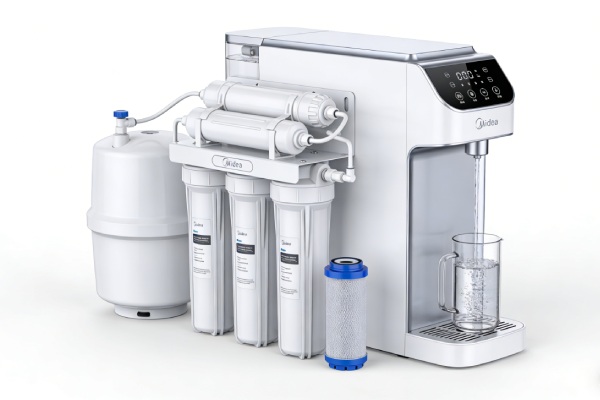
If the filter is part of a reverse osmosis system, the same rules apply, with two additions. The RO storage tank on a tank system holds treated water between draws, so it belongs on the cleaning and emptying schedule rather than being treated as a sealed part. And a reverse osmosis system’s taste can change if the carbon stage ahead of the membrane is exhausted, because chlorine then reaches the membrane — which is why the carbon stage’s date matters as much as the membrane’s.
If the unit sits on the counter, check whether the countertop RO filter and the countertop RO system you have use a cartridge the manufacturer still sells. A cartridge that is discontinued is a taste problem waiting to happen, because the substitutes are rarely an exact match. For a countertop reverse osmosis system, check the parts listing for the model before the cartridge runs out, not after.
Frequently Asked Questions
Why does my water filter make water taste bad after a month?
Usually the cartridge is reaching its capacity, the reservoir needs cleaning, or water has been standing. Compare filtered with tap water first.
Why does filtered water taste like plastic?
Most often a new cartridge that was not flushed, or a cartridge that is not the correct part. Follow the flush step and confirm the part number.
Why does my water still taste bad after changing the filter?
Check the flush first, then the reservoir, then cartridge compatibility. If the tap water has also changed, the supply is the cause.
Can a dirty water filter make water taste worse?
A cartridge past its capacity, or a reservoir that needs cleaning, can both affect taste.
How often should I clean my water filter reservoir?
Follow the manual’s interval. Where the manual gives none, clean it at each cartridge change and whenever the unit has sat unused.
Does reverse osmosis water taste different?
It can, because reverse osmosis removes minerals along with contaminants. That is a characteristic of the filtration type, not a fault, and it is consistent from the first glass rather than appearing later.
Should I stop drinking water that tastes strange?
Stop if the taste is suddenly chemical, solvent-like or fuel-like, or if the appearance has changed. Then contact the supplier or the manufacturer.
Is filtered water safe if it tastes fine?
Taste is not a safety test. A filter that improves taste does not prove the water is free of harmful organisms or chemicals.
The cartridge I need is discontinued. What then?
Check whether the manufacturer sells a replacement cartridge for the model before the old one runs out. A discontinued cartridge is a reason to plan a system change rather than to buy an untested substitute.
Does the storage tank on a reverse osmosis system need cleaning?
On a tank system, yes — the tank holds treated water between draws, and it belongs on the cleaning and emptying schedule rather than being treated as sealed.