
Why Is My Electric Blanket Overheating? Quick Answer
If your electric blanket is overheating, the most common causes are faulty temperature regulation, sensor malfunction, or inadequate heat control settings. Many users report that blankets that initially worked well eventually start overheating, requiring constant adjustments during the night. In some cases, uneven heating creates hot spots while other areas remain cold. This is a safety concern that requires immediate attention.
Search Intent Opening
If your electric blanket starts overheating after a few hours, gets too hot even on lower settings, or develops hot spots while other areas stay cold, you’re facing a serious safety issue. Owners searching for “electric blanket overheating,” “electric blanket too hot,” or “electric blanket temperature control problems” are often dealing with faulty sensors, inadequate control systems, or design flaws that can pose burn risks.
This guide is based on appliance repair technician reports and safety incident data from multiple electric blanket brands. Overheating is not normal and should be addressed immediately.
Safety Warning: An overheating electric blanket can cause burns or fire. If your blanket feels excessively hot, unplug it immediately and discontinue use.
Author: Appliance Repair Technician | Experience: 12 years in small appliance diagnostics
How to Stop Electric Blanket from Overheating: First Steps
Step 1: Unplug Immediately
- If the blanket feels excessively hot, unplug it right away
- Do not continue using an overheating blanket
Step 2: Check for Visible Damage
- Look for discoloration, melting, or scorch marks
- Feel for areas that remain hot after unplugging
Step 3: Test Temperature Settings
- Run on lowest setting first, monitor temperature
- Gradually increase to see if overheating occurs at specific settings
Step 4: Check for Bunching or Folding
- Ensure blanket lies completely flat
- No folds or wrinkles that could trap heat
Step 5: Monitor Over Time
- Use for 30-60 minutes, noting if temperature climbs
- If it gets progressively hotter, regulation is faulty
Electric Blanket Overheating: 7 Common Causes
1. Faulty Temperature Regulation
The most common cause of overheating is failure of the blanket’s temperature control system.
- Component: Thermostat, temperature sensors, control board
- Mechanism: The system that should maintain consistent temperature fails, allowing heat to build up unchecked
- Trigger: Component aging, manufacturing defects, power surges
- Result: Blanket gets progressively hotter during use, requiring constant adjustment
- Overheating risk: High – can lead to burns or fire
What users report: “When I first used the blanket, a ‘2’ setting was fine. I now start with a ‘5’ but after an hour or two, I wake up very hot and turn it off or back down to ‘2’.”
2. Sensor Malfunction
Temperature sensors that monitor heat levels can fail, causing inaccurate readings.
- Component: Thermal sensors embedded in the blanket
- Mechanism: Sensors give false readings to the controller, which then fails to regulate temperature properly
- Trigger: Age, wire fatigue, manufacturing defects
- Result: Blanket overheats because controller thinks it’s cooler than it actually is
- Overheating risk: High – temperature can climb dangerously
What users report: “The blanket started overheating after a while. It gets too warm at lower settings, and I have to constantly adjust it during the night.”
3. Inadequate Heat Control Settings
Some blankets have limited temperature settings that don’t allow precise control.
- Component: Controller with limited settings
- Mechanism: Too few settings mean the blanket is either not warm enough or too hot
- Trigger: Design choice, cost cutting
- Result: Users cannot find a comfortable temperature; blanket overheats on higher settings
- Overheating risk: Moderate – user discomfort but may not be dangerous
What users report: “I was disappointed by the lack of heat control on this blanket. There are too few settings, and it either gets too hot or isn’t warm enough.”
4. Uneven Heating and Hot Spots
When heating wires are unevenly distributed or shift during use, hot spots can develop.
- Component: Heating wire layout
- Mechanism: Wires may be closer together in some areas, creating concentrated heat; wires may shift over time
- Trigger: Poor design, wire movement from washing or use
- Result: Certain areas become excessively hot while others remain cool
- Overheating risk: Moderate to High – localized overheating can cause burns
What users report: “The heating doesn’t seem to be spread out evenly, and there are spots that get hotter than others.” “When turned up, there are spots that get warm and others that don’t.”
5. “Hot Lava Mode” Preheating Issues
Some blankets have aggressive preheating modes that overshoot desired temperatures.
- Component: Preheating circuit, timer settings
- Mechanism: Blanket heats to a very high temperature initially, then drops to a lower setting
- Trigger: Design feature that may not work well for all users
- Result: Blanket becomes uncomfortably hot during preheating phase
- Overheating risk: Low – temporary, but uncomfortable
What users report: “The settings are nice, but it’s like a ‘hot lava mode’ when preheating, and then just one single temperature setting after that.”
6. Auto-Shutoff Malfunctions
The safety feature designed to prevent overheating may not function correctly.
- Component: Auto-shutoff timer, control logic
- Mechanism: Timer fails to activate, or blanket continues to produce heat after shutoff
- Trigger: Controller failure, design flaw
- Result: Blanket runs longer than intended, potentially overheating
- Overheating risk: High – can lead to prolonged overheating
What users report: “The auto-shutoff timer works, but the power light stays on dimly, making me think I left the blanket on.” “After the timer shuts off, the blanket remains warm, but the light stays on.”
7. Blanket Displacement Causing Localized Overheating
When the blanket shifts during sleep, wires can bunch up, creating concentrated heat zones.
- Component: Blanket surface material, heating wire layout
- Mechanism: Slippery surface allows blanket to move; wires fold or bunch
- Trigger: Movement during sleep, poor fabric grip
- Result: Localized overheating where wires are concentrated
- Overheating risk: Moderate – can cause hot spots
What users report: “I keep waking up cold because the blanket moves around too much. It slips off during the night, causing uneven heating.” “The blanket slides off the bed, causing me to lose heat in certain areas.”
Electric Blanket Temperature Regulation Issues: Diagnosis Guide
| Symptom | Likely Cause | Overheating Risk | Action Required |
|---|---|---|---|
| Gets hotter over time | Faulty temperature regulation | High | Discontinue use; replace |
| Hot spots in specific areas | Uneven heating, wire bunching | Moderate to High | Replace if persistent |
| Too hot on low, too cold on high | Inadequate settings | Low | Accept limitation; replace if uncomfortable |
| Extremely hot during preheat | Aggressive preheat design | Low | Preheat earlier; use lower setting |
| Auto-shutoff not working | Controller failure | High | Replace controller or blanket |
| Blanket shifts, causing hot spots | Slippery surface | Moderate | Secure with straps; replace if persistent |
Electric Blanket Too Hot Safety Concerns
When is overheating a safety concern?
- Temperature continues to climb during use – not normal
- Hot spots that feel significantly warmer than surrounding areas
- Burning smell accompanies heat
- Discoloration or melting of fabric
- Auto-shutoff fails to activate
- Controller too hot to touch
What to do:
- Unplug immediately
- Allow to cool completely
- Inspect for damage
- If any of the above signs are present, discard the blanket
Electric Blanket Causes Overheating Risk: When to Replace
Replace immediately if:
- Blanket gets progressively hotter during use
- Hot spots are severe or cause discomfort
- You smell burning or see discoloration
- Auto-shutoff fails completely
- Temperature fluctuates wildly
- Controller is too hot to touch
Monitor if:
- Only preheating phase is too hot (learn timing)
- Settings are inconsistent but you can find a comfortable one
- Blanket shifts but can be secured with straps
Electric Blanket Hot Spots: Causes and Fixes
Hot spots occur when heating wires are concentrated in certain areas:
- Wire bunching from movement – Blanket shifts during sleep
- Uneven wire distribution – Poor design from factory
- Wire damage – Broken wires can create resistance hot spots
- Folding or bunching – User error during use
Electric blanket overheating fix for hot spots:
- Ensure blanket lies completely flat
- Check if hot spots move when you reposition blanket
- Smooth out any bunched areas
- If hot spots persist, wires may be damaged
- Replace blanket if hot spots continue after smoothing
Electric Blanket Temperature Fluctuations
If your blanket’s temperature varies widely during use:
- Sensor issues – Faulty sensors provide incorrect readings
- Controller problems – Electronics not regulating properly
- Power fluctuations – Inconsistent power delivery
Testing:
- Monitor temperature over 2-3 hours
- Note if it cycles between too hot and too cold
- Check if problem occurs on all settings
- If fluctuations are severe, discontinue use
Why Does My Electric Blanket Get Hotter Over Time?
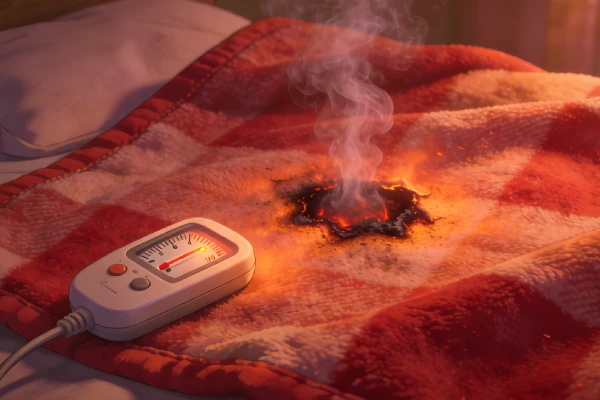
This classic symptom indicates faulty temperature regulation. The blanket’s control system should maintain a consistent temperature. If it gets progressively hotter, the thermostat or sensors are failing. This is a safety hazard—discontinue use.
Electric blanket temperature regulation issues like this cannot be repaired. Replacement is the only safe option.
Field Verification Tests (No Tools)
Test 1: Temperature Ramp Test
- Set blanket to medium
- Monitor for 30-60 minutes
- Pass: Temperature stabilizes and remains consistent
- Fail: Temperature continues climbing throughout test – safety hazard
Test 2: Hot Spot Detection
- Run on high for 20 minutes
- Feel across entire surface systematically
- Pass: Even warmth throughout
- Fail: Distinct areas significantly hotter than surroundings
Test 3: Setting Consistency Test
- Try each heat setting
- Note if lower settings are actually lower than higher settings
- Pass: Clear progression from low to high
- Fail: Settings inconsistent or overlapping
Test 4: Auto-Shutoff Test
- Time how long blanket runs before shutting off
- Compare to advertised auto-off time
- Pass: Shuts off within expected time range
- Fail: Runs longer than advertised or doesn’t shut off – safety concern
Test 5: Displacement Test
- Use blanket normally for a night
- Check if it has shifted significantly
- Pass: Stays in place
- Fail: Slides off bed, causing bunching and potential hot spots
Test 6: Controller Temperature Test
- During use, carefully touch controller
- Pass: Warm but comfortable to hold
- Fail: Too hot to touch – controller failure, safety hazard
Real-World Usage Failure Scenarios
Scenario 1: The Progressive Overheating
- User: Nightly use
- Timeline: 1 year
- Issue: Blanket worked fine at setting 2 initially; now setting 2 overheats after an hour
- Cause: Temperature sensor drift
- Outcome: Blanket replaced – safety first
Scenario 2: The Hot Spot Problem
- User: Couple
- Timeline: 6 months
- Issue: Certain areas get much hotter than others
- Cause: Uneven wire distribution
- Outcome: Returned; bought different brand
Scenario 3: The Inconsistent Settings
- User: Single user
- Timeline: From new
- Issue: Setting 3 hotter than setting 6
- Cause: Poor controller design
- Outcome: Lived with it; replaced later
Scenario 4: The Preheating Surprise
- User: Sensitive sleeper
- Timeline: First use
- Issue: Blanket became uncomfortably hot during preheat
- Cause: Aggressive preheat design
- Outcome: Learned to preheat earlier, turn down before bed
Scenario 5: The Auto-Shutoff Failure
- User: Falls asleep with blanket on
- Timeline: 2 years
- Issue: Blanket didn’t shut off after advertised time
- Cause: Controller failure
- Outcome: Controller replaced
Scenario 6: The Slippery Blanket
- User: Tosses and turns
- Timeline: Ongoing
- Issue: Blanket slides off bed, causing cold spots and overheating where bunched
- Cause: Slippery surface material
- Outcome: Used blanket straps to secure
Common Misdiagnosis Patterns
Misdiagnosis 1: “Blanket is too hot, must be defective” → Normal preheat cycle
- Symptom: Very hot when first turned on
- Actual cause: Some blankets have aggressive preheat mode
- Verification: Check if temperature drops after 30 minutes
Misdiagnosis 2: “Uneven heating means broken” → Wire movement
- Symptom: Hot spots in some areas
- Actual cause: Wires may have shifted; blanket may not be flat
- Verification: Smooth out blanket, ensure flatness
Misdiagnosis 3: “Settings are wrong” → Poor design
- Symptom: Setting 3 hotter than setting 6
- Actual cause: Controller may have non-linear settings
- Verification: Test all settings; if pattern repeats, design issue
Misdiagnosis 4: “Auto-shutoff not working” → Normal behavior
- Symptom: Light stays on after shutoff
- Actual cause: Some controllers keep dim light on
- Verification: Check if blanket actually turned off
Misdiagnosis 5: “Blanket moves too much” → Fabric issue
- Symptom: Slides off bed
- Actual cause: Slippery surface material
- Verification: Use blanket straps; if solves, fabric issue
Misdiagnosis 6: “Blanket is too hot, but it’s fine” → Dangerously wrong
- Symptom: Progressive overheating
- Actual cause: Temperature regulation failure
- Verification: This is never normal – replace immediately
Electric Blanket Lifespan and Overheating Risk
| Usage Level | Expected Lifespan | Overheating Risk |
|---|---|---|
| Light (occasional, seasonal) | 5-8 years | Lower risk if well-maintained |
| Moderate (nightly, cold months) | 3-5 years | Moderate risk after 3 years |
| Heavy (year-round, nightly) | 2-4 years | Higher risk due to component wear |
Safety Red Flags:
- Blanket gets hotter over time
- Hot spots develop
- Settings become inconsistent
- Auto-shutoff malfunctions
- Burning smell or discoloration
- Controller too hot to touch
Electric Blanket Overheating Fix: Repair vs Replace
Consider replacement if:
- Overheating is severe or progressive
- Hot spots are present
- Temperature regulation is clearly faulty
- Blanket is over 3-5 years old
- Any burning smell or discoloration
- Controller is too hot to touch
Consider repair if:
- Controller is the issue and replacements are available
- Blanket is under warranty
- Simple fix (like securing a shifting blanket)
Note: Heating elements and temperature sensors cannot be repaired. When these fail, replacement is the only option.
Controller Replacement Options
Some manufacturers sell replacement controllers separately:
- Sunbeam: Available for many models ($20-40)
- Biddeford: Limited availability
- Beautyrest: Some models have replacements
- Generic brands: Usually not available
How to find:
- Locate model number on blanket tag or controller
- Search “[brand] [model] replacement controller”
- Contact manufacturer
How to Prevent Electric Blanket Overheating
Proper Use
- Always lay blanket flat; never fold or bunch
- Don’t cover with heavy blankets or comforters
- Use the lowest effective heat setting
- Allow space for heat to dissipate
- Never use with infants, elderly, or immobile persons
Regular Inspection
- Check for hot spots before each season
- Test all settings periodically
- Feel for uneven heating
- Replace at first sign of trouble
Storage
- Roll loosely, never fold sharply
- Store in cool, dry place
- Keep away from heavy items
Washing
- Follow manufacturer instructions exactly
- Disconnect controller before washing
- Ensure completely dry before use
Technician Notes
Based on repair observations:
- Overheating that gets worse over time indicates sensor or thermostat failure. This is a safety hazard—replace the blanket immediately.
- Hot spots are usually caused by wire bunching or damage. If smoothing doesn’t help, replace.
- Inconsistent settings are often design flaws. Some controllers simply have poor temperature mapping.
- Aggressive preheating is intentional but can be managed. Preheat earlier and turn down before bed.
- Auto-shutoff issues usually mean controller failure. Replace controller if available.
- Slippery blankets are a design issue. Use straps or buy a blanket with better grip.
- If you’re unsure whether overheating is normal, err on the side of safety. Replace the blanket.
- I’ve seen blankets that were hot enough to melt fabric. Never ignore overheating.
Frequently Asked Questions
Why is my electric blanket overheating?
The most common causes are faulty temperature regulation, sensor malfunction, or inadequate heat control settings. If your blanket gets progressively hotter during use, discontinue use immediately.
How to stop electric blanket from overheating?
Unplug immediately, ensure blanket lies flat, check for visible damage, and test on lower settings. If overheating persists, replace the blanket.
Why does my electric blanket get hotter over time?
This indicates a failing thermostat or temperature sensor. The control system is not regulating properly, allowing heat to build up. This is a safety hazard—replace the blanket.
Why does my electric blanket have hot spots?
Hot spots occur when heating wires are concentrated in certain areas. This can be due to poor design, wire movement, or blanket displacement during sleep.
Why are my electric blanket settings inconsistent?
Some controllers have poor temperature mapping where lower settings can feel hotter than higher ones. This is often a design flaw rather than a defect.
Why is my electric blanket too hot on preheat?
Many blankets have aggressive preheat modes that intentionally overshoot temperature. Preheat earlier and turn down before getting into bed.
Why does my electric blanket auto-shutoff not work?
Auto-shutoff failure usually indicates controller malfunction. If the blanket doesn’t shut off at the advertised time, replace the controller or blanket.
Why does my electric blanket slide off the bed?
Slippery surface material causes displacement during sleep. Use blanket straps to secure it, or consider a blanket with better grip.
Is it normal for an electric blanket to get very hot?
No. Electric blankets should provide gentle, consistent warmth. Excessive heat or progressive overheating is a safety concern.
Can an overheating electric blanket cause a fire?
Yes. Overheating can lead to melted insulation, short circuits, and fire. If your blanket overheats, unplug it immediately and discontinue use.
How long do electric blankets last before overheating becomes a risk?
Typically 3-5 years with regular use. After this, components can degrade and overheating risk increases.
Electric blanket temperature regulation issues – can they be fixed?
If the issue is in the controller and replacements are available, yes. If the heating elements or sensors are faulty, replacement is the only option.
Summary
Electric blankets that overheat typically have one of these issues:
- Faulty temperature regulation → gets hotter over time → replace immediately
- Sensor malfunction → inaccurate readings → replace blanket
- Inadequate settings → too hot on low, too cold on high → design limitation
- Uneven heating → hot spots → replace if persistent
- Aggressive preheat → uncomfortably hot initially → manage timing
- Auto-shutoff failure → doesn’t turn off → replace controller
- Blanket displacement → bunching causes hot spots → secure with straps
Safety Guidelines:
- Never ignore overheating
- Unplug immediately if blanket feels too hot
- Check for hot spots regularly
- Replace blankets older than 3-5 years
- If in doubt, throw it out
Electric blanket overheating fix quick guide:
- Unplug and inspect
- Ensure flatness
- Test lower settings
- Monitor temperature
- Replace if problem persists
The cost of a new electric blanket is minimal compared to the risk of burns or fire. When it comes to overheating, err on the side of safety.