
Why Is My Dehumidifier Running but Producing No Water?
Your dehumidifier has power and appears to be running, but the water tank stays empty. That does not automatically mean the compressor has failed. The cause may be low room humidity, restricted airflow, frozen coils, a tank-sensor problem, or an internal fault that requires professional diagnosis.
Before assuming the unit is broken, check the room humidity, airflow, operating conditions, and tank installation. If the unit uses continuous drainage, also check whether water is being directed through the drain hose instead of into the tank.
This guide covers seven possible causes and explains what you can safely check before paying for repairs. Component layouts, operating ranges, and normal behavior vary by model, so follow your manufacturer’s instructions where they differ from this guide.
Quick Diagnosis: What Do You Observe?
| What you observe | What to check next |
|---|---|
| Fan does not run or airflow is very weak | Check the filter, air intake, exhaust, and operating mode. |
| Fan runs, but the compressor does not seem to start | Check the operating settings and model-specific restart instructions. |
| Thick ice covers the coils | Unplug the unit and allow it to thaw completely. Then check room temperature and airflow. |
| Airflow is normal, but no water collects | Check room humidity, the target setting, and the unit’s operating conditions. |
| Tank is empty, but the full-tank light is on | Check that the tank is seated correctly and inspect the float if the manual permits. |
| Tank stays empty while continuous drainage is connected | Check the drain hose installation and whether water is flowing through it. |
| Room humidity is already at or below the target | Confirm the reading with a separate hygrometer. The unit may not need to remove more moisture. |
Use these observations to narrow down the problem. They are clues, not definitive diagnoses.
1. The Room Humidity Is Too Low
What it means
A dehumidifier removes moisture from the air when conditions call for dehumidification. If actual room humidity is already at or below the selected target, the compressor may stop or cycle less frequently. As a result, little or no water may collect.
An empty tank alone does not prove that the unit has failed.
How to check
- Place a separate hygrometer in the room and allow the reading to stabilize.
- Compare the measured relative humidity with the dehumidifier’s target setting.
- Confirm that the unit is in dehumidifying mode rather than fan-only mode.
- Check whether a timer or schedule is limiting operation.
What to do
If room humidity is already at or below the target, the unit may be operating normally. If humidity remains above the target, check the other causes in this guide.
Do not judge performance solely by the amount of water in the tank. Collection also depends on room temperature, humidity, operating time, and the unit’s design.
2. Airflow Is Restricted
What it means
A dirty filter, blocked intake, or obstructed exhaust can reduce the amount of air passing over the evaporator. This can reduce moisture removal and, under some conditions, contribute to coil icing.
How to check
- Turn off and unplug the unit.
- Remove and inspect the air filter according to the manual.
- Check the intake and exhaust grilles for dust, lint, or other obstructions.
- Make sure furniture, curtains, or walls are not blocking airflow.
- Check whether the fan moves air normally when the unit is operating.
What to do
Clean or replace the filter as directed by the manufacturer. Clear obstructions around the air openings and leave the recommended clearance around the unit.
If airflow remains weak after these checks, the fan or another internal component may need inspection. Do not dismantle electrical components unless you are qualified to do so.
3. The Evaporator Coil Is Frozen
What it means
Ice on the evaporator can obstruct airflow and interfere with normal moisture removal. Icing may be associated with low room temperature, restricted airflow, or another operating fault. The exact cause depends on the unit and its operating conditions.
Light, temporary frost may occur on some models. Thick ice that continues to build up or prevents normal water collection requires further investigation.
How to check
- Switch off and unplug the unit.
- If the coils are visible through an opening intended for user inspection, look for frost or ice.
- Do not remove panels that the manufacturer does not identify as user-accessible.
- Check the room temperature and filter condition against the model’s operating requirements.
What to do
Allow the unit to thaw completely before restarting it. Do not chip, scrape, or forcibly remove ice because the coil and fins can be damaged.
After thawing, check the filter, airflow, and room temperature. If the coils repeatedly freeze under conditions within the unit’s rated operating range, arrange further diagnosis rather than repeatedly restarting the appliance.
For a dedicated explanation of freeze-up symptoms and possible causes, see Dehumidifier Freezes Up? 7 Causes & Fixes.
4. The Compressor Is Not Starting
What it means
On a compressor-type dehumidifier, the fan can run even when the compressor is not operating. If the compressor does not start, the unit may be unable to cool the evaporator and collect water.
However, a quiet compressor does not automatically mean it has failed. Operating settings, control functions, and model-specific restart behavior can affect when the compressor runs.
What to check first
- Confirm that the unit is in dehumidifying mode and that room humidity is above the selected target.
- Check the display and indicator lights for warnings.
- Follow the model-specific instructions for restart delays and defrost operation.
- Note whether repeated humming, clicking, or other unusual noises occur.
Do not repeatedly restart a unit that hums or clicks without starting. Do not open the electrical compartment or attempt to test live components.
If the compressor repeatedly fails to engage after the basic checks, a qualified technician may need to distinguish a starting-component problem from a control-circuit or compressor fault.
For detailed information about this specific symptom, see Dehumidifier Fan Running but No Water? 7 Causes (Compressor Not Starting).
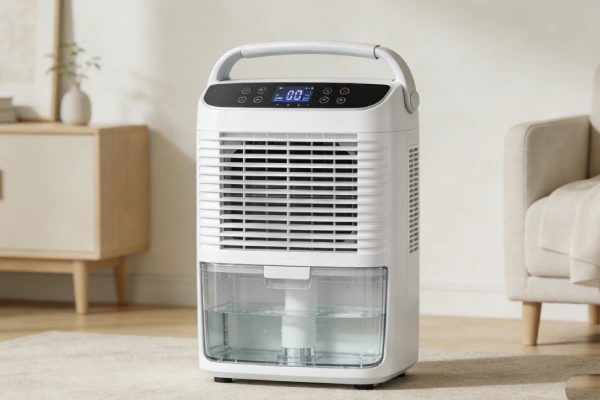
5. The Tank Sensor or Float Is Preventing Operation
What it means
Many dehumidifiers use a float mechanism or tank sensor to detect when the water container is full or incorrectly positioned. If the tank is not seated correctly, or the mechanism is stuck, the unit may register a full-tank condition even when the tank is empty.
How to check
- Turn off and unplug the unit.
- Remove the tank and check for visible damage or obstructions.
- Reinstall the tank securely.
- If the float is accessible and identified as user-serviceable in the manual, check whether it moves freely.
- Check whether the full-tank indicator clears when the tank is correctly installed.
What to do
Correct the tank’s position and clean accessible parts only as directed by the manufacturer.
If the full-tank warning remains on with an empty, correctly seated tank, the sensor, float mechanism, or associated switch may need service.
Do not bypass, short-circuit, or disconnect the tank sensor. It is a safety feature intended to prevent overflow.
6. The Cooling System Is Not Removing Moisture
What it means
If the room is humid enough, airflow is normal, and the coils are not frozen, but the unit still collects no water, an internal cooling or control problem may be involved.
On compressor-type models, the cause could involve the compressor or another part of the cooling system. However, the absence of water alone cannot establish that refrigerant has leaked.
What to check
Before arranging service, confirm that:
- Room humidity is above the selected target.
- The filter and air openings are clean and unobstructed.
- Room temperature is within the unit’s rated operating range.
- The tank and any connected drainage arrangement are correctly installed.
- The problem persists after the normal operating or restart period specified in the manual.
What to do
If the compressor appears to be running but the unit still produces no water, a technician may need to assess cooling performance and the sealed system.
Do not assume refrigerant loss from a single symptom. Do not use compressor housing temperature alone to diagnose the fault. Sealed-system repairs require specialized tools and should be handled by a qualified technician.
Ask for a diagnosis and repair estimate before authorizing work. Compare the estimate with the price of a comparable replacement unit before deciding whether the repair makes sense.
7. The Unit Type or Operating Conditions Are Unsuitable
What it means
Not every dehumidifier works effectively under the same conditions. Compressor-type units generally become less effective in cooler environments, and some may stop or develop frost outside their rated operating range.
Thermoelectric models use a different mechanism and should not be assessed using compressor-specific checks. The unit may also be too small for the room or moisture load, making it difficult to achieve the desired humidity.
How to check
- Identify whether the unit is compressor-type or thermoelectric.
- Check the manufacturer’s rated operating temperature range.
- Measure room temperature and relative humidity.
- Compare the room size and moisture conditions with the unit’s rated capacity.
- Confirm that the unit is not operating in a mode that limits dehumidification.
What to do
Use the unit within its specified operating range. If the room is too cold, consider moving the unit to a suitable location or using a model rated for lower temperatures.
If the unit is undersized for the space, it may run for long periods without achieving the desired humidity. Check the unit’s rated capacity and the room’s moisture load before assuming that an internal component has failed.
Safe Checks You Can Do Before Calling a Technician
Before arranging service, you can usually check the following without opening the unit:
- Measure room humidity with a separate hygrometer.
- Confirm the humidity target and operating mode.
- Clean or replace the filter according to the manual.
- Make sure the intake and exhaust are unobstructed.
- Check whether the tank is seated correctly.
- Confirm that room temperature is within the unit’s rated operating range.
- If continuous drainage is connected, check the hose installation.
- Look for visible frost or ice through user-accessible openings.
Do not open the sealed refrigerant system, test live electrical components, or bypass a float switch or other safety feature. Do not diagnose a compressor fault from sound or housing temperature alone.
When Should You Call a Technician?
Arrange professional diagnosis if:
- Room humidity is above the target, airflow is normal, and the unit still collects no water after the basic checks.
- The compressor repeatedly fails to start.
- The coils repeatedly freeze despite suitable operating conditions and a clean filter.
- The full-tank warning persists after the tank is correctly installed.
- An error code remains after the model-specific reset procedure.
- You suspect an internal electrical or sealed-system fault.
If you smell burning, see smoke, or notice damaged electrical parts, switch off and disconnect the unit if it is safe to do so. Do not continue operating it.
Before approving a repair, ask the technician to explain the confirmed fault and provide an estimate. An empty tank is a symptom, not a diagnosis, so avoid paying for a compressor or sealed-system repair based on an assumption.
Dehumidifier Running but No Water: FAQ
Why is my dehumidifier running but not collecting water?
Possible causes include low room humidity, restricted airflow, frozen coils, a tank-sensor problem, a compressor that is not starting, or a cooling-system fault. Compare actual humidity with the target setting first, then check the filter, airflow, tank, and operating conditions.
Can a dirty filter cause a dehumidifier to stop collecting water?
Yes. A clogged filter can restrict airflow across the evaporator, reducing moisture removal and potentially contributing to icing. Clean or replace the filter according to the manufacturer’s instructions.
Why does my dehumidifier freeze up?
Possible causes include a room temperature outside the unit’s rated range, restricted airflow, or an internal fault. Turn the unit off, unplug it, and allow the ice to melt completely. If icing returns under suitable conditions, arrange further diagnosis.
Why is the tank empty but the full-tank light is on?
The tank may not be seated correctly, or the float mechanism or sensor may be stuck or faulty. Reinstall the tank and inspect any user-serviceable float according to the manual. Do not bypass the safety switch.
When should I call a technician?
Call for service if the unit continues to collect no water after the basic checks, repeatedly fails to start, freezes up under suitable conditions, or displays a persistent fault code. Internal electrical and sealed-system faults should be diagnosed by a qualified professional.