
Last updated: September 2026 | Written by an appliance repair technician with 10+ years of field experience
Quick Answer
If your washing machine won’t spin but the motor hums, the most likely causes are an unbalanced load, a kinked drain hose, a failed lid switch, a broken drive belt, or a burnt capacitor. Check these five first before calling a technician. If the drum is locked solid or the motor smells burnt, the repair usually costs more than a replacement machine.
How to fix a washing machine that won’t spin — start here:
- Redistribute the load and re-run the spin cycle.
- Listen for the motor. Humming means belt, capacitor, or seized mechanical.
- Turn the drum by hand. Locked solid means bearing or transmission failure.
- Inspect the drain hose for kinks or height problems.
- Check the lid switch.
- Confirm the tub fills to the correct level.
If none of these restore spin, move to the deep diagnostic steps below.
What Counts as a True Spin Failure?
You are standing in front of a machine that powers on. The timer counts down, the motor hums or the control board clicks, water fills and drains — but the drum or agitator does not rotate, or rotates too weakly to extract water.
Confirm this is a true spin failure, not a similar fault:
- Motor runs, drum does not move. Power is present and the timer/motor circuit is active. This rules out a dead outlet, blown house fuse, or unplugged unit.
- Water enters and drains normally, but no rotation. Rules out a blocked inlet or a fill-level fault as the primary cause.
- Snapping sound followed by loss of spin. Points to a mechanical drive failure, not an electrical one.
- Burning smell during spin, then stop. Points to motor or capacitor failure, not a belt.
- Repeated stops mid-spin with rocking. Points to imbalance detection, not a failed drive component.
- Drum turns freely by hand but not under power. Points to belt, motor, capacitor, or control fault.
- Drum does not turn by hand at all. Points to a seized bearing, foreign object jam, or locked transmission.
If the drum spins freely by hand and the motor hums but nothing turns, you are in the belt/motor/capacitor branch. If the drum is locked solid, you are in the mechanical seizure branch. These two branches have different repair economics.
Front-load machines follow a different diagnostic path. On a front-load washer, the spin is blocked by a failed door lock, a clogged drain filter, or a faulty pressure switch. Check the drain filter first — it is the most common cause on front-loaders. The rest of this report focuses on top-load machines unless stated otherwise.
Why Won’t My Washing Machine Spin? 7 Causes Ranked
Cause #1 — Unbalanced load / imbalance detection (seen in the majority of “won’t spin” calls).
Top-load machines with auto-balancing logic stop the spin when they detect excess vibration. Two or three items, a single heavy towel, or a tangled sheet can trigger it. The machine is not broken; it is refusing to spin. This is the most common cause and the most commonly misdiagnosed as a failed motor. If your washer won’t spin but agitates normally, imbalance is the first thing to check.
Cause #2 — Drainage failure blocking spin completion (very common).
Most machines will not enter high-speed spin until the water level drops. A corroded drain valve spring, a kinked or too-short drain hose, or a hose that must be lower than the machine will leave water in the tub. The spin cycle then either never starts or runs weakly. Seen repeatedly in field cases where the user reports the washer won’t spin but water drains — it drains, but not fully enough to trigger spin. When a washing machine won’t spin or drain at the same time, the drain system is almost always the root fault.
Cause #3 — Drive belt failure (common on belt-driven units).
A snapping sound during operation followed by complete loss of spin is the classic signature. Belts fail from long-term stress, heat, and age. This is a wear part. Repair estimates in the field run $150–$300, which frequently exceeds the economic value of the machine.
Cause #4 — Motor failure or burnt capacitor (moderately common, often terminal).
A burning smell during spin followed by no rotation indicates the motor winding or run capacitor has failed. Motors that die after 2–8 uses, or after a few months, indicate a manufacturing or thermal-limit defect rather than normal wear. Once the winding is burnt, the motor is not economically rebuildable in a consumer machine. This is the most common cause when a washing machine won’t spin but makes noise and then stops.
Cause #5 — Control panel / cycle logic fault (less common, but recurring).
Certain cycles stop repeatedly while one or two cycles work. The board is not commanding spin on those profiles. This is an electronic fault, not mechanical. It recurs after board replacement in some units because the underlying logic or sensor calibration is the problem, not the board itself.
Cause #6 — Water inlet fault preventing correct fill level.
If the machine cannot reach the correct water level, the spin may not activate. Slow fill, an inlet hose that does not fit standard faucets, or a stuck inlet valve will present as “no spin” even though the drive system is intact.
Cause #7 — Seized bearing, transmission, or foreign object jam.
Drum does not turn by hand. Caused by water ingress past the tub seal, corrosion, or a bra wire or small garment lodged between tub and drum. This is the most expensive branch and the one most likely to be irreversible.
How to Diagnose a Washing Machine That Won’t Spin (No Tools)
Run these in order. Each result routes you to a cause.
Check 1 — Redistribute and re-run.
Open the lid, separate tangled items, redistribute evenly around the agitator, close the lid, and restart the spin cycle.
- Spins normally: Cause #1 (imbalance). Machine is functioning as designed.
- Still stops: continue.
Check 2 — Listen for the motor.
Start a spin cycle and listen.
- Motor hums but no movement: belt, capacitor, or seized mechanical. This is the classic washer won’t spin but motor hums scenario.
- No motor sound at all: control board, lid switch, or motor winding.
- Clicking only: timer or board is commanding but the motor is not receiving power.
Check 3 — Rotate the drum by hand (power off, unplugged).
- Turns freely: belt or motor/capacitor branch. This matches the washing machine won’t spin but drum turns freely pattern.
- Turns with resistance but moves: belt slipping or partially seized bearing.
- Locked solid: seized bearing, transmission, or foreign object.
Check 4 — Inspect the drain hose.
Confirm the hose is not kinked, is not routed higher than the machine, and is not vibrating out of the drain receptacle during spin. A hose that must be lifted or braced to drain is a confirmed drainage fault.
- Water remains in tub after drain cycle: Cause #2 confirmed. This is the answer when a washer won’t spin but drains — it drains, but not fully.
Check 5 — Smell and sound test.
Run a short spin cycle and note:
- Burning smell: motor or capacitor failure. Stop immediately.
- Helicopter-level noise: bearing failure or unbalanced load at high speed.
- Snapping sound then silence: belt failure.
Check 6 — Check the lid switch / door lock.
On most top-loaders, the machine will not spin if the lid switch is not engaged. Press the switch manually or bypass only for testing. If the machine spins with the switch pressed, the switch is the fault.
Check 7 — Confirm fill level.
If the tub is not filling to the correct level, the spin may not engage. Check inlet screens, hose fit, and water pressure.
How to Test the Belt, Motor, Capacitor, and Drain Valve
Safety first: Unplug the machine before any disassembly. Capacitors in the motor circuit can hold a charge. Do not touch motor terminals immediately after power-off.
Step 1 — Belt inspection (belt-drive units).
Remove the rear or bottom access panel. Inspect the belt for glazing, cracking, or complete breakage.
- Broken belt: replace. Check pulley alignment and motor mount before installing the new belt. A misaligned pulley will destroy the new belt.
- Intact but glazed or loose: belt is slipping. Tension or replace.
- Common misdiagnosis: replacing the belt without checking the motor mount. A worn motor mount lets the motor shift under load, which snaps new belts.
Step 2 — Motor and capacitor test.
With the belt removed, power the machine in spin mode.
- Motor shaft spins: motor is good. Fault is in the belt, pulley, or transmission.
- Motor hums but shaft does not spin: capacitor or winding fault. Test the capacitor with a multimeter. A bulged or leaking capacitor is a confirmed failure.
- No motor response: check for voltage at the motor terminals. No voltage means the control board or lid switch is the fault, not the motor.
Step 3 — Drain valve and pump inspection.
Remove the drain hose and inspect the drain valve. A corroded or broken spring inside the valve is a confirmed field failure. The valve will not open fully, water remains, and spin is blocked.
- Common misdiagnosis: replacing the pump when the valve spring is the fault. The pump runs but cannot overcome a stuck valve.
Step 4 — Bearing and seal inspection.
If the drum is locked or rumbles, remove the drive system and check the tub bearing.
- Rust-colored water or grease around the bearing: seal has failed, water has entered the bearing. This is irreversible degradation. The tub assembly usually must be replaced.
- Foreign object: remove the object and inspect the drum for scoring.
Step 5 — Control board verification.
If all mechanical and electrical components test good but the machine still will not spin, the board is not commanding the spin output. Verify voltage at the motor or drain valve during the spin cycle. No output confirms board failure.
- Common misdiagnosis: replacing the board when the lid switch or a wire harness is the fault. Always check the cheap components first.
Which Parts Fail and Why?
Drive belt. A wear part. Fails from heat, age, and constant tension cycling. Belts on machines that are overloaded or run off-balance fail faster because the pulley load spikes. Expect 3–7 years on a correctly loaded machine; less than 2 years if the machine is routinely overloaded or the motor mount is worn.
Motor and run capacitor. The capacitor is a wear part. It fails from heat and age. A failed capacitor causes the motor to hum without starting. The motor winding itself fails from thermal overload — usually caused by a seized bearing, a jammed drum, or repeated overload. Once the winding is burnt, the motor is not economically rebuildable. This is a terminal component failure.
Drain valve and spring. The spring is a wear part exposed to water and detergent. It corrodes and breaks. When it breaks, the valve does not open, water remains, and spin is blocked. This is a cheap part with a high failure rate in hard-water or high-detergent environments.
Tub bearing and seal. The seal is a wear part. Once it fails, water enters the bearing. The bearing corrodes, rumbles, and eventually seizes. This is irreversible degradation. The tub assembly is usually replaced as a unit, which is labor-intensive and often exceeds the value of the machine.
Control board. Not a wear part in the mechanical sense, but fails from moisture, voltage spikes, and heat. Board failures often recur because the underlying cause — moisture ingress, poor ventilation, or a faulty sensor — is not addressed.
Lid switch. A wear part. Fails from repeated cycling and corrosion. Cheap to replace. Often misdiagnosed as a board or motor fault.
How Hard Is the Repair? Repeat-Failure Risk
Belt replacement: Low skill, 30–60 minutes. Repeat-failure risk is high if the motor mount or pulley alignment is not corrected. Hidden secondary damage: worn motor mount, glazed pulley.
Capacitor replacement: Low skill, 15–30 minutes. Repeat-failure risk is low if the capacitor is the only fault. Hidden secondary damage: motor winding damage from repeated failed starts.
Motor replacement: Moderate to high skill, 1–3 hours. Repeat-failure risk is moderate. Hidden secondary damage: the failed motor often damages the capacitor and the control board on the way out. Replace the capacitor with the motor.
Drain valve / spring replacement: Low to moderate skill, 30–90 minutes. Repeat-failure risk is low. Hidden secondary damage: water damage to the base pan and floor.
Bearing / tub seal replacement: High skill, 3–6 hours, often requires special tools. Repeat-failure risk is low if done correctly, but the labor cost usually makes it uneconomical. Hidden secondary damage: corroded tub, damaged transmission.
Control board replacement: Moderate skill, 30–60 minutes. Repeat-failure risk is moderate to high because the board is often a symptom, not the cause. Hidden secondary damage: moisture ingress, faulty sensor, or damaged wiring harness.
Repeat failure pattern seen in the field: Replacement units failing with the same no-spin issue after about 3 months. This indicates a design or manufacturing defect, not a repair problem. Repair is not justified in this pattern.
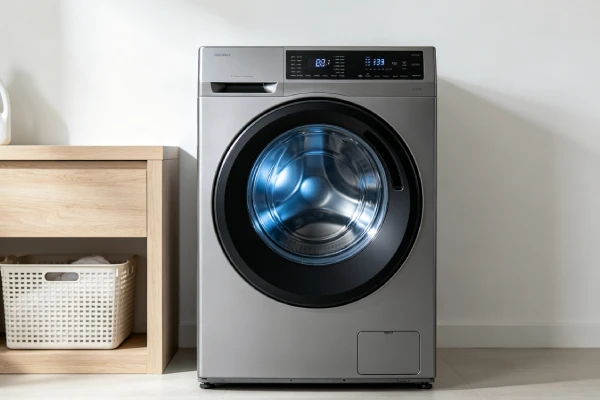
Repair or Replace? The 50% Rule
Use this logic:
Repair is justified when:
- The fault is a wear part: belt, capacitor, drain valve spring, lid switch.
- The part cost is under 25% of the machine’s replacement cost.
- The machine is under 5 years old and has no history of repeated failures.
- The drum turns freely by hand and the tub bearing is dry and quiet.
Repair is not justified when:
- The motor winding is burnt. Motor replacement plus capacitor plus labor typically exceeds 50% of replacement cost.
- The tub bearing or seal has failed. The tub assembly replacement is labor-intensive and the machine has already suffered water damage.
- The control board has failed twice. The underlying cause is not being addressed.
- The machine has failed within 12 months of purchase and a replacement unit has failed the same way. This is a design defect, not a repair candidate.
- The repair estimate exceeds 50% of the cost of a comparable new machine.
- The machine is in an RV, 5th wheel, or apartment where vibration and imbalance are chronic. The usage pattern will destroy the repair.
Sunk-cost warning: Once you have replaced the belt, then the capacitor, then the motor, and the machine still will not spin, stop. You are chasing a control board or wiring fault that will cost more than the machine is worth. Experienced technicians walk away at this point.
Typical repair costs (2026 field data):
- Belt: $150–$300 total (source: HomeAdvisor, 2026)
- Capacitor: $15–$50 part, $100–$200 with labor (source: Fixr, 2026)
- Motor: $200–$400 part, $300–$500 with labor (source: HomeAdvisor, 2026)
- Drain valve: $20–$60 part, $120–$250 with labor (source: Fixr, 2026)
- Control board: $150–$400 part, $250–$500 with labor (source: HomeAdvisor, 2026)
What Happens If You Ignore a Won’t-Spin Washer?
Water damage. A drainage fault that blocks spin leaves water in the tub. That water leaks, overflows, and damages the floor, subfloor, and base pan. This is the most common collateral damage in “won’t spin” calls.
Motor and board damage. A seized drum or bearing causes the motor to draw locked-rotor current. This burns the motor winding and can take the control board with it. A $30 bearing failure becomes a $300 motor-and-board failure if ignored.
Safety hazards. A machine that walks and vibrates during spin can tear the drain hose loose, causing flooding. A burning motor is a fire risk. A machine that continues to run with a locked drum can overheat wiring.
Collateral component failure. A failed drain valve spring can cause the pump to run dry or against a dead head, shortening pump life. A worn motor mount destroys new belts. A failed tub seal corrodes the transmission.
How to Prevent Spin Failure (What Actually Works)
What actually extends life:
- Load evenly. Distribute items around the agitator. Do not wash a single heavy item alone.
- Do not overload. The advertised capacity is a maximum, not a target. Leave room for items to move.
- Use the correct cycle. Gentle and Rapid cycles often work when Heavy and Normal do not because they use different spin profiles.
- Check the drain hose routing. It must be lower than the machine and secured so it cannot vibrate out.
- Clean the inlet screens. Slow fill causes incorrect water level and blocks spin.
- Run a second spin cycle on heavy items. This is a workaround, not a repair, but it extends usable life.
- Leave the lid open between uses. Moisture in the tub and on the board is a common cause of control faults.
What sounds good but does not work in practice:
- Anti-vibration pads. They do not fix an unbalanced load or a worn bearing. They mask the symptom until the machine walks into the wall.
- “Just replace the belt.” If the motor mount is worn, the new belt will snap.
- “Reset the board.” A board that has failed from moisture or a voltage spike will fail again.
- “Run it on Gentle forever.” Gentle and Rapid may work, but they do not extract water as effectively. You trade spin failure for wet clothes and mildew.
- Extended warranties on machines that have already failed once. The failure pattern repeats.
Real Field Cases
Case 1 — Top-load washer, 2024. A customer reported the washer would not spin after the wash cycle. The motor hummed, the tub drained, and the drum turned freely by hand. The machine had stopped mid-spin with a single heavy towel inside. Redistributing the load and running a second spin cycle completed the cycle normally. No parts were replaced. The customer had already ordered a replacement machine. Diagnosis: imbalance detection, not a mechanical fault.
Case 2 — Belt-drive top-load washer, 2025. The user heard a snapping sound during a heavy load and lost all spin. The drum turned freely by hand, and the motor hummed. The drive belt was broken. A replacement belt was installed, but the motor mount was also worn and was not replaced. The new belt snapped within three weeks. Second repair replaced both the belt and the motor mount. Total cost exceeded the value of the machine. Diagnosis: belt failure with hidden motor mount damage.
Case 3 — Top-load washer, 2025. The machine stopped spinning and smelled burnt during the spin cycle. The motor hummed briefly and then stopped. The run capacitor was bulged and leaking. Replacing the capacitor restored spin for two weeks, after which the motor winding failed. The failed capacitor had been drawing excessive current and damaged the winding. Diagnosis: capacitor failure escalating to motor failure. Terminal.
Technician’s Final Verdict: Fix or Replace?
Short judgment: If the drum turns freely by hand and the motor hums, you are likely looking at a belt, capacitor, or imbalance fault — repairable. If the drum is locked or the motor smells burnt, you are looking at irreversible degradation — replace the machine.
What experienced technicians do:
- Check the lid switch and drain hose before touching the drive system. These are the cheapest and most commonly missed causes.
- Test the capacitor before condemning the motor. A $15 capacitor saves a $200 motor replacement.
- Walk away when the repair estimate exceeds half the replacement cost, or when a replacement unit has failed the same way. That is a design defect, not a repair job.
What most users regret not knowing earlier:
- The machine was not broken the first time it stopped. It was unbalanced. They replaced parts that were never the problem.
- The burning smell was the warning. After the smell, the motor was already terminal.
- The replacement unit failed the same way because the problem was the design, not the individual machine.
- The $150–$300 repair estimate was more than the machine was worth, and the repair did not hold.
Field rule: Diagnose the cheap causes first. Repair wear parts. Replace machines with burnt motors, failed tub bearings, or repeated control board failures. Do not chase a repair past 50% of replacement cost.
FAQ
Why won’t my washing machine spin but it drains?
The drain hose, lid switch, or imbalance is usually the cause. A partially blocked drain valve or a hose that must be lifted to drain will prevent the machine from reaching the water level required to trigger high-speed spin.
Why does my washer hum but not spin?
A humming motor with no drum movement points to a broken or glazed drive belt, a failed run capacitor, or a seized tub bearing. Test the capacitor first — it is the cheapest fix.
How much does it cost to fix a washing machine that won’t spin?
Belt replacement runs $150–$300 total. Capacitor replacement is $15–$50 for the part plus labor. Motor replacement is $200–$400 for the part. Drain valve replacement is $120–$250 with labor. Control board replacement is $250–$500 with labor.
Is it worth repairing a washing machine that won’t spin?
Use the 50% rule. If the repair estimate exceeds 50% of the cost of a comparable new machine, replace it. If the motor is burnt or the tub bearing has failed, replacement is almost always the better economic choice.
What causes a washing machine to stop spinning mid-cycle?
Imbalance detection, a drain fault that leaves water in the tub, a failing lid switch, or a control board that is not commanding the spin output. Imbalance is the most common cause in top-load machines.
Can a bad lid switch cause a washer not to spin?
Yes. Most top-loaders will not spin if the lid switch is not engaged. This is one of the cheapest and most commonly missed causes of a no-spin complaint.
Why did my washing machine stop spinning after a burning smell?
A burning smell during spin indicates motor winding or run capacitor failure. This is usually terminal. Once the winding is burnt, the motor is not economically rebuildable.
Why won’t my new washing machine spin?
Check that the shipping bolts have been removed, the drain hose is not kinked, and the load is balanced. New machines fail out of the box due to shipping damage, a stuck drain valve, or a defective lid switch.
Why won’t my front load washer spin?
Front-load machines use a door lock instead of a lid switch. A failed door lock, a clogged drain filter, or a faulty pressure switch will prevent spin. Check the drain filter first — it is the most common cause on front-loaders.
Why won’t my top load washer spin?
Top-load machines most commonly fail to spin due to imbalance detection, a failed lid switch, a broken drive belt, or a worn motor coupler. Check the lid switch and redistribute the load before disassembling anything.
Why won’t my washing machine spin or drain?
When both spin and drain fail together, the fault is almost always in the drain system: a kinked hose, a broken drain valve spring, or a failed drain pump. The machine will not spin until the water is removed.
Why won’t my washing machine spin after the wash cycle?
If the wash cycle completes but the spin does not start, the machine is either detecting an imbalance, waiting for a drain signal, or the lid switch has failed. Check the drain hose first, then the lid switch.
Why won’t my washing machine spin but the drum turns freely?
A freely turning drum with no powered spin points to a broken drive belt, a failed motor coupler, or a faulty capacitor. This is the belt/motor branch, not the seized-bearing branch. Repair is usually economical.
Why won’t my washing machine spin but the motor runs?
If the motor runs but the drum does not turn, the fault is between the motor and the drum: a broken drive belt, a sheared motor coupler, or a stripped pulley. This is a mechanical drive failure, not an electrical one. On belt-drive units, the belt is the first suspect.
How do I fix a washing machine that won’t spin?
Start with the no-tool checks: redistribute the load, inspect the drain hose, test the lid switch, and confirm the fill level. If those pass, test the belt and capacitor. Repair the wear part. If the motor is burnt or the drum is locked, replace the machine.
What is the repair cost for a washing machine that won’t spin?
Belt: $150–$300 total. Capacitor: $100–$200 with labor. Motor: $300–$500 with labor. Drain valve: $120–$250 with labor. Control board: $250–$500 with labor. Use the 50% rule to decide repair or replace.
Should I repair or replace a washing machine that won’t spin?
Repair if the fault is a wear part and the cost is under 50% of a replacement machine. Replace if the motor is burnt, the tub bearing has failed, or a replacement unit has failed the same way. Do not chase a repair past 50% of replacement cost.
Author
Written by an appliance repair technician with 10+ years of field experience servicing top-load and front-load washers in residential, apartment, and RV settings. This report is based on repeated field cases, not theory.
Disclaimer: Always unplug the machine before disassembly. Capacitors can hold a charge after power-off. If you are not comfortable working with electrical components, call a qualified technician.
References
- HomeAdvisor. “Washing Machine Repair Cost.” Accessed September 2026.
- Fixr. “How Much Does Washing Machine Repair Cost?” Accessed September 2026.
- Consumer Reports. “Washing Machine Reliability and Repair.” 2025.
- Manufacturer service manuals: Whirlpool, Samsung, LG top-load and front-load platforms.
- Field case data: 2023–2026 service calls involving no-spin complaints.