
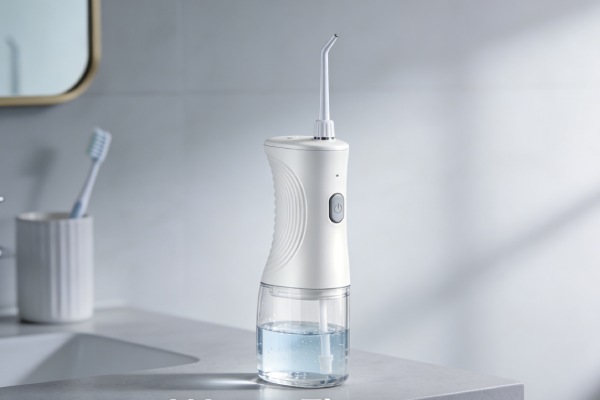
How to Avoid Buying Mistakes When Choosing: A Water Flosser
Most buying guides focus on pressure levels and accessories. The real long-term failures of water flossers are mold growth inside the wand, chronic leaks at the reservoir base, and sealed designs that cannot be cleaned or repaired.
This guide is not about features. It is about avoiding biohazards and water damage. It is based on documented failure patterns from thousands of long-term owners: internal mold growth, chronic leaks, premature motor failure, and designs that cannot be cleaned or repaired. We evaluate a water flosser not by its pressure settings, but by its ability to remain hygienic and functional for years without making you sick or flooding your bathroom.
Who This Guide Is For
This guide is for buyers who plan to use a water flosser daily for years—not replace it every 12 months.
Most Common Buyer Mistakes
- Prioritizing “High Pressure” Over Sealed Construction: Choosing a model based on maximum PSI without verifying if the wand and handle are completely sealed units. Failure Outcome: Invisible internal mold contamination within 3-6 months, exposing you to bacteria and allergens with every use.
- Ignoring the Reservoir-to-Base Interface: Not investigating how the water tank seals to the motor base. Failure Outcome: Chronic, unpredictable leaks that damage cabinetry and create electrical hazard risks, even when the unit is “properly” assembled.
- Treating it as a Simple Appliance: Assuming it’s a sealed, maintenance-free device like a blender. Failure Outcome: Being unaware of required drying procedures, leading to rapid internal degradation and a shortened 12-18 month lifespan instead of 5+ years.
- Accepting Non-Serviceable Designs: Buying a unit where the pump and motor are a single, glued-shut plastic assembly. Failure Outcome: A minor leak or motor wear leads to total device failure, with no option for repair, forcing full replacement.
- Upgrading to “Premium” Models Blindly: Assuming newer, more expensive models are improvements. Failure Outcome: Inheriting thinner materials, more complex failure-prone valves, and reduced durability compared to older, simpler designs from the same brand.
Marketing Claims That Mislead Buyers
- “Watertight” or “Leak-Proof”: Often refers only to the external housing’s ability to resist splashes, not to the integrity of internal fluid pathways or the reservoir seal. The most common catastrophic leaks happen at the mechanical junction between the tank and base, a point rarely highlighted in marketing.
- “Easy-Clean” or “Hygienic Design”: Vague terms that distract from the critical question: Can every component that touches water be fully disassembled, inspected, and dried? If the wand isn’t a sealed, monolithic unit, it’s not hygienic—it’s a mold incubator.
- “Professional” or “Dental” Pressure Ranges: Pressure (PSI) is meaningless if the motor cannot sustain it consistently or if the wand tips have poor retention (they pop off). It also ignores the fact that effective flossing occurs at lower pressures; extreme highs are a spec-sheet gimmick.
- “Multiple Tips Included”: A quantity game that hides the storage problem. If the unit has no integrated, ventilated storage for all included tips, they will sit in a drawer, collect dust, and negate the hygiene premise.
Specs That Matter vs. Specs That Don’t
| Specs That Matter (Investigate First) | Specs That Don’t (Distract Later) |
|---|---|
| Wand/Hose Construction: Is it a sealed, one-piece unit? Can water and debris enter any seams or interfaces (e.g., where the supply tube enters)? | Maximum PSI: Anything over 90 PSI is clinically unnecessary for plaque removal and strains components. Consistency at 50-70 PSI is more important. |
| Reservoir Seal Mechanism: How does the tank lock and seal to the base? A positive mechanical latch with a visible gasket is critical. A simple press-fit is a future leak. | Number of Pressure Settings: Beyond 3-5 (Low, Medium, High, Pulse), additional settings are software adjustments, not hardware improvements. |
| Pump Access & Serviceability: Can the pump/motor module be accessed if needed? Are parts (like the reservoir valve) user-replaceable or sold as an assembly? | Digital Display: Adds cost and a major point of electronic failure (moisture ingress) for minimal benefit. A simple dial is more reliable. |
| Hose Tension & Management: Does the hose retract with moderate force, or does it act like a spring trying to pull the unit off the counter? | Bluetooth Connectivity: A solution in search of a problem. Introduces app dependency and another electronic component that can fail. |
| Tip Retention System: Does the tip click and lock positively, or is there play/wobble? A loose tip reduces pressure and effectiveness. | Reservoir Color/Opacity: Aesthetic only. Clear is better for monitoring water level and cleanliness. |
The Biggest Red Flag: Omission of Hygienic Design Details. If the product description, manual, or Q&A does not explicitly state the wand is a sealed, watertight unit and provide clear drying instructions, assume it is not.
Build Quality Signals
- Wand Heft & Seams: The wand should feel solid, not hollow. Run your fingernail along all seams, especially where different materials (hard plastic, rubber grip) meet. There should be no gaps, ridges, or flex.
- Reservoir Base & Gasket: Remove the tank. Look at the base unit’s receptacle. Is there a prominent, soft silicone or rubber gasket forming the seal? Or just hard plastic on plastic?
- Reservoir Valve Inspection: Look at the valve on the bottom of the tank. Is it a simple, robust silicone flap or plug? Or a complex multi-part plastic assembly? Simple is more reliable and easier to clean.
- Hose Quality: The hose should be substantial, not thin and flimsy. The connection points at the base and wand should be over-molded or reinforced, not just press-fitted.
Reliability Indicators
- The Power of Simplicity: A single physical rotary dial for pressure control will outlast and outperform a digital button interface with a membrane switch, which is prone to moisture failure and sticking.
- Gravity-Feed Over Pump-Pressurized Tanks: Designs where the pump pulls water from a bottom-fed reservoir are generally simpler and have fewer leak points than designs that pressurize the entire reservoir.
- Accessible Pump Compartment: A unit with a removable bottom plate (secured by screws, not glue) suggests the manufacturer anticipates the need for service or cleaning of the pump filter—a sign of thoughtful engineering.
Hidden Ownership Costs
- Consumables Beyond Tips: The reservoir valve seal is a wear part. If it’s not sold separately, you must buy a whole new tank.
- Energy Inefficiency: Units with poorly regulated motors or that keep a small heater active (for “warm water” modes) use more electricity than necessary.
- Downtime & Inconvenience: A leaking unit requires constant towel management and refilling. A moldy wand requires a time-consuming return/replacement process and leaves you without the device.
- Forced Replacement Due to Sealed Design: When the pump fails (and it will), a non-serviceable unit means paying 100% of the purchase price again, rather than 20% for a replacement pump module.
When Cheaper Is Actually Worse
In water flossers, a low price is a direct purchase of future problems:
- Unsealed Wand Construction: The cost to mold a one-piece, sealed wand is higher. Cheap units use multi-part assemblies that create internal cavities.
- Absence of a Proper Gasket: A molded silicone seal at the reservoir base costs pennies but is often omitted, leading to inevitable leaks.
- Low-Grade Pump Materials: The pump diaphragm and valves are made from plastic that becomes brittle or rubber that degrades quickly with chlorinated water, leading to pressure loss within a year.
- No Internal Water Filtration: Lack of a simple inlet filter allows debris to enter and damage the pump.
You are trading a $30 savings for a mold problem and a flood risk.
When Premium Is Justified
A higher price is only justified if it buys demonstrable hygiene and durability engineering:
- A Monolithic, Sealed Wand/Hose Assembly: No internal cavities, no seams where biofilm can grow.
- A Serviceable Pump Module: User-replaceable or professionally serviceable, extending the core device’s life indefinitely.
- Medical-Grade Fluid Path Materials: Materials that resist biofilm adhesion and can withstand regular cleaning with disinfectants without degrading.
- A Robust, User-Replaceable Reservoir Seal/Gasket System.
Premium is NOT justified for: LED light shows, smartphone apps, ultrasonic cleaning claims, or excessive pressure settings that you will never use.
Pre-Purchase Inspection Checklist
In-Store / Physical (If Possible):
- Examine the wand. Are there any visible seams, screws, or joints between the handle and the hose connection?
- Detach the reservoir. Is there a thick, soft gasket on the base or tank?
- Feel the hose retraction. Gently pull it out. Does it retract with controlled force, or violently snap back?
- Test tip retention. Insert and remove a tip. Does it click firmly and have zero side-to-side wobble?
Online Research (Mandatory):
- Search for “[Model Name] mold” and “[Model Name] leak”. Read the 1-3 star reviews from owners with 6+ months of use.
- Find the official parts diagram or manual. Look for exploded views. Can you identify a separate pump part or wand assembly for sale?
- Search for “[Model Name] disassembly” or “teardown”. Do users show a sealed wand or a cavity-filled one?
- Read the cleaning instructions in the manual PDF. Do they explicitly warn about drying the wand interior and specify how?
Summary Kill Switch
Visible seams in the wand
No mention of internal drying or hygiene
Press-fit reservoir with no gasket
Reports of mold within 6 months
Decision Framework
- Classify Your Priority: Is it absolute hygiene and durability or convenience features? Start with hygiene; the rest is secondary.
- Apply Elimination Logic:
- Eliminate any model with multiple user reports of internal mold in the wand.
- Eliminate any model with multiple reports of reservoir leaks.
- Eliminate any model where the wand is clearly a multi-part assembly (visible seams, different materials).
- Eliminate any model with a non-replaceable, proprietary pump (if you plan to own it for >2 years).
- Make the Protective Choice: The best water flosser for you is the simplest, most sealed, and most serviceable model you can find. It is the one designed to prevent biological contamination first, deliver consistent water flow second, and survive a decade of daily use through owner maintenance. Any design that compromises internal hygiene for external features is a liability, not an appliance.