
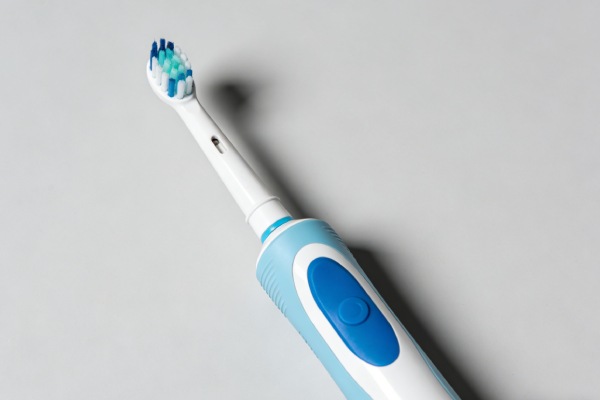
How to Avoid Buying Mistakes When Choosing: An Electric Toothbrush
This guide is not about finding the best electric toothbrush. It’s about avoiding the worst one. It is based on recurring failure patterns reported by long-term users, repair outcomes (or more often, the lack thereof), and the specific design choices that lead to poor oral health, frustration, and early landfill disposal. We prioritize what breaks, what disappoints, and what costs you more in the long run—not what shines in a marketing photo.
Most Common Buyer Mistakes
- Prioritizing “Modes” Over Motor Quality: Choosing a brush with 5+ “smart” modes powered by a weak, vibration-only motor. Failure Outcome: Plaque buildup and cavities because the primary cleaning action is ineffective. The fancy modes are just software overlays on a fundamentally poor engine.
- Falling for Unverified “Professional” Endorsements: Assuming a generic seal of approval (like a dental association logo) guarantees real-world performance for your mouth. Failure Outcome: Dentist visits reveal increased plaque and gum issues, as the endorsement may only validate safety, not clinical efficacy for all users.
- Ignoring Physical Design in Favor of Digital Features: Being swayed by Bluetooth connectivity and app tracking while overlooking poor button placement and a slippery grip. Failure Outcome: Constant accidental shut-offs, disrupted brushing sessions, and a frustrating daily experience that discourages proper use.
- Assuming All “Pressure Sensors” Are Equal: Believing any brush with a pressure alert is protecting your gums. Failure Outcome: An overly sensitive sensor that constantly stops the brush when you apply necessary cleaning force, leading to plaque “halos” at the gumline and ineffective cleaning.
- Treating It as a Disposable Electronics Item: Not considering battery replacement, part availability, or the brand’s repair policy. Failure Outcome: A $100 device becomes a paperweight in 18 months due to a dead, non-replaceable battery or a failed charging contact, forcing a full repurchase.
Marketing Claims That Mislead Buyers
- “Multiple Cleaning Modes” (Clean, Whitening, Gum Care, Sensitive): Often, these are merely pre-programmed timers and slight variations in vibration pattern or frequency. They do not change the physical motion of the brush head (e.g., from sonic oscillation to rotation). If the core motor action is weak, these modes are cosmetic software settings.
- “ADA Accepted”: This indicates the product is safe and effective when used as directed based on limited submitted data. It is not a guarantee of superior performance versus all other brushes, nor does it account for individual technique or dental conditions. It’s a baseline safety check, not a performance trophy.
- “Smart Connectivity & Coaching”: Distracts from the core mechanical question: Does it physically clean teeth? An app cannot compensate for a poor motor or bad brush head design. These features often become unused gimmicks, while the high cost they enable funds marketing, not better internal components.
- “Long Battery Life” (without context): A 30-day battery life on a weak motor is easy to achieve. The critical metric is performance consistency over the charge cycle. Does the brushing power drop significantly when the battery is at 50%? This is rarely advertised.
Specs That Matter vs. Specs That Don’t
| Specs That Matter (Check First) | Specs That Don’t (Investigate Later) |
|---|---|
| Type of Motion: Sonic (side-to-side oscillation) vs. Rotational-Oscillation. This defines the fundamental cleaning physics. | Number of Modes: Beyond a standard and a sensitive mode, additional modes rarely change clinical outcomes. |
| Frequency / Speed: Stated in movements per minute (oscillations or rotations). Look for a range with a minimum over 8,000 for sonic, 5,000 for rotation. | Decibel Level: Within reason. A completely silent motor is a powerless motor. Some operational sound is expected. |
| Brush Head Compatibility & Cost: Are replacement heads proprietary and expensive ($8+ each), or are there affordable, widely available generic options? | Color/Finish Options: Aesthetics have zero impact on cleaning performance or durability. |
| Battery Type & User-Replaceability: A sealed lithium-ion battery has a 2-5 year lifespan. Can you replace it, or is the handle disposable? | Bluetooth Version or App Star Rating: These are digital features unrelated to the mechanical removal of biofilm. |
| Warranty Length & Terms: A 2-year warranty suggests more confidence in internal components than a 1-year warranty. | Included “Travel Case”: Often a flimsy afterthought. Judge it separately. |
The Biggest Red Flag: Missing Performance Data. If a manufacturer hides the motor’s oscillation/rotation speed or type, assume it is because the data is uncompetitive.
Build Quality Signals
- Handle Grip & Button Placement: Hold it. Can you grip it firmly without your thumb resting on the mode button? Buttons should be distinct and require deliberate pressure. A slippery, seamless handle will be problematic when wet.
- Weight & Balance: It should have some heft from the motor and battery, not feel hollow. The weight should be centered in the hand, not head-heavy.
- Charging Base & Contacts: A simple, stable induction (wireless) base is superior to exposed metal contacts that corrode. Look for a design that’s easy to wipe dry.
- Brush Head Attachment: The mechanism should snap on/off with a secure, positive click. Wiggle it. Excessive play means wear and potential performance loss over time.
Reliability Indicators
- Simplicity is Longevity: The most reliable component is the one that isn’t there. Fewer buttons, a single physical on/off switch (not a capacitive touch), and a basic LED indicator often outlast complex “smart” interfaces with internal rocking switches that fail.
- Sealed vs. Serviceable Design: A handle sealed with ultrasonic welding is designed for disposal. A handle with a screwed-in end cap or a replaceable battery is designed for long-term ownership.
- Power Supply Quality: A cheap, lightweight wall wart power adapter is a sign of cost-cutting on a critical component that affects charging stability and battery health.
Hidden Ownership Costs
- Consumables: Proprietary brush heads are a perpetual revenue stream. Calculate the annual cost (heads every 3 months) over 5 years. It can exceed the brush’s purchase price.
- Energy Inefficiency: A poor charging circuit that trickle-charges constantly or has a “standby” mode drains electricity and degrades the battery faster.
- Downtime & Inconvenience: A confusing charging indicator that leaves you with a dead brush in the morning has a real cost. So does a brush that turns on accidentally in your travel bag, draining the battery.
- Forced Early Replacement: The ultimate hidden cost is the total repurchase price when the non-replaceable battery fails just after the warranty expires.
When Cheaper Is Actually Worse
In electric toothbrushes, low cost is almost always achieved through three critical compromises:
- The Motor: A low-torque, vibration-only motor that lacks the amplitude or frequency for effective plaque removal. It feels buzzy, not powerful.
- The Battery: A small-capacity, low-cycle battery or a cheap NiMH cell that degrades rapidly and cannot sustain consistent power output.
- The Internal Sealing: Inadequate protection against moisture ingress from the brush head shaft or button seals. This leads to internal corrosion and electronic failure.
You are not saving money; you are prepaying for a future cavity and a replacement brush.
When Premium Is Justified
A higher price is only justified if it purchases tangible engineering that prevents failure:
- A High-Torque, Stabilized Motor: Delivers consistent cleaning power across the entire battery charge and for years of use.
- A User-Replaceable Battery: Transforms the handle from a disposable electronic into a long-term appliance.
- Superior Moisture Sealing: True IPX7 waterproofing throughout, not just at the obvious points.
- A Standardized, Non-Proprietary Brush Head Connection: Ensures future availability and competitive pricing.
Premium is NOT justified for: additional gimmicky modes, colored LED displays, or brand-name markup without the above features.
Pre-Purchase Inspection Checklist
In-Store / Physical (If Possible):
- Hold and “Brush” the air. Does your thumb naturally hit the buttons?
- Feel the weight. Does it feel substantial or hollow and cheap?
- Examine the brush head attachment. Is it solid with minimal wobble?
- Look at the charging base. Are the contacts exposed and prone to toothpaste gunk?
Online Research (Mandatory):
- Search for “[Model Name] battery replacement” or “[Model Name] disassembly.” Is there a path to service?
- Search for “[Model Name] weak motor” or “[Model Name] not cleaning.” Ignore reviews from the first month; look for 1+ year ownership reports.
- Find the official replacement head model. Price out a year’s supply.
- Read the warranty PDF. What is excluded? (e.g., “normal battery wear”).
Decision Framework
- Classify Your Need: Are you primarily seeking effective plaque removal or digital coaching? Start with the former; the latter is optional.
- Apply Elimination Logic:
- Eliminate any brush that does not publish its motion type and frequency.
- Eliminate any brush with multiple 1-star reviews citing “weak power” or “doesn’t clean.”
- Eliminate any brush with a non-replaceable, sealed battery if you plan to own it for >2 years.
- Eliminate any brush where replacement heads cost over $6 each.
- Make the Protective Choice: The best electric toothbrush for you is the simplest, most robustly built model with a proven effective cleaning action (sonic or rotational) that you can maintain for a decade. It is the one designed with fewer points of failure, transparent performance data, and a clear owner-serviceable path. Everything else is marketing spending your money on its own demise.