
Search Intent Opening
If your Kasa smart power strip gets stuck in an endless orange/green blinking loop during setup, fails to connect to your Google WiFi mesh network, frequently disconnects after working initially, or makes an audible click when commanded but does not actually power the connected load, these are distinct hardware and network compatibility failures. Changing your WiFi password without a reset option also forces full reconfiguration.
Search Query Coverage Block (Long-Tail Symptom Variations)
Users commonly describe this as:
- Kasa smart strip stuck on connecting to WiFi
- Kasa strip orange light blinking won’t connect
- Kasa strip won’t setup on Google WiFi
- Kasa strip keeps disconnecting from WiFi
- Kasa strip click but no power to outlet
- Kasa strip app crashes when setting schedule
- Kasa strip won’t reconnect after WiFi password change
- Kasa strip not compatible with Apple HomeKit
- Kasa strip surge protector LED off dead
- Kasa strip angled plug blocks other outlet
- Kasa strip setup fails on iPhone works on iPad
- Kasa strip skips schedule randomly
- Kasa strip requires reset every time WiFi changes
Observed Failure Patterns
Pattern A: Setup Loop — Endless Orange/Green Blinking.
- Visible symptom: During initial setup, strip enters pairing mode (orange blink), app finds device, but connection fails at “Connecting to WiFi” stage. Device returns to blinking pattern and never completes.
- When it occurs: First-time setup, or after factory reset.
- Usually indicates: 2.4GHz/5GHz band steering conflict, or router incompatibility (especially mesh systems like Google WiFi).
- Usually does NOT indicate: Hardware defect (though that is possible).
Pattern B: WiFi Credential Change Lockout.
- Visible symptom: After changing home WiFi password, strip remains connected to old network (offline). No option in app to update credentials. Factory reset required.
- When it occurs: After any router password change.
- Usually indicates: Firmware limitation—no over-the-air credential update capability.
- Usually does NOT indicate: Network issue.
Pattern C: Persistent Disconnections After Initial Success.
- Visible symptom: Strip works for hours/days, then drops offline. Requires power cycle to reconnect. Pattern repeats.
- When it occurs: After variable uptime.
- Usually indicates: Wi-Fi radio firmware crash, or DHCP lease renewal failure.
- Usually does NOT indicate: Signal strength (strip may be near router).
Pattern D: Click But No Power.
- Visible symptom: App or physical button pressed, relay clicks audibly, but connected device does not power on. May require second press to activate.
- When it occurs: Randomly, or consistently on specific outlets.
- Usually indicates: Relay contact failure, or internal power path interruption.
- Usually does NOT indicate: App issue (click confirms command received).
Pattern E: App Crash on Schedule Access.
- Visible symptom: Opening schedule settings in Kasa app causes immediate crash. Cannot edit or create schedules.
- When it occurs: After app update, or on specific Android/iOS versions.
- Usually indicates: App software bug, not device hardware.
- Usually does NOT indicate: Device failure.
Pattern F: Surge Protection LED Off — Unit Dead.
- Visible symptom: Surge protection indicator LED is permanently off. Strip may still pass power but no longer provides surge protection.
- When it occurs: After a power surge event.
- Usually indicates: Surge protection component sacrificed; unit is now a basic power strip.
- Usually does NOT indicate: Device failure (protection function is one-time).
Most Common Root Causes (Ranked by Field Frequency)
1. 2.4GHz/5GHz Band Steering Incompatibility — 40%
- Why it happens: Many mesh routers (Google WiFi, Eero) use a single SSID for both bands and steer devices to 5GHz. Kasa strips only support 2.4GHz. During setup, the strip cannot maintain 2.4GHz connection if router pushes it to 5GHz.
- Triggers: Mesh network, unified SSID.
- Confirms: Pattern A. Strip connects successfully when router is temporarily configured with separate 2.4GHz SSID, or when using a non-mesh router.
- Disproves: If strip fails even on dedicated 2.4GHz network.
2. Firmware Limitation — No Credential Update — 20%
- Why it happens: Kasa firmware lacks capability to accept new WiFi credentials without factory reset. Design oversight.
- Triggers: Router password change.
- Confirms: Pattern B. No option in app; reset required.
- Disproves: If newer firmware version adds this feature (rare).
3. Wi-Fi Radio Firmware Crash — 15%
- Why it happens: Memory leak or race condition in Wi-Fi module causes lockup after hours/days.
- Triggers: Normal operation.
- Confirms: Pattern C. Power cycle restores function temporarily. Logs show module stop responding.
- Disproves: If problem occurs immediately after power-on.
4. Relay Contact Failure — 10%
- Why it happens: Relay contacts arc and pit over time, or fail to close properly due to mechanical wear or contamination.
- Triggers: Switching high-inrush loads (motors, power supplies).
- Confirms: Pattern D. Click heard but no output. Continuity test across relay shows open circuit when closed.
- Disproves: If output works after second press (intermittent contact).
5. App Software Bug — 10%
- Why it happens: Kasa app has known crashes on schedule screens, especially after updates.
- Triggers: Opening schedule UI.
- Confirms: Pattern E. App crashes consistently; device control works otherwise.
- Disproves: If crash occurs on other screens (wider app issue).
6. Surge Protection Sacrificed — 5%
- Why it happens: MOV (Metal Oxide Varistor) absorbs surge and fails short, blowing internal fuse or opening circuit. LED extinguishes permanently.
- Triggers: Power surge, lightning strike.
- Confirms: Pattern F. Surge LED off, strip still passes power but protection lost.
- Disproves: If LED was never on (defective from factory).
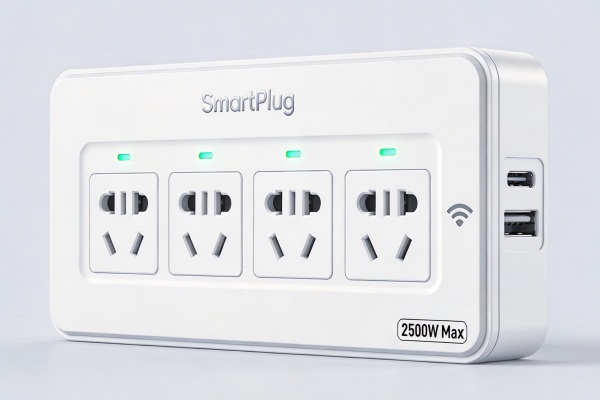
Rapid Triage Checklist (2-Minute Tests)
1. Router Band Segregation Test.
Temporarily disable 5GHz on router (if possible) or create a dedicated 2.4GHz IoT SSID. Attempt setup.
- If success: Cause 1 confirmed.
- If still fails: Proceed.
2. Factory Reset Attempt.
Press and hold power button for 10-15 seconds until LED flashes amber rapidly.
- If LED responds: Strip alive.
- If no response: Hardware dead.
3. Outlet Load Test.
Plug a lamp into each outlet. Command on via app.
- If click but no light on one outlet: Relay failure (Cause 4) on that channel.
- If all outlets work: Relay OK.
4. App Crash Test.
Open Kasa app, navigate to Schedules.
- If app crashes: Cause 5.
- If schedules open: App OK.
5. Surge LED Check.
Observe green surge protection LED.
- If off permanently: Cause 6 (if unit still powers devices).
- If on: Protection active.
6. WiFi Credential Change Simulation.
If considering password change, attempt to find “Change WiFi” option in app device settings.
- If present: Firmware updated.
- If absent: Reset required (Cause 2).
Step-by-Step Diagnostic Procedure
Step 0: Verify Power and Outlet.
- Action: Plug a lamp directly into strip, press physical button.
- Expected: Lamp turns on.
- Failure: No power.
- Decision: Check wall outlet, replace strip if internal fuse blown.
Step 1: Router Configuration for Setup.
- Action: Access router settings. If using mesh (Google WiFi, Eero), create a guest network on 2.4GHz only, or temporarily disable 5GHz.
- Expected: Strip connects during setup.
- Failure: Still stuck in setup loop.
- Decision: If fails with dedicated 2.4GHz, proceed to Step 2.
Step 2: Factory Reset and Reattempt.
- Action: Press and hold power button for 15 seconds until LED flashes amber rapidly. Release. Attempt setup again with phone close to strip.
- Expected: Setup completes.
- Failure: Setup loop persists.
- Decision: If multiple attempts fail, hardware may be defective. Replace strip.
Step 3: Firmware Version Check.
- Action: In Kasa app → Device Settings → Device Info. Note firmware version.
- Expected: Latest version.
- Failure: Outdated.
- Decision: Update firmware via app. Retest stability.
Step 4: Relay Continuity Test (if click but no power).
- Action: Unplug strip. Remove cover (if comfortable). Locate relay for affected outlet. Set multimeter to continuity. Command relay closed via app (reconnect power carefully). Probe relay output contacts.
- Expected: Continuity when closed.
- Failure: Open circuit when closed.
- Decision: Replace strip (relay not field-repairable economically).
Step 5: App Reinstall (if crashes).
- Action: Delete Kasa app, reboot phone, reinstall from app store.
- Expected: Schedules accessible.
- Failure: Crash persists.
- Decision: Report to manufacturer; use physical button or voice control as workaround.
Step 6: Surge LED Verification.
- Action: If surge LED off but strip works, note that protection is gone.
- Expected: Understand limitation.
- Failure: Not applicable.
- Decision: Replace if surge protection required.
Physical Layer Inspection
- Surge LED: Green LED near plug. If off permanently, MOV has sacrificed.
- Enclosure: Check for cracks, especially near plug entry.
- Prongs: Ensure ground pin is intact, not bent.
- Cord: Inspect for cuts, kinks, or exposed wire.
- Button: Physical button should click distinctly. Mushy feel indicates wear.
- Label: Check hardware version (look for v1, v2). Newer versions may have different failure modes.
Electrical / Signal Verification
- Relay Coil Drive: With strip powered, measure voltage across relay coil pins when commanded on. Should see coil voltage (usually 3V or 5V). If voltage present but no click, coil open.
- Output Voltage: Measure AC voltage at outlet with relay closed. Should match line voltage. If 0V, contacts failed open.
- Wi-Fi Signal Strength: During setup, use Wi-Fi analyzer app. RSSI should be > -67 dBm at strip location. Lower may cause intermittent drops.
- Power Consumption: Measure current draw with no load. Should be <1W. Higher indicates power supply fault.
Reset and Recovery Behavior Mapping
- Normal Reset (Soft): Press and hold button for 5 seconds → LED blinks amber slowly → returns to previous state.
- Factory Reset (Hard): Press and hold 10-15 seconds → LED flashes amber rapidly → enters pairing mode.
- Failed Reset (Wi-Fi Dead): LED flashes as expected, but no SSID appears in Wi-Fi list.
- Failed Reset (Firmware Crash): LED behaves normally, but strip does not respond to app after pairing.
- Failed Reset (Hardware Dead): No LED response to button press.
False Fixes That Do Not Work
- “Turn off 5GHz on phone”: Phone band doesn’t matter; router band steering is the issue.
- “Move closer to router”: If setup fails at 3 feet, distance isn’t the problem.
- “Reset router”: Temporarily changes nothing for band steering.
- “Use a WiFi extender”: Extenders complicate 2.4GHz/5GHz issues further.
- “Press button harder for stuck relay”: Does not fix welded contacts.
- “Ignore surge LED, still protected”: LED off means protection circuit is open.
- “Use same WiFi password forever”: Not realistic; firmware should support changes.
Confirmed Fix Scenarios
Scenario A:
- Symptom: Endless setup loop on Google WiFi.
- Cause: Band steering pushing strip to 5GHz.
- Fix: Create separate 2.4GHz IoT guest network. Connect strip to that.
- Verification: Setup completes, strip stays connected.
Scenario B:
- Symptom: After WiFi password change, strip offline, no update option.
- Cause: Firmware lacks credential update feature.
- Fix: Factory reset, reconfigure from scratch.
- Verification: Strip reconnects, schedules must be recreated.
Scenario C:
- Symptom: Strip works for days then drops, power cycle fixes.
- Cause: Wi-Fi radio firmware crash.
- Fix: Firmware update (if available). If not, replace strip.
- Verification: Strip stays online for 30+ days.
Scenario D:
- Symptom: Click heard but outlet dead.
- Cause: Relay contact failure.
- Fix: Replace strip. (Internal relay replacement not economical.)
- Verification: New strip powers load reliably.
Scenario E:
- Symptom: App crashes when opening schedules.
- Cause: Kasa app bug.
- Fix: Reinstall app, or wait for update. Use physical button as workaround.
- Verification: Schedules accessible after reinstall.
Scenario F:
- Symptom: Surge LED off, strip still works.
- Cause: Surge protection sacrificed.
- Fix: Replace strip if protection needed. Otherwise, continue using as basic strip.
- Verification: Not applicable.
Post-Fix Verification Checklist
- Setup Success: Strip completes onboarding within 2 minutes, LED solid.
- WiFi Stability: Strip remains online for 7 days without drops.
- Outlet Function: All outlets power loads reliably, no click-without-power events.
- Schedule Test: Set 2 on/off events, verify execution for 3 days.
- App Stability: Navigate all screens, especially schedules, no crashes.
- Physical Button Test: Press button to toggle all outlets, immediate response.
- Surge LED (if applicable): LED on, indicating protection active.
Escalation Threshold
Strip Replacement Required When:
- Relay failure confirmed (click but no power).
- Wi-Fi radio dead (no SSID after factory reset).
- Physical damage (cracked case, bent prongs).
- Surge protection sacrificed and user requires protection.
- Multiple setup attempts fail on dedicated 2.4GHz network.
- Out of warranty and repair not economical.
No Repair Possible When:
- Firmware lacks credential update feature (design limitation).
- Band steering incompatibility cannot be worked around (no 2.4GHz-only option).
- App bugs persist across versions (software issue, not hardware).
- Surge protection is one-time and sacrificial by design.
Return Recommended When:
- User cannot work around band steering (no router access).
- Multiple units exhibit same failure pattern.
- Within return period and user prefers compatible alternative.