
If your Honest countertop ice maker has stopped producing ice, shows a false “ice full” warning, leaks water, or makes unusual noises, the first step is to identify the symptom, not to assume the unit has reached the end of its life.
Start with the checks your model’s manual allows: water level, sensor cleanliness, ventilation, and normal operating conditions. If the problem continues, compare the warranty, the repair estimate, the replacement cost, and the availability of parts before deciding whether to repair or replace the machine. An ice maker that is not making ice, a machine that runs but never freezes, or a unit that reports a full bin when it is empty are separate problems, and each points to a different next step.
This page covers Honest countertop portable units specifically. If your machine is not making ice at all, see our general ice maker not making ice guide. If ice forms but does not stay frozen, see our ice maker not keeping ice frozen guide. If you see mold inside, see our ice maker mold inside guide. If you own a different brand, see our multi-brand ice maker repair vs replace guide.
Common Honest Ice Maker Problems
The symptoms below are the ones owners most often report on Honest countertop portable ice makers. Each section explains what you can check safely and when the issue moves beyond user-level troubleshooting.
Ice Full Light On When the Bin Is Empty
A false “ice full” reading is a frequently reported complaint on portable ice makers, and Honest units are no exception. The usual suspects are an optical sensor that is dirty, blocked by ice fragments, or obscured by condensation, and a basket that is not seated correctly.
What you can do:
- Unplug the unit, remove all ice, and check that nothing blocks the sensor window.
- Clean the sensor area as described in the manual, then restart.
- Make sure the ice basket sits fully in place.
If the warning returns with a clean sensor and an empty bin, the sensor or its circuit needs diagnosis. Do not assume the whole unit is dead, and do not assume the bin is overfilled. Whether a sensor can be replaced by the owner depends on the model and the manufacturer’s instructions; check the manual before attempting anything beyond cleaning.
Ice Maker Running but Not Producing Ice
A unit that powers on, runs its fan, and circulates water but never forms ice has a cooling-side problem, but the cause is not obvious from the outside. Before assuming a sealed-system fault, confirm the basics:
- The unit has enough water and is sitting level.
- Room temperature is within the range the manual specifies; a hot room slows or stops ice production.
- There is clearance around the vents, and the rear grille is not blocked.
- A full cycle has actually been allowed to complete under the rated room temperature and cycle time stated in the manual.
If the machine still fails to freeze under those conditions, the cooling system needs professional diagnosis. Freezing performance depends on the evaporator reaching a sufficiently low temperature, and that cannot be confirmed by touch alone.
Small, Soft, or Clumping Ice
Ice that comes out small, wet, or fused into a block is a real symptom, but it is not proof of a refrigerant leak, and ice texture alone does not indicate how much life the unit has left. Ice texture is affected by several things:
- How long the ice stayed in the basket after the cycle ended.
- Whether the basket is designed for storage or only for collection.
- Room and water temperature.
- The ice-size setting, where the model offers one.
- How the cubes were handled after removal.
Start by checking the operating conditions and the ice-size setting, and by moving fresh ice to a freezer if you want to store it. If the unit consistently produces soft or wet ice under correct conditions, and the problem persists across several cycles, have the cooling system inspected.
Water Pump Noise or No Water Circulation
If you hear the pump motor but see no water flowing over the evaporator, or the pump is silent while the rest of the unit runs, the water circuit needs attention.
What you can check:
- Water level in the reservoir.
- Visible blockages in the reservoir, filter, or water channels.
- That removable parts are seated correctly.
- That the unit is level, since a tilted unit can prevent the pump from priming.
Internal pump diagnosis, impeller inspection, and replacement are technician work on most portable units. A pump that has run dry may also have damaged seals, so the cause of the dry run, often a water-level sensor fault, a low reservoir, or an unlevel surface, should be found before replacing the pump alone. Confirm the cause against the manual and a proper inspection.
Water Leaks or Unusual Debris
Water on the counter during the fill cycle, or black plastic or metal particles in the reservoir or ice basket, are stop-and-check symptoms.
- For leaks, confirm the unit is level, the reservoir is not overfilled, and removable parts are seated. If water comes from inside the housing, stop using the unit.
- For debris, stop using the ice and inspect the reservoir and basket. If particles keep appearing, or you cannot identify their source, contact the manufacturer. The source cannot be confirmed from color or appearance alone, and whether the unit needs replacement depends on what the inspection finds.
Safe Troubleshooting Before Ordering Parts
The table below replaces the step-by-step disassembly instructions that appear on some repair pages, which are not appropriate for most owners and are not valid across every Honest model. It covers the same ground as the six external checks commonly recommended for portable ice makers: the ice-full sensor, the water-level indicator, cooling performance, condenser airflow, ice texture, and leaks.
| What you are seeing | What to do first | When to involve a technician or support |
|---|---|---|
| Ice full light on, bin empty | Unplug, empty the bin, clean the sensor area, reseat the basket, restart | Warning persists after cleaning and restart |
| Add water warning with a full reservoir | Confirm water level, level placement, and that removable parts are seated | Warning repeats with correct water level |
| Runs but no ice for a full cycle | Check water, room temperature, ventilation, and operating conditions | Still no freezing under correct conditions |
| Small, soft, or clumping ice | Check ice-size setting, room and water temperature, and storage practice | Texture stays abnormal across cycles under correct conditions |
| Pump noise but no water flow | Stop the unit, check water level, level placement, and visible blockages | No flow after basic checks, or internal pump access needed |
| Weak or warm airflow at the rear vent | Check that the rear grille is clear and the unit has the clearance the manual requires | Airflow stays weak after clearing, or the unit overheats |
| Leak or unexplained debris | Stop use, check external leak source and reservoir | Leak comes from inside the housing, or debris keeps appearing |
These checks are diagnostic directions, not confirmed faults. A symptom on its own does not prove that a specific component has failed.
When to Contact Customer Support
Contact Honest support or the retailer before doing anything that could affect your warranty, especially if:
- The unit is new or still under warranty.
- The same warning has returned after cleaning and resetting.
- Water is leaking from inside the housing.
- Debris keeps appearing in the reservoir or ice.
- The unit makes grinding, growling, or repeated clicking sounds.
- You are considering opening the housing or testing electrical components.
Opening the unit, testing sensor voltages, or measuring compressor current requires the service documentation for your specific model and is best left to a qualified technician. Generic voltage or current figures are not a valid test across all Honest units. If you do not own a multimeter, clamp meter, or soldering equipment, none of the internal checks are appropriate for you, and the correct next step is support or a technician.
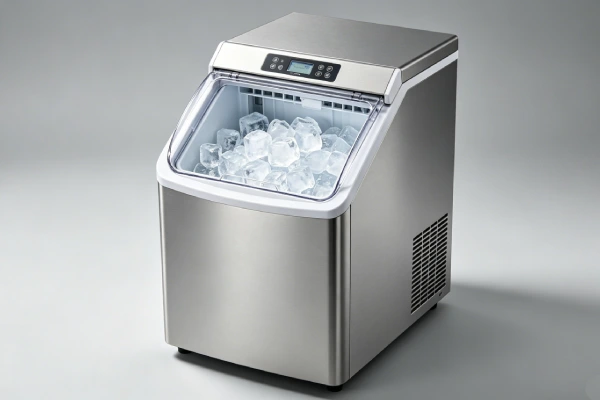
Honest Ice Maker Repair Cost vs. Replacement
Repair costs vary by model, region, fault, and whether the work is done under warranty. Treat any figure you find online, including on this page, as an estimate to verify, not a quote.
A practical comparison includes:
- The purchase price of a comparable replacement unit.
- The cost of parts, labor, and shipping for the repair.
- Whether the repair is covered by warranty or a service plan.
- Whether the repair carries its own warranty.
- Whether the parts are actually available for your model.
- Whether replacement solves the underlying problem.
Here is the comparison in table form, with the figures left blank because they depend on your unit and your local market. Fill them in from real quotes before deciding.
| Item | Repair option | Replacement option |
|---|---|---|
| Upfront cost | Actual repair quote | Price of a comparable new unit |
| Parts and labor | Included in the quote | Not applicable |
| Shipping or transport | Include if the unit must be shipped | Include delivery if charged |
| Warranty coverage | State what remains and what the repair includes | State the new unit’s warranty |
| Guarantee on the work | Does the repair carry its own warranty? | Covered by the new unit’s warranty |
| Parts availability | Confirm the part exists for your model | Not applicable |
| Time without the unit | Repair turnaround | Delivery time |
| Whether the underlying problem is solved | Depends on the diagnosis | A new unit resolves the current fault but not the design |
If you cannot get a real quote for your unit, do not rely on a generic price range to make the decision.
How to Evaluate Repair and Replacement Options
Lean toward warranty or support first. If the unit is new, recently purchased, or has failed more than once, check the warranty terms and the seller’s return or replacement policy before paying for any repair. Do not open the unit during the warranty period unless the manufacturer instructs you to.
Repair may make sense when the fault is clearly identified, the part is available, the quote is reasonable relative to the replacement price, and the repair comes with some form of guarantee.
Replacement may make more sense when the cooling system has a serious fault, key parts are unavailable, the repair quote approaches the cost of a new unit, or the unit presents a safety risk that cannot be resolved.
As a practical rule of thumb, if the repair quote approaches or exceeds half the price of a comparable new unit, replacement is usually the better economic choice. Treat this as an experience-based framework, not a fixed threshold, and weigh it against warranty status and how the unit has performed.
There is no universal rule such as “replace after 12 months” or “replace if the repair exceeds a set dollar amount.” The right decision depends on your warranty status, the actual quote, the replacement price you would realistically pay, and how the unit has performed so far.
Frequently Asked Questions
Should I repair or replace my Honest ice maker?
Start with the warranty and the seller’s policy. If the unit is out of warranty, get a repair quote and compare it with the price of a comparable replacement, the availability of parts, and whether the repair carries a guarantee. If the quote approaches or exceeds half the replacement price, replacement is usually the better economic choice. There is no fixed age or price threshold that applies to every unit.
Why does my Honest ice maker say ice full when the bin is empty?
The optical sensor is dirty, blocked, or not reading correctly, or the basket is not seated properly. Unplug the unit, empty the bin, clean the sensor area as the manual describes, reseat the basket, and restart. If the warning returns with a clean sensor and an empty bin, the sensor circuit needs diagnosis.
Why is my Honest ice maker making ice that is soft or clumps together?
Ice texture depends on freezing conditions, ice-size setting, room and water temperature, and how long the ice sat in the basket. Check the operating conditions and storage practice first. If soft or wet ice continues across several cycles under correct conditions, have the cooling system inspected. Texture alone does not indicate how much life the unit has left.
My Honest ice maker runs but does not make ice. What should I check?
Confirm water level, level placement, room temperature, and ventilation, and let a full cycle complete under the rated conditions in the manual. If the unit still does not freeze under normal conditions, the cooling system needs professional diagnosis. Touching the evaporator plate is not a reliable test.
There are black plastic or metal particles in the ice. What should I do?
Stop using the ice and inspect the reservoir and basket. If particles keep appearing or you cannot identify their source, contact the manufacturer. The source cannot be confirmed from appearance alone, and whether the unit needs replacement depends on what the inspection finds.
My Honest ice maker is leaking water. Can I fix it?
Check that the unit is level, the reservoir is not overfilled, and removable parts are seated correctly. If water comes from inside the housing, stop using the unit and contact support or a technician. Internal seals are not a user-service item on most portable units.
My Honest ice maker makes a grinding or growling noise. Is that serious?
Light clicking when the compressor starts or stops is normal. Continuous grinding, growling, or repeated clicking that prevents the unit from running is not normal. Stop the unit and contact support or a technician. Do not continue running a unit that is making grinding sounds while you wait to decide.
How long should a portable ice maker last?
Lifespan varies by model, usage, water quality, cleaning routine, and operating conditions. The factors that affect it most, roughly in order of impact, are water quality and scale buildup, how often the condenser and vents are cleaned, the room temperature the unit runs in, and how frequently it is used. Keep the condenser and vents clean, use the water type the manual recommends, run the unit within its rated room-temperature range, and follow the cleaning schedule. These steps affect how long the unit lasts more than the brand name does.
Summary
Honest countertop ice makers show a recurring set of symptoms: a false ice-full warning, a unit that runs without freezing, soft or clumping ice, pump noise without water flow, weak rear airflow, leaks, and unexplained debris. Some of these can be narrowed down with safe, manual-based checks before any parts are ordered. When the symptom persists under correct operating conditions, the next step is support or a technician, not a parts swap based on a guess. The repair-or-replace decision should rest on warranty status, a real repair quote, the replacement price, and parts availability, with the half-of-replacement-price comparison as a rough guide rather than a fixed rule.