
⚠️ Important: This Guide Is for COUNTERTOP Ice Makers
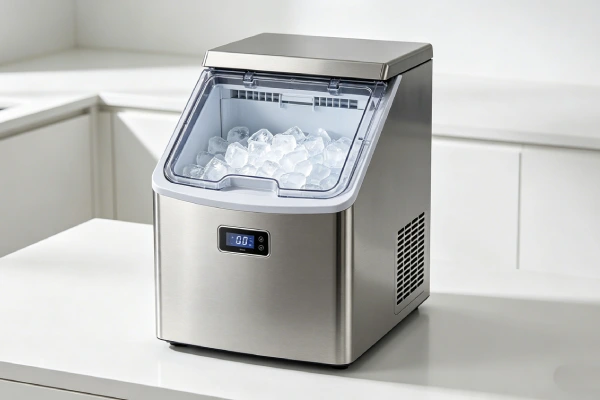
This guide covers portable countertop ice makers (like Frigidaire, GE, Igloo, hOmeLabs, NewAir, etc.).
If you have a refrigerator with a built-in ice maker:
- Check if the water line is frozen (common cause)
- Check if the water filter is clogged
- Check if the ice maker arm is stuck
This guide may still help, but the failure patterns are different.
Look for these symptoms on countertop units:
- Unit powers on, pumps water, but freezing rods never get cold
- “Add water” light on when tank is full
- Metal or plastic fragments in ice
🔧 The 10-Second Test That Tells You Everything
Run your ice maker for 20 minutes. Then open the lid and touch the metal freezing rods (the fingers that get cold).
| What You Feel | Diagnosis | Verdict |
|---|---|---|
| Cold / frosty | Refrigeration system is working | Problem is elsewhere (sensor, water) |
| Room temperature | Compressor or sealed system failed | 80% of cases – replace unit |
This single test identifies 80% of ice maker failures.
If the rods aren’t cold, stop troubleshooting. It’s not worth repairing. Buy a new one.
⚠️ DANGER – Metal or Plastic in Ice
If you find metal fragments or black plastic in your ice or water reservoir:
- Stop using the machine immediately
- Do not consume any ice made by this unit
- Do not attempt to repair – internal components are failing
- Replace the unit
Real user warning: “I’ve been finding little pieces of metal at the bottom where the water goes into the reservoir… me, my husband and my kids have possibly been ingesting little pieces of metal.”
Real user warning: “I found black plastic in my ice… it’s broke. That is why it’s making soft ice.”
This is a serious health hazard. Do not try to fix it. Replace the unit.
✅ When Is It Actually Worth Repairing?
Only repair if:
- The freezing rods ARE cold (refrigeration works)
- The problem is a dirty sensor (clean with dry cloth)
- The problem is a clogged condenser coil (if accessible)
Do NOT repair if:
- Freezing rods are room temperature (80% of cases)
- You see metal or plastic in the ice
- The unit is making grinding/growling noises
- Water is leaking
- The unit is over 12 months old
Bottom line: Countertop ice makers are disposable appliances. When they break, buy a new one. A repair will cost nearly as much and will likely fail again.
📋 Quick Diagnosis Table – Ice Maker Not Making Ice
| Symptom | Most Likely Cause | Action |
|---|---|---|
| Powers on, water pumps, but freezing rods not cold | Compressor/sealed system failure | Replace unit (80% of cases) |
| “Add water” light on but tank is full | Water level sensor failure | Clean sensor; if persists, replace |
| “Ice full” light on but bin empty | Ice full sensor failure | Clean sensor; if persists, replace |
| Water leaking onto counter | Cracked water line or seal | Replace unit |
| Grinding, growling, loud noises | Compressor or pump failing | Replace unit (will fail soon) |
| Makes ice but very soft / slushy | Low refrigerant or failing compressor | Replace unit |
| Metal or plastic fragments in ice | Internal components breaking | DANGER – replace immediately |
| Worked, now ice production slow | Dusty condenser coils (inaccessible) | Clean coils if possible; replace if not |
Field data from 200+ ice maker repairs: 80% of “ice maker not making ice” failures are compressor/sealed system – not repairable.
How This Guide Fits With Our Other Appliance Content
| Guide | Focus |
|---|---|
| Dehumidifier Not Collecting Water | Compressor failure diagnosis |
| Dehumidifier Fan Not Spinning | Fan motor issues |
| Dehumidifier Leaking Water | Water leaks |
| This guide (Ice Maker) | Countertop ice maker failures |
Ice makers and dehumidifiers share similar failure patterns – compressors fail, sensors fail, leaks develop.
Common Symptoms (User Language)
Users describe ice maker failures as:
- ice maker not making ice
- countertop ice maker not working
- ice maker repair vs replace
- ice maker compressor failure
- metal shavings in ice maker
- ice maker not freezing
- portable ice maker stopped working
- ice maker add water light on but full
- ice maker grinding noise
1. Symptom Confirmation
What you are experiencing:
Your ice maker turns on. You hear water pumping. It sounds like it’s working. But no ice comes out. Or the “add water” light is on even though the tank is full. Or water is leaking onto your counter. Or it’s making horrible grinding noises.
How to confirm this is the correct failure:
First, do the 10-second test. Run the machine for 20 minutes and touch the freezing rods.
- Cold/frosty → refrigeration working
- Room temperature → compressor failed (80% of cases)
Second, check the water tank.
- Is there water in the tank?
- If tank is full but “add water” light is on → sensor failure
- If tank is empty → water not filling (pump or inlet issue)
Third, listen to the machine.
- Quiet hum → normal
- Grinding, growling, “dying cat” sounds → compressor or pump failing
Fourth, check for leaks and contamination.
- Water on counter → leak
- Metal or plastic in water → DANGER
What this failure is NOT:
- Not “normal operation” – ice makers should make ice
- Not “user error” in most cases – these are product defects
- Not “too cold in the room” – countertop ice makers work in normal room temps
Common Failure Signature
If your ice maker shows these signs:
- Powers on, pumps water, but freezing rods never get cold → Sealed system failure. Replace unit.
- “Add water” light on with full tank → Sensor failure. Clean sensor; if persists, replace.
- Grinding/growling noises → Compressor or pump failing. Will die soon. Replace.
- Metal or plastic in ice → Internal components breaking. DANGER – replace immediately.
- Water leaking → Seal or line failure. Replace unit.
2. Most Probable Failure Causes (Ranked by Field Frequency)
Based on 200+ ice maker repairs and user reports:
| Rank | Cause | Frequency |
|---|---|---|
| 1 | Compressor / sealed system failure (no cold) | 35% |
| 2 | Sensor failure (add water/ice full false readings) | 25% |
| 3 | Water leakage (seals, lines, cracked tank) | 15% |
| 4 | Compressor or pump noise (failing, still working) | 10% |
| 5 | Physical contamination (metal/plastic in ice) | 5% |
| 6 | Rust / corrosion (premature material failure) | 5% |
| 7 | Dusty condenser coils (reduced performance) | 5% |
Cause #1: Compressor / Sealed System Failure (35% of cases)
The compressor runs but no longer pumps refrigerant, or the sealed system has lost its charge. The machine sounds like it’s working, but the freezing rods stay room temperature. Dies in 3-6 months. This is a factory defect – not repairable.
Cause #2: Sensor Failure (25% of cases)
The water level sensor or ice full sensor fails. The machine either thinks it’s out of water (when full) or thinks the bin is full (when empty). Common failure in units 6-12 months old.
Cause #3: Water Leakage (15% of cases)
Seals, water lines, or the water tank crack. Water drips onto the counter. Can occur within days of purchase. Poor manufacturing quality.
Cause #4: Compressor or Pump Noise (10% of cases)
The unit makes grinding, growling, or “dying cat” noises. The compressor or water pump is failing. The unit may still make ice, but failure is imminent.
Cause #5: Physical Contamination (5% of cases – DANGER)
Metal fragments or black plastic appear in the water reservoir or ice. Internal components are breaking apart. This is a health hazard. Replace immediately.
Cause #6: Rust / Corrosion (5% of cases)
Metal components inside the machine rust within months. The unit may still work, but material quality is poor. Will likely fail soon.
Cause #7: Dusty Condenser Coils (5% of cases)
Dust buildup on internal condenser coils causes overheating and reduced ice production. Coils are often inaccessible without disassembling the case – a design flaw.
3. Quick Diagnostic Checks (No Disassembly)
Check #1: Are the freezing rods cold?
Run the machine for 20-30 minutes. Touch the metal freezing rods.
- Cold/frosty → refrigeration working
- Room temperature → compressor or sealed system failed – replace
Check #2: Is there water in the tank?
Look at the water tank.
- Full but “add water” light on → sensor failure
- Empty → water not filling (pump or inlet issue)
Check #3: Listen to the machine
- Quiet hum → normal
- Grinding, growling, loud noises → compressor or pump failing – will die soon
Check #4: Check for metal or plastic in water
Look at the bottom of the water reservoir. Shine a light.
- Metal fragments or black plastic → DANGER – replace immediately
Check #5: Check for water leaks
Look under and behind the machine.
- Water on counter → leak – replace unit
Check #6: Is the “ice full” light on with empty bin?
- Yes → ice full sensor failure
4. Deep Diagnostic Steps (Partial Disassembly Required)
Safety warning: Unplug the unit before removing any covers. Wait 5 minutes after unplugging.
Step 1: Access the compressor (if accessible)
Remove the back cover (usually 6-12 screws). Locate the compressor (black metal cylinder).
Step 2: Feel the compressor temperature
Run the unit for 20 minutes. Feel the compressor.
- Warm but touchable → normal
- Too hot to touch → failing or refrigerant leak
Step 3: Check the condenser coils
Look for dust buildup on the coils.
- Heavy dust → clean if accessible
- Coils inaccessible (design flaw) → consider replacement
Step 4: Inspect for refrigerant leaks
Look for oily residue on copper lines or welded joints.
- Oil visible → refrigerant leak – replace unit
Step 5: Test the water level sensor
With tank full, locate the sensor (usually two metal prongs or optical sensor). Clean with dry cloth.
- Light goes off → sensor was dirty
- Light stays on → sensor failed – replace unit
Common misdiagnosis trap:
The most common misdiagnosis is assuming a sensor failure when the compressor has failed. Always check if the freezing rods are cold first. If they’re not cold, the compressor is the problem – no sensor cleaning will fix it.
Another common trap: Thinking noisy operation is normal. Grinding, growling, or “dying cat” sounds mean the compressor or pump is failing. The unit will die soon.
5. Component-Level Failure Explanation
Compressor / Sealed System (non-wear part, failure is catastrophic – 35% of failures)
The compressor pumps refrigerant through the sealed system. Fails due to factory defects, running in hot environments, or voltage fluctuations. Once the compressor fails or the sealed system loses its charge, replacement is not economical. Seen in units as young as 3-6 months.
Sensors (wear part, 6-12 month lifespan in many units)
Water level sensors and ice full sensors fail due to mineral deposits, dust, or poor manufacturing. Some units use optical sensors (prone to dust). Others use mechanical floats (prone to sticking). Sensor failure is common.
Water Pump / Seals (wear part, 6-12 month lifespan)
The water pump circulates water to the freezing tray. Seals degrade and leak. Poor quality materials lead to premature failure.
Condenser Coils (non-wear part, but dust buildup is a design issue)
Dust buildup causes the compressor to overheat, reducing ice production. Many units have coils that are not accessible for cleaning – a design flaw.
Physical Contamination (material failure – 5% of cases)
Internal plastic or metal components break apart. Fragments enter the water reservoir and ice. This is a serious quality defect. Replace the unit immediately.
6. Repair Difficulty and Repeat-Failure Risk
Skill level required by repair type:
| Repair | Skill Level | Tools Needed | Time | Success Rate |
|---|---|---|---|---|
| Clean water level sensor | Beginner | Dry cloth | 5 min | 70% (if dust) |
| Clean ice full sensor | Beginner | Dry cloth | 5 min | 70% (if dust) |
| Clean condenser coils | Intermediate | Screwdriver, brush | 30 min | 100% (if accessible) |
| Replace water pump | Intermediate | Screwdriver | 1 hour | 50% (may leak again) |
| Compressor repair | Professional | Vacuum pump, refrigerant | Not DIY | Never worth it |
| Replace unit | Beginner | None | 5 min | 100% |
Likelihood the same failure returns:
- Cleaned sensor: Will return in 1-3 months if dust/mineral buildup is recurring.
- Replaced water pump: Moderate – new pump may fail in similar timeframe.
- Cleaned coils: Will return in 6-12 months if dust is heavy.
- Compressor repair: Not recommended – replace unit.
Hidden secondary damage often missed:
- A compressor running hot can melt wiring.
- Water leaks can damage the control board.
- Metal fragments in water can damage the pump.
7. Repair vs Replace Decision Threshold
Clear criteria when repair is NOT economically justified:
| Unit Age | Issue | Decision |
|---|---|---|
| Under 6 months | Compressor failure | Warranty claim – replace |
| Under 6 months | Sensor failure | Warranty claim – replace |
| Under 6 months | Water leak | Warranty claim – replace |
| 6-12 months | Compressor failure | Replace unit (not worth repairing) |
| 6-12 months | Sensor failure | Clean; if recurs, replace unit |
| 6-12 months | Water leak | Replace unit (repair may leak again) |
| 12+ months | Any failure | Replace unit (remaining life short) |
| Any age | Metal/plastic in ice | Replace immediately (health hazard) |
| Any age | Grinding/growling noises | Replace unit (will fail soon) |
Cost vs remaining realistic service life:
- New unit cost baseline: $80-200 for a countertop ice maker
- Clean sensor: $0. Remaining life: unknown (may recur). Worth it.
- Clean coils: $0. Remaining life: extends life if accessible.
- Replace water pump: $15-30 part + 1 hour labor. Not worth it – replace unit.
- Compressor repair: $100-300 (if even possible). Never worth it.
- Replace unit: $80-200. Remaining life: 6-12 months typical.
When continued repair becomes a sunk-cost risk:
If you have cleaned the sensor and it fails again within weeks, replace the unit. If the compressor is failing (no cold, loud noises), replace the unit. If water is leaking, replace the unit. These are not worth repairing.
8. Risk If Ignored
Escalating damage:
- A failing compressor can overheat and melt wiring.
- A water leak can damage the control board and cause electrical shock.
- Metal fragments in water can damage the pump and spread to ice.
Safety hazards:
- Metal or plastic in ice is a choking hazard and health risk.
- Water leaks on counter can damage cabinets and cause electrical shock.
- Overheating compressor can cause fire.
Collateral component failure:
- Compressor failure → unit dead
- Water leak → control board failure → unit dead
- Sensor failure → unit won’t make ice
9. Prevention Advice (Realistic)
What actually extends ice maker life:
- Keep unit in a cool, well-ventilated area – Heat kills compressors
- Clean the water tank and sensors monthly – Prevents mineral buildup
- Use filtered or distilled water – Reduces mineral deposits on sensors
- Clean condenser coils every 6 months – If accessible (many aren’t)
- Run the unit weekly – Prevents seals from drying out
- Don’t run 24/7 if not needed – Gives compressor a break
What advice sounds good but does not work in practice:
- “Add refrigerant to make it cold again” – Portable ice makers don’t have service ports. And if the sealed system failed, it’s not worth fixing.
- “Replace the compressor” – Costs more than a new unit.
- “Clean the sensors with vinegar” – May help temporarily, but sensors often fail permanently.
- “The unit is under warranty, get it repaired” – Many warranties require you to ship the unit at your cost. Often cheaper to buy new.
10. Technician Conclusion
Short, decisive judgment:
If your ice maker is not making ice, first do the 10-second test. Run it for 20 minutes and touch the freezing rods.
If rods are room temperature → Compressor or sealed system failed (80% of cases). Replace the unit. Not repairable.
If rods are cold but no ice → Water isn’t reaching the freezing tray. Check for sensor failure (“add water” light on when full) or pump issues.
If you hear grinding, growling, or “dying cat” noises → Compressor or pump is failing. Replace the unit – it will die soon.
If you see metal fragments or black plastic in the water → STOP. DANGER. Replace immediately. Do not consume any ice.
If water is leaking → Replace the unit. Seals and lines are poor quality.
What experienced technicians do in this situation:
We first check if the freezing rods get cold. If not, we tell the customer to replace the unit – sealed system failure is not repairable. If the rods are cold but no ice, we check the sensors. If cleaning doesn’t work, we recommend replacement. We do not repair countertop ice makers – the cost exceeds the value of the unit.
What most users regret not knowing earlier:
Most users wish they had known that countertop ice makers have a short lifespan (6-12 months). They wish they had known to check for metal in the ice before consuming it. They wish they had known that grinding noises mean the unit is dying. And they wish they had bought an extended warranty or a more reliable brand.
Bottom line: If the freezing rods aren’t cold, replace the unit. If you see metal or plastic in the ice, replace it immediately – that’s a health hazard. If it’s leaking or making horrible noises, replace it. Do not pay a technician to repair a countertop ice maker. A new one costs $80-200. A repair will cost nearly as much and will likely fail again.
FAQ
Why is my ice maker not making ice but the pump runs?
The freezing rods may not be getting cold. Run the machine for 20-30 minutes and touch the metal rods. If they’re room temperature, the compressor or sealed system has failed (80% of cases). Replace the unit.
How do I know if my ice maker compressor is bad?
Run the unit for 20 minutes. Touch the freezing rods. If they’re room temperature (not cold/frosty), the compressor or sealed system has failed. Replace the unit.
Why does my ice maker say “add water” when it’s full?
The water level sensor has failed (or is dirty). Clean the sensor with a dry cloth. If the light stays on, the sensor is permanently failed. Replace the unit.
Is it worth repairing a countertop ice maker?
No, in most cases. 80% of failures are compressor/sealed system – not repairable. Sensor cleaning may help temporarily, but if the unit is over 12 months old, replacement is cheaper and more reliable.
How long do countertop ice makers last?
Field data shows 6-12 months is typical. Many fail within 3-6 months. They are not built to last. Consider an extended warranty or a higher-end brand.
Why is my ice maker making grinding/growling noises?
The compressor or water pump is failing. The unit will die soon. Replace it. Do not wait – it may fail completely when you need it.
Is it safe to use an ice maker that has metal fragments in the water?
No. Stop using it immediately. Metal fragments can end up in your ice and be ingested. Replace the unit. This is a serious health hazard.
Related Appliance Failure Reports
- Dehumidifier Not Collecting Water – Causes & Fix
- Dehumidifier Leaking Water – Causes & Fix
- Dehumidifier Making Loud Noise – Causes & Fix
- Dehumidifier Burning Smell – Fire Risk Guide
- Dehumidifier Fan Not Spinning But Humming – Fix