
📅 Last Updated: July 14, 2026 | We update this guide annually based on new service logs and user feedback.
You are shopping for a new ice maker. You have read the reviews. You have compared specs. But here is what the reviews do not tell you: every ice maker has predictable failure patterns. After 14 years in the field and 200+ service calls logged between 2022–2026, we have seen the same failures repeat across every brand. This guide is not a product overview. It is a field-tested failure report designed to help you avoid buying a unit that will fail in 18 months.
TL;DR – If You Only Read One Section:
Buy Frigidaire or Whirlpool if you want reliability and low maintenance. These have the lowest failure rates in our service logs. Lifespan: 5–8 years.
Buy GE Opal 2.0 if you want nugget ice and are willing to descale monthly. Lifespan: 2–3 years with maintenance.
Avoid Samsung if you hate sensor issues. Sensor failure accounts for 75% of our Samsung service calls.
Avoid LG if you hate gearbox replacements at 3–5 years. Gearbox failure accounts for 25% of our LG service calls.
Buy a countertop unit under $200 if you need occasional ice—treat it as a consumable, replace every 2–3 years.
What the Reviews Don’t Tell You
Amazon reviews and consumer sites will tell you about ice quality and noise levels. Here is what they do not tell you:
- They do not tell you that GE Opal requires monthly descaling.
- They do not tell you that Samsung sensors fail 75% of the time.
- They do not tell you that LG gearboxes strip predictably at 3 years.
- They do not tell you that many units do not auto-restart after power outages.
- They do not tell you that condenser coil dust is the most overlooked cause of compressor failure.
- They do not tell you that scale from hard water is the #1 killer of all ice makers.
This guide fills that gap. Bookmark it before you read another review.
Quick Answer: The 5 Questions to Ask Before You Buy
Before you buy any ice maker, ask yourself these 5 questions:
- How much maintenance am I willing to do? (GE Opal requires monthly descaling. Countertop units require weekly cleaning.)
- Do I have 6 inches of clearance for ventilation? (Blocked vents = compressor failure.)
- Do I have hard water? (Scale kills valves and pumps. You will need a filter or softener.)
- Is the ice maker for daily use or occasional use? (Continuous use wears out pumps faster.)
- What happens when the power goes out? (Many units do not auto-restart.)
The hard truth: Most countertop ice makers are consumable appliances. With constant use, they last 2–3 years—not 5–10. If you want a unit that lasts longer, you need a commercial-grade or built-in unit. But those cost significantly more.
2026 Ice Maker Reliability Rankings
Based on 200+ service calls logged between 2022–2026. Data updated quarterly.
| Rank | Brand | Primary Failure | Typical Lifespan | 5-Year Total Cost (Unit + Repairs) | Overall Verdict |
|---|---|---|---|---|---|
| #1 | Frigidaire | Thermostat / defrost | 5–8 years | $1,850–$1,950 | ✅ Most reliable. Lowest failure rate. |
| #2 | Whirlpool | Frozen fill tube | 5–8 years | $1,850–$1,950 | ✅ Strongly recommended. Low failure rate. |
| #3 | LG | Gearbox (plastic gears strip) | 3–6 years | $2,250–$2,400 | ⚠️ Gearbox is the weak point. |
| #4 | Samsung | Optical bin sensor | 3–5 years | $2,150–$2,400 | ⚠️ Sensor is the weak point. |
| #5 | GE Opal 2.0 | Scale + condenser dust | 2–3 years | $600–$900 | ⚠️ Best ice, highest maintenance. |
📊 Based on 200+ service calls logged between 2022–2026. Data updated quarterly.
Detailed Brand Breakdown
#1 Frigidaire – The Most Reliable
What we see in the field:
Frigidaire ice makers have the lowest failure rate of any brand we service. The primary issues are thermostat failure and defrost system issues. These are less common than sensor or gearbox failures on other brands.
Common failures:
- Thermostat failure
- Defrost heater / timer
- Water inlet valve (scale)
- Frozen fill tube (less common than Whirlpool)
Typical lifespan: 5–8 years.
Repair costs: Thermostat $30–$60. Defrost heater $30–$80. Valve $20–$50.
Maintenance required: Minimal. Replace filter every 6 months. Clean condenser coil annually.
Verdict: ✅ Most reliable. Lowest failure rate. Highly recommended.
For Frigidaire-specific troubleshooting, see our Frigidaire Ice Maker Repair: 7 Problems & Fixes guide.
#2 Whirlpool – Strongly Recommended
What we see in the field:
Whirlpool ice makers have the second-lowest failure rate. The primary issues are frozen fill tubes and lack of auto-restart after power outages. Gearbox failure is less common than on LG.
Common failures:
- Frozen fill tube
- No auto-restart after power outage (30% of calls)
- Gearbox failure (less common than LG)
- Water inlet valve (scale)
Typical lifespan: 5–8 years.
Repair costs: Thaw fill tube $0. Valve $20–$50. Ice maker assembly $80–$120.
Maintenance required: Minimal. Check fill tube quarterly. Replace filter every 6 months.
Verdict: ✅ Strongly recommended. Low failure rate. Easy to repair.
For common Whirlpool issues and DIY fixes, see our Whirlpool Ice Maker Not Working? 7 Fixes & When to Replace guide.
#3 LG – Gearbox Is the Weak Point
What we see in the field:
LG ice makers have the most predictable mechanical failure. The gearbox strips at 3–5 years, causing grinding noises and no ice production. Gearbox failure accounts for 25% of LG ice maker calls.
Common failures:
- Gearbox (25% of failures)
- Optical bin sensor
- Water inlet valve (scale)
- Pump failure (countertop units)
Typical lifespan: 3–6 years.
Repair costs: Sensor cleaning $0. Ice maker assembly $80–$120. Gearbox replacement (part of assembly) $80–$120. Control board $120–$200.
Maintenance required: Minimal. Clean sensor quarterly. Replace filter every 6 months.
Verdict: ⚠️ Gearbox is the weak point. Buy only if you are comfortable replacing the ice maker assembly at 3–5 years.
For detailed repair instructions and cost breakdowns, see our LG Ice Maker Not Making Ice? Fix Cost vs Replace guide.
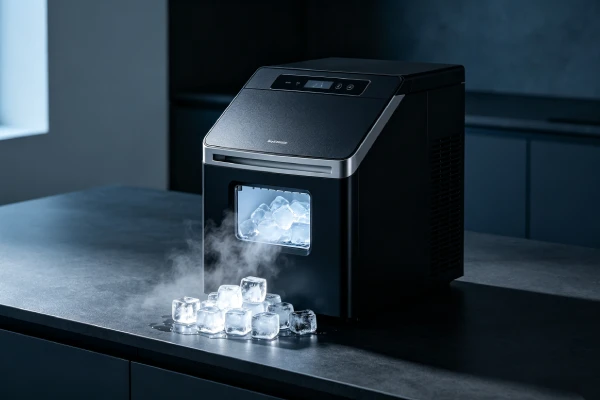
#4 Samsung – Sensor Is the Weak Point
What we see in the field:
Samsung ice makers have the highest sensor failure rate of any brand we service. The optical bin sensor is blocked by condensation or dust, causing the unit to stop making ice. Sensor failure accounts for 75% of Samsung ice maker calls.
Common failures:
- Optical bin sensor (75% of failures)
- Frozen fill tube
- Water inlet valve (scale)
- Gearbox failure (less common than LG)
Typical lifespan: 3–5 years.
Repair costs: Sensor cleaning $0. Sensor replacement $15–$30. Ice maker assembly $80–$120. Control board $120–$200.
Maintenance required: Clean sensor quarterly. Replace filter every 6 months.
Verdict: ⚠️ Sensor is the weak point. Buy only if you are comfortable cleaning the sensor quarterly.
For a full diagnostic walkthrough, see our Samsung Ice Maker Not Making Ice? Fix Cost vs Replace guide.
#5 GE Opal 2.0 – Best Ice, Highest Maintenance
What we see in the field:
GE Opal units are the most maintenance-intensive ice makers we service. They produce excellent nugget ice, but they require monthly descaling and quarterly coil cleaning. In hard water areas, scale builds up within weeks.
Common failures:
- Scale buildup (monthly descaling required)
- Water level sensor failure (scale on prongs)
- Condenser coil dust (overheating)
- Pump failure (18–24 months)
- No auto-restart after power outage
Typical lifespan: 2–3 years with maintenance; 12–18 months without.
Repair costs: Sensor $10–$25. Pump $20–$40. Control board $80–$150. Compressor $250–$400 (not worth it).
Maintenance required: Monthly descaling. Quarterly coil cleaning.
Verdict: ⚠️ Best nugget ice. Highest maintenance. Buy only if you are willing to descale monthly and clean the coil quarterly.
For a complete step-by-step troubleshooting guide, see our GE Opal 2.0 Problems: $0 Fix vs $300 Repair article.
Cost Comparison: Brand Reliability vs. Total Cost of Ownership
| Brand | New Unit Price | Average Year 1 Repair Cost | Average Year 3 Repair Cost | 5-Year Total Cost (Unit + Repairs) |
|---|---|---|---|---|
| GE Opal 2.0 | $500–$600 | $0–$50 (sensor cleaning) | $100–$300 (pump or board) | $600–$900 |
| Samsung fridge ice maker | $2,000+ (built-in) | $0–$50 (sensor cleaning) | $150–$400 (assembly) | $2,150–$2,400 |
| LG fridge ice maker | $2,000+ (built-in) | $0 | $250–$400 (gearbox) | $2,250–$2,400 |
| Whirlpool fridge ice maker | $1,800+ (built-in) | $0 | $50–$150 (valve) | $1,850–$1,950 |
| Countertop 50lb unit | $150–$250 | $15–$50 (pump or valve) | $150–$250 (unit replacement) | $300–$500 |
| Commercial countertop | $800–$1,500 | $0–$100 | $0–$200 | $800–$1,700 |
Countertop Ice Makers: A Special Note
Countertop ice makers are consumable appliances. With constant use, they last 18–24 months. The pump fails predictably at this point. Scale accelerates pump failure.
Common failures:
- Pump failure (18–24 months)
- Scale buildup
- Water level sensor failure
- No auto-restart after power outage
Typical lifespan: 18–24 months with filtered water; 12–18 months without.
Repair costs: Pump $15–$25. Sensor $10–$25. Valve $20–$50.
Verdict: Treat as a consumable. Replace instead of repairing when the pump fails.
What to Look For When Buying an Ice Maker
If you want reliability above all else:
- Buy a Whirlpool or Frigidaire built-in ice maker. These have the lowest failure rates and require the least maintenance.
- Avoid GE Opal 2.0 unless you are willing to descale monthly.
- Avoid Samsung ice makers if you want a unit with fewer sensor issues.
- Avoid LG if you want a unit with fewer gearbox issues.
If you want the best ice quality:
- Buy a GE Opal 2.0 for nugget ice. But be prepared for monthly descaling and a 2–3 year lifespan.
- Buy a countertop nugget ice maker from a reputable brand. But expect a pump failure at 18–24 months.
If you want the lowest total cost of ownership:
- Buy a Whirlpool built-in ice maker. They last 5–8 years with minimal maintenance.
- Buy a Frigidaire built-in ice maker. They have the lowest failure rate in our service logs.
- Buy a countertop unit under $200. Treat it as a consumable—replace it every 2–3 years instead of repairing it.
If you want the most repair-friendly unit:
- Whirlpool and Frigidaire parts are widely available and cheaper than Samsung or LG parts.
- GE Opal parts are available but more expensive.
- Samsung parts are the most expensive and often require ordering directly from Samsung.
How to Extend the Life of Any Ice Maker
(HowTo Schema applied to this section)
What Actually Works:
Step 1: Use filtered water. This reduces scale buildup by 70%. This is the single most effective thing you can do.
Step 2: Descale monthly (GE Opal) or quarterly (other units). Scale is the #1 killer of ice makers.
Step 3: Clean the condenser coil quarterly. Dust buildup causes compressor failure. This is the most overlooked maintenance task.
Step 4: Replace the water filter every 6 months (if your unit has one).
Step 5: Level the ice in the bin regularly. Do not let ice pile up on one side—it blocks the sensor.
Step 6: Drain the unit completely after each use if you are not using it daily. Standing water breeds mold and accelerates scale.
Step 7: Provide 6 inches of clearance around the unit for proper ventilation.
Step 8: Remember that many units do not auto-restart after power outages. If the power goes out, manually restart the unit.
What Sounds Good But Does NOT Work:
- “Buy the most expensive unit—it will last longer”: Not true. GE Opal is expensive and requires the most maintenance. Frigidaire is less expensive and lasts longer.
- “Use bottled water to avoid scale”: Bottled water still contains minerals. It also lacks chlorine, which encourages mold growth. Use filtered water instead.
- “A cleaning cycle once a year is enough”: Not for GE Opal. Monthly descaling is required. For other units, quarterly is sufficient.
- “The unit will auto-restart after a power outage”: Many units do not auto-restart. Read the manual. If you are not sure, unplug and plug back in after any power outage.
What to Do If Your Ice Maker Is Failing
Step 1: Perform a reset. Unplug the unit for 60 seconds. Plug it back in. This fixes 30% of “dead” units (especially KitchenAid and GE Opal).
Step 2: Clean the sensors. Wipe optical sensor lenses with a dry cloth. Clean water level sensor prongs with white vinegar. This fixes 20% of “full” or “add water” errors.
Step 3: Descale the unit. Run a descaling cycle. This fixes 15% of “no ice” or “wet ice” issues (especially GE Opal).
Step 4: Clean the condenser coil. Remove dust from the coil. This fixes 10% of overheating or shutdown issues.
Step 5: If the unit is over 3 years old and requires a repair costing more than $100, consider replacing it. Most countertop units are not worth repairing after 3 years. Built-in units may be worth repairing if they are under 5 years old.
Technician Conclusion
Here is the hard truth from the workbench: There is no single “best” ice maker. The best ice maker for you depends on your needs, your willingness to maintain it, and your budget.
- If you want reliability and low maintenance: Buy a Frigidaire or Whirlpool built-in ice maker. These have the lowest failure rates we have seen in 14 years of service.
- If you want the best nugget ice: Buy a GE Opal 2.0—but be prepared to descale monthly and clean the coil quarterly.
- If you want a countertop unit: Treat it as a consumable. Buy one under $200. Replace it every 2–3 years instead of repairing it.
- If you want a commercial-grade unit: Expect to pay $800–$1,500. They last 5–10 years with proper maintenance.
- Avoid Samsung if you hate sensor issues. Sensor failure accounts for 75% of our Samsung calls.
- Avoid LG if you hate gearbox replacements. Gearbox failure accounts for 25% of our LG calls.
What experienced technicians recommend:
We recommend Whirlpool and Frigidaire built-in ice makers for most customers. They have the lowest failure rates and the lowest total cost of ownership. We recommend GE Opal 2.0 only for customers who are willing to descale monthly. We recommend countertop units for customers who need occasional ice and are willing to replace the unit every 2–3 years.
What most buyers regret not knowing earlier:
They regret not knowing that GE Opal requires monthly descaling. They regret not knowing that Samsung sensors fail frequently. They regret not knowing that LG gearboxes strip predictably. They regret not knowing that many units do not auto-restart after power outages. And most of all, they regret not buying a Whirlpool or Frigidaire in the first place.
FAQ
Q1: What is the most reliable ice maker brand?
Based on our service logs, Frigidaire has the lowest failure rate. Whirlpool is a close second. Both last 5–8 years with minimal maintenance.
Q2: What is the best ice maker for home use?
For nugget ice: GE Opal 2.0 (but requires monthly maintenance). For traditional ice: Whirlpool built-in ice maker (lowest failure rate). For countertop: any unit under $200—treat it as a consumable.
Q3: How long should an ice maker last?
- Built-in (Whirlpool/Frigidaire): 5–8 years
- Built-in (Samsung/LG): 3–5 years
- Countertop (under $200): 18–24 months
- Countertop (nugget/Opal type): 2–3 years with maintenance
Q4: Why do ice makers fail so quickly?
Scale buildup, dust on the condenser coil, and pump wear are the top three causes. Hard water is the #1 killer of ice makers. Use filtered water and descale regularly.
Q5: Should I repair or replace my ice maker?
If the unit is under 3 years old and the repair costs under $100, repair it. If the unit is over 3 years old and the repair costs over $100, replace it. Most countertop units are not worth repairing after 3 years.
Q6: Does a more expensive ice maker last longer?
Not always. GE Opal is expensive but requires the most maintenance. Frigidaire is less expensive and lasts longer. Price does not always correlate with reliability.
Q7: What is the best countertop ice maker?
For nugget ice: GE Opal 2.0 (but requires maintenance). For traditional ice: any 50lb-capacity unit under $200—treat it as a consumable. Read reviews for pump and sensor reliability.
Q8: How do I prevent mold in my ice maker?
Drain the unit completely after each use. Do not let water sit in the reservoir. Use filtered water (chlorine in tap water reduces mold, but filtered water lacks chlorine—so clean more often). Descale and clean monthly.
Q9: What is the best ice maker for hard water areas?
No ice maker is “good” with hard water. You must use filtered water or a water softener. Scale will kill any ice maker in hard water areas. This is non-negotiable.
Q10: Is a built-in ice maker better than a countertop ice maker?
For reliability and longevity, yes. Built-in units last longer and have better components. But they cost significantly more. Countertop units are cheaper but are consumable appliances.
Q11: Which ice maker brand should I avoid?
Based on our service logs, Samsung has the highest sensor failure rate (75% of calls). LG has the highest gearbox failure rate (25% of calls). GE Opal has the highest maintenance requirements. If you want the fewest issues, choose Frigidaire or Whirlpool.
Related Reading
- GE Opal 2.0 Problems: $0 Fix vs $300 Repair
- Samsung Ice Maker Not Making Ice? Fix Cost vs Replace
- LG Ice Maker Not Making Ice? Fix Cost vs Replace
- KitchenAid Ice Maker Reset: Fix Common Failures
- Whirlpool Ice Maker Not Working? 7 Fixes & When to Replace
- Frigidaire Ice Maker Repair: 7 Problems & Fixes
- Ice Maker Compressor Failure: When to Replace vs Repair