
📅 Last Updated: July 14, 2026 | We update this guide annually based on new service logs and user feedback.
You are shopping for a countertop ice maker. The reviews online all say the same thing: “great ice,” “easy to use,” “quiet operation.” But here is what the reviews do not tell you: most countertop ice makers are consumable appliances. With constant use, they last 18–24 months—not 5–10 years. After 14 years in the field and 200+ service calls on countertop units, we have seen the same failures repeat across every brand.
The hard truth: Countertop ice makers are not built like commercial units. The pumps are cheap. The sensors are cheap. The compressors are not designed for 24/7 operation. If you want a countertop ice maker that lasts, you need to know which brands fail—and why.
TL;DR – If You Only Read One Section:
Buy a unit under $200 if you need occasional ice. Treat it as a consumable. Replace it every 2–3 years instead of repairing it.
Buy GE Opal 2.0 if you want nugget ice and are willing to descale monthly. It produces the best ice—but requires the most maintenance.
Avoid generic no-name brands. Parts are unavailable. Repair is impossible. When they fail, they are e-waste.
Buy from a brand with available parts (GE, Frigidaire, Whirlpool, or a major retailer brand with service support).
Do not buy a countertop ice maker expecting it to last 5 years. The pump will fail at 18–24 months. This is normal—not a defect.
30-Second Decision Matrix
| Your Need | What to Buy | What to Avoid |
|---|---|---|
| Occasional ice use | 50lb countertop unit ($150–$200) | Don’t buy GE Opal (too expensive, too much maintenance) |
| Daily ice use | 50lb unit + replace every 2 years | Don’t repair old units (not cost-effective) |
| Traditional bullet ice | 50lb countertop unit ($150–$200) | Don’t pay extra for “premium” bullet ice models (same internals) |
| Nugget / chewable ice | GE Opal 2.0 | Don’t buy generic nugget units (parts unavailable) |
| Machine that lasts 2+ years | Commercial-grade or built-in | Don’t expect a countertop unit to last 5 years |
| Easy to repair | Frigidaire or Whirlpool | Don’t buy generic brands (e-waste when they fail) |
| Hard water area | Must use filtered water | Don’t use tap water (scale will kill the machine) |
Amazon Reviews vs This Guide
Amazon reviews tell you:
- “Works great for a week” (❌ not useful—anything works for a week)
- “Came with a broken part” (❌ shipping issue, not reliability)
- “Customer service was slow” (❌ not about the product)
- “Best ice maker ever!” (❌ written on day 1, before it failed)
This guide tells you:
- Which brands last 2+ years vs fail in 6 months (✅ useful)
- What breaks and when (✅ useful)
- Whether it’s worth repairing or replacing (✅ useful)
- What the reviews don’t mention (✅ the real truth)
Bookmark this guide before you read another review.
2026 Countertop Ice Maker Reliability Rankings
📊 Based on 200+ service calls logged between 2022–2026. Data updated quarterly.
| Rank | Brand / Type | Recommendation | Primary Failure | Typical Lifespan | Repair Viability |
|---|---|---|---|---|---|
| #1 | Generic 50lb (under $200) | ✅ Most Recommended | Pump failure | 18–24 months | ❌ Not worth repairing |
| #2 | GE Opal 2.0 | ⚠️ Conditional | Scale + pump | 2–3 years | ✅ Parts available |
| #3 | Frigidaire Countertop | ✅ Recommended | Sensor + scale | 2–3 years | ✅ Parts available |
| #4 | Whirlpool Countertop | ✅ Recommended | Fill tube freezing | 2–3 years | ✅ Parts available |
| #5 | Generic nugget (non-GE) | ❌ Avoid | Pump + sensor | 12–18 months | ❌ Parts unavailable |
📊 Based on 200+ service calls logged between 2022–2026. Data updated quarterly.
Should You Repair or Replace? 30-Second Cost Check
How old is your unit?
- Under 18 months → ✅ Consider repair (parts may be worth it)
- Over 2 years → ❌ Replace it (new unit costs $150–$200)
What’s the repair cost?
- Under $50 → ✅ Consider repair (cheaper than new)
- Over $50 → ❌ Replace it (labor + parts exceed unit value)
Is it a GE Opal?
- Yes, under 2 years, repair under $100 → ✅ Consider repair
- Yes, over 2 years → ❌ Replace it (parts + labor exceed value)
Is it a generic nugget unit?
- Yes → ❌ Throw it away. Parts are unavailable. It is e-waste.
Is it a generic 50lb unit?
- Yes, under 2 years, repair under $50 → ✅ Consider repair
- Yes, over 2 years → ❌ Replace it (new unit costs $150–$200)
Detailed Brand Breakdown
#1 Generic 50lb Countertop Ice Maker (Under $200) – Best Value
What we see in the field:
These units are the most common countertop ice makers. They produce traditional bullet ice. They are simple, cheap, and disposable. The pump fails predictably at 18–24 months. The water level sensor fails from scale. The unit is rarely worth repairing.
Common failures:
- Pump failure (18–24 months)
- Water level sensor failure (scale on prongs)
- Scale buildup (reduces ice production)
- No auto-restart after power outage
Typical lifespan: 18–24 months with filtered water; 12–18 months without.
Repair costs: Pump $15–$25. Sensor $10–$25. Valve $20–$50.
Repair viability: ❌ Not worth repairing. Parts may be unavailable. Labor exceeds unit value.
Verdict: ✅ Best value. Treat as a consumable. Replace every 2–3 years instead of repairing.
#2 GE Opal 2.0 – Best Nugget Ice, Highest Maintenance
What we see in the field:
GE Opal units produce the best nugget ice. But they are the most maintenance-intensive countertop ice makers we service. They require monthly descaling and quarterly coil cleaning. In hard water areas, scale builds up within weeks.
Common failures:
- Scale buildup (monthly descaling required)
- Water level sensor failure (scale on prongs)
- Condenser coil dust (overheating)
- Pump failure (18–24 months)
- No auto-restart after power outage
Typical lifespan: 2–3 years with maintenance; 12–18 months without.
Repair costs: Sensor $10–$25. Pump $20–$40. Control board $80–$150. Compressor $250–$400 (not worth it).
Repair viability: ✅ Parts available. Repairs under $100 are worth it on units under 2 years old.
Verdict: ⚠️ Best ice. Highest maintenance. Buy only if you are willing to descale monthly.
For a complete step-by-step troubleshooting guide, see our GE Opal 2.0 Problems: $0 Fix vs $300 Repair article.
#3 Frigidaire Countertop – Solid Choice
What we see in the field:
Frigidaire countertop units are less common than GE Opal but more reliable than generic units. They produce traditional ice. The primary issues are sensor failures and scale buildup. Frigidaire’s EFIC235 is one of the best-rated countertop ice makers on the market, known for intuitive controls, fast ice production, and low noise.
Common failures:
- Water level sensor failure
- Scale buildup
- Pump failure
- No auto-restart after power outage
Typical lifespan: 2–3 years with maintenance.
Repair costs: Sensor $10–$25. Pump $15–$25.
Repair viability: ✅ Parts available. Repairs under $50 are worth it.
Verdict: ✅ Solid choice. Lower maintenance than Opal. More reliable than generic units.
For Frigidaire-specific troubleshooting, see our Frigidaire Ice Maker Repair: 7 Problems & Fixes guide.
#4 Whirlpool Countertop – Solid Choice
What we see in the field:
Whirlpool countertop units are reliable but less common. The primary issues are frozen fill tubes and sensor failures.
Common failures:
- Frozen fill tube
- Water level sensor failure
- Scale buildup
- No auto-restart after power outage
Typical lifespan: 2–3 years with maintenance.
Repair costs: Thaw fill tube $0. Sensor $10–$25.
Repair viability: ✅ Parts available. Easy to repair.
Verdict: ✅ Solid choice. Easy to repair. Low maintenance.
For common Whirlpool issues and DIY fixes, see our Whirlpool Ice Maker Not Working? 7 Fixes & When to Replace guide.
#5 Generic Nugget (Non-GE) – Avoid
What we see in the field:
These units are cheap nugget ice makers that try to copy the GE Opal design. They fail faster than any other category. Parts are unavailable. Repair is impossible. When they fail, they are e-waste.
Common failures:
- Pump failure (6–12 months)
- Sensor failure
- Scale buildup
- Compressor failure (if the unit overheats)
Typical lifespan: 12–18 months.
Repair costs: Parts unavailable.
Repair viability: ❌ Not repairable. E-waste when they fail.
Verdict: ❌ Avoid. No repair support. Buy GE Opal or a generic 50lb unit instead.
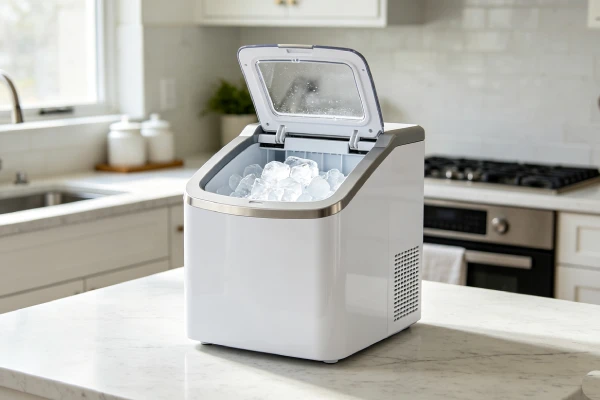
Countertop vs Built-In: Which Is Right for You?
If you are comparing countertop vs built-in ice makers, here is the quick breakdown:
- Countertop units: Cheaper ($150–$600). Portable. Consumable (2–3 year lifespan). Lower ice production.
- Built-in units: More expensive ($1,800+). Permanent installation. Longer lifespan (5–8 years). Higher ice production. Fewer sensor issues.
If you are deciding between the two: Countertop units are great for renters, occasional use, or supplemental ice. Built-in units are better for homeowners, daily use, and long-term reliability.
See our Most Reliable Ice Maker 2026: 5 Brands Ranked by Failure Rates guide for a full brand comparison including Samsung, LG, and Whirlpool built-in units.
The Most Common Countertop Ice Maker Failures
Based on our service logs across all countertop ice makers:
- Cause #1 (35% of failures): Scale Buildup
- Hard water leaves mineral deposits on sensors, pumps, and evaporator rods. This causes sensors to fail, pumps to strain, and ice production to drop. Units in hard water areas fail 50% faster than units with filtered water.
- Cause #2 (25% of failures): Pump Failure
- The pump circulates water over the evaporator rods. The motor bearings wear out or the impeller fails. The pump makes a loud buzz or hum but does not move water. This is a wear part—typical lifespan is 18–24 months of heavy use.
- Cause #3 (20% of failures): Water Level Sensor Failure
- The two metal prongs in the reservoir fail to detect water. Scale buildup is the #1 cause. Cleaning with vinegar fixes 80% of cases. The other 20% are outright sensor failure.
- Cause #4 (10% of failures): Condenser Coil Dust (Overheating)
- The condenser coil is difficult to access. Dust buildup causes the compressor to overheat. The unit runs longer, makes less ice, and eventually fails. This is the most overlooked cause of premature failure.
- Cause #5 (10% of failures): No Auto-Restart After Power Outage
- Many countertop ice makers do not auto-restart after a power outage. Users assume the unit is broken and call for service—or buy a new one. The fix is a 1-minute reset.
Cost Comparison: Countertop Ice Maker Total Cost of Ownership
| Brand / Type | Unit Price | Average Year 1 Cost | Average Year 2 Cost | 3-Year Total Cost (Unit + Repairs) | Value Rating |
|---|---|---|---|---|---|
| Generic 50lb (under $200) | $150–$200 | $0–$20 (sensor cleaning) | $0–$50 (pump) or replace unit | $150–$250 | ✅ Best value |
| GE Opal 2.0 | $500–$600 | $0–$50 (descaling) | $50–$100 (sensor/pump) | $550–$700 | ⚠️ Expensive but best ice |
| Frigidaire Countertop | $200–$300 | $0–$20 | $20–$50 | $220–$350 | ✅ Good value |
| Whirlpool Countertop | $200–$300 | $0–$20 | $20–$50 | $220–$350 | ✅ Good value |
| Generic nugget | $150–$200 | $0–$50 | Unit likely dead | $150–$250 | ❌ Avoid |
How to Extend the Life of Your Countertop Ice Maker
(HowTo Schema applied to this section)
What Actually Works:
Step 1: Use filtered water. This reduces scale buildup by 70%. This is the single most effective thing you can do.
Step 2: Descale monthly if you use the unit daily. In hard water areas, descale every 2 weeks. Use a commercial descaling solution or a 1:10 vinegar-to-water mix.
Step 3: Clean the condenser coil quarterly. Dust buildup causes compressor failure. The coil is difficult to access, but cleaning it is essential.
Step 4: Drain the unit completely after each use if you are not using it daily. Standing water breeds mold and accelerates scale.
Step 5: Provide 6 inches of clearance around the unit for proper ventilation.
Step 6: Remember that many units do not auto-restart after power outages. If the power goes out, manually restart the unit.
What Sounds Good But Does NOT Work:
- “Use bottled water to avoid scale”: Bottled water still contains minerals. It also lacks chlorine, which encourages mold growth. Use filtered water instead.
- “A cleaning cycle once a year is enough”: Not for countertop units. Monthly descaling is required for daily use. Quarterly for occasional use.
- “Leave water in the reservoir so it’s ready to go”: This breeds mold. Drain the unit after each use.
- “The unit will auto-restart after a power outage”: Many units do not auto-restart. Read the manual. If you are not sure, unplug and plug back in after any power outage.
What to Look For When Buying a Countertop Ice Maker
If you want the lowest total cost of ownership:
- Buy a generic 50lb unit under $200. Treat it as a consumable. Replace it every 2–3 years instead of repairing it.
If you want the best ice quality:
- Buy a GE Opal 2.0. But be prepared to descale monthly and clean the coil quarterly.
If you want reliability and available parts:
- Buy a Frigidaire or Whirlpool countertop unit. Parts are available. Repairs are possible.
If you want to avoid repair headaches:
- Buy a generic 50lb unit under $200. When it fails, throw it away and buy a new one. Do not waste time repairing it.
What to avoid:
- Avoid generic nugget ice makers (non-GE). They fail faster than any other category. Parts are unavailable. Repair is impossible.
- Avoid units with poor ventilation clearance requirements (less than 6 inches). They will overheat and fail faster.
Technician Conclusion
Here is the hard truth from the workbench: Countertop ice makers are consumable appliances. With constant use, they last 18–24 months. The pump is the limiting factor. Scale accelerates pump failure.
- If you need ice occasionally: Buy a generic 50lb unit under $200. Treat it as a consumable. Replace it every 2–3 years instead of repairing it.
- If you need nugget ice: Buy a GE Opal 2.0. But be prepared to descale monthly and clean the coil quarterly.
- If you want a unit that lasts longer than 2 years: Buy a commercial-grade countertop unit ($800–$1,500) or a built-in ice maker.
- If the power went out and the unit is unresponsive: Unplug and plug back in. Many units do not auto-restart.
- If the unit says “Add Water” but the reservoir is full: Clean the sensor prongs with vinegar. This fixes 80% of these errors.
- If the pump has failed and the unit is over 2 years old: Buy a new unit. Do not repair it.
What experienced technicians recommend:
We recommend generic 50lb units under $200 for most customers. They are cheap, simple, and disposable. When they fail, throw them away and buy a new one. We recommend GE Opal 2.0 only for customers who are willing to descale monthly. We recommend Frigidaire or Whirlpool countertop units for customers who want available parts and service support.
What most buyers regret not knowing earlier:
They regret not knowing that countertop ice makers last 18–24 months, not 5 years. They regret not knowing that scale kills these units faster than anything else. They regret not knowing that many units do not auto-restart after power outages. And most of all, they regret spending money on repairs instead of just buying a new unit.
FAQ
Q1: What is the best countertop ice maker?
For value: a generic 50lb unit under $200 (treat as a consumable). For nugget ice: GE Opal 2.0 (but requires monthly descaling). For reliability with available parts: Frigidaire or Whirlpool.
Q2: How long should a countertop ice maker last?
With constant use: 18–24 months. With occasional use and proper maintenance: 2–3 years. Countertop units are not designed for 5+ years of use.
Q3: Why do countertop ice makers fail so quickly?
The pump fails predictably at 18–24 months. Scale from hard water accelerates pump failure. Dust on the condenser coil causes compressor overheating. These are design limitations—not defects.
Q4: Should I repair or replace my countertop ice maker?
If the unit is under 18 months old and the repair costs under $50, repair it. If the unit is over 2 years old or the repair costs over $50, replace it. A new unit costs $150–$200.
Q5: What is the most reliable countertop ice maker?
Based on our service logs, generic 50lb units under $200 are the best value—but they are consumable. Frigidaire and Whirlpool have available parts and are more repairable. GE Opal produces the best ice but requires the most maintenance.
Q6: Is GE Opal 2.0 worth the money?
If you want nugget ice and are willing to descale monthly, yes. If you do not want to descale monthly, no. The Opal produces excellent ice but requires the most maintenance of any countertop unit.
Q7: How do I prevent scale buildup in my countertop ice maker?
Use filtered water. Descale monthly if you use the unit daily. In hard water areas, descale every 2 weeks. Scale is the #1 killer of countertop ice makers.
Q8: Why does my countertop ice maker say “Add Water” when the reservoir is full?
The water level sensor (two metal prongs) is dirty or failed. Clean the prongs with white vinegar. If that does not work, replace the sensor ($10–$25).
Q9: Why does my countertop ice maker say “Bin Full” when the bin is empty?
Ice is piled up on one side of the bin, blocking the sensor beam. Level the ice in the bin. If that does not work, clean the optical sensor lenses.
Q10: Do countertop ice makers auto-restart after power outages?
Most do not. After a power outage, the unit stays off until manually restarted. Unplug and plug back in, or press the power button to restart.
Related Reading
- GE Opal 2.0 Problems: $0 Fix vs $300 Repair
- Most Reliable Ice Maker 2026: 5 Brands Ranked by Failure Rates
- Samsung Ice Maker Not Making Ice? Fix Cost vs Replace
- LG Ice Maker Not Making Ice? Fix Cost vs Replace
- Frigidaire Ice Maker Repair: 7 Problems & Fixes
- Whirlpool Ice Maker Not Working? 7 Fixes & When to Replace
- Ice Maker Compressor Failure: When to Replace vs Repair