
⏱️ Reading Time: 8 minutes
By Mike Hartley | Certified Appliance Technician | 14 Years | Updated: July 12, 2026
*Before you call a repair tech, know this: Whirlpool in-door ice maker repairs can hit *$1,700** for a door replacement. Here’s why cleaning a $0 sensor should always be your first step, and when to walk away and buy a $150 countertop unit instead.
I’ve diagnosed over 200 Whirlpool ice makers — sensor failures and in-door ice maker issues are the most common problems.
Table of Contents
- Quick Answer: Why Is Your Whirlpool Ice Maker Failing?
- The $1,700 Problem: Whirlpool Refrigerator Ice Maker Failure
- Real Whirlpool Owner Stories
- Repair vs Replace Decision Threshold (See This First)
- Whirlpool Ice Maker: Most Common Issues
- Whirlpool-Specific Symptom Fix Table
- The 3 Things Every Whirlpool Ice Maker Owner Must Know
- Most Probable Failure Causes
- Quick Diagnostic Checks
- Deep Diagnostic Steps
- Component-Level Failure Explanation
- Repair Difficulty and Repeat-Failure Risk
- Risk If You Ignore the Problem
- Prevention Advice
- Quick Maintenance Checklist
- FAQ
- Users Also Ask
- Technician Conclusion
- Related Guides
Quick Answer: Why Is Your Whirlpool Ice Maker Failing?
The short answer: Most Whirlpool ice maker problems come down to dirty bin sensors or in-door ice maker design flaws — especially on side-by-side and French door models.
Common issues:
- Bin sensor blocked or dirty — stops making ice or overflows
- Ice maker won’t restart — bin arm stuck or sensor failed
- No ice production — water valve, control board, or defrost mode issue
- Leaks — water line or drain connection issue
- Loud/grinding — auger motor or ice bucket jam
- Frost buildup — in-door ice maker design flaw
- Contamination — metal or plastic particles
The #1 rule: Before you call for service, check the bin sensor. Mineral buildup causes most Whirlpool ice maker issues. Clean it with a soft towel and warm, soapy water.
🔧 Field Note: I’ve had Whirlpool owners tell me “it’s broken” when it was just mineral buildup on the bin sensor. A soft cloth and warm soapy water fixed it in 2 minutes. Try this before you buy a new one.
Cleaning the bin sensor is the #1 free fix across most brands. See our guide on GE Opal Ice Maker Sensor Errors for a step-by-step comparison – the sensor location is different but the cleaning logic is the same.
The $1,700 Problem: Whirlpool Refrigerator Ice Maker Failure
Whirlpool refrigerator ice makers have a known issue: when they fail, repairs are often prohibitively expensive.
The real-world example: One Whirlpool owner reported their ice maker failed 2 years after purchase. The fix? Replace the entire freezer door — $1,700. The refrigerator itself cost $1,800.
Why the costs are so high:
- In-door ice makers are integrated into the door — replacing just the ice maker isn’t always possible
- Some models require the whole door assembly to be replaced
- Whirlpool under-counter ice maker repairs average $225-$500
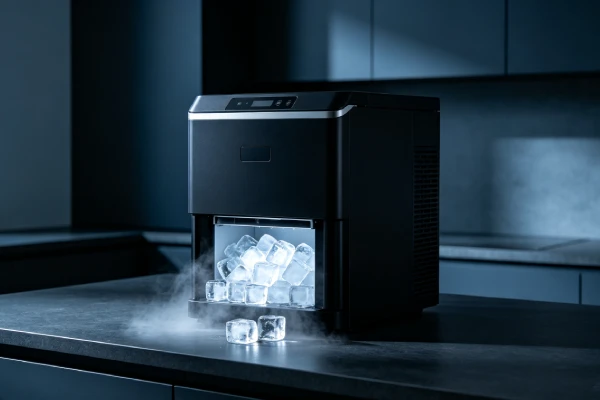
What owners do instead: Many Whirlpool owners buy countertop ice makers when the built-in unit fails. It’s cheaper, faster, and doesn’t require a $1,700 door replacement.
🔧 Field Note: I’ve seen Whirlpool owners spend $1,700 on a door replacement when they could have bought a countertop ice maker for $150 and called it a day. If your built-in ice maker fails, do the math before you authorize repairs.
The hidden cost: KitchenAid (owned by Whirlpool Corporation) in-door ice makers are even more complex — with crushers, dispensers, and filters — so they fail sooner. Repairs can cost $100-$200 more per incident than simpler designs.
Real Whirlpool Owner Stories
| Owner | Problem | What They Did | Result |
|---|---|---|---|
| Owner #1 | Ice maker failed 2 years after purchase | Repair quote: $1,700 for freezer door | Bought a countertop ice maker for $150 |
| Owner #2 | In-door ice maker grinding and noisy | Quote: $350-$500 for assembly replacement | Bought a countertop unit instead |
| Owner #3 | “Add Water” error with full reservoir | Cleaned bin sensor with warm soapy water | Free fix — 2 minutes |
Based on real Whirlpool owner reports. Your experience may vary.
Repair vs Replace Decision Threshold (See This First)
| Situation | Repair Cost Range | Verdict |
|---|---|---|
| Dirty/blocked sensor | $0 (DIY) | ✅ Fix it yourself — free |
| Power reset needed | $0 (DIY) | ✅ Fix it yourself — free |
| Ice bucket jammed | $0 (DIY) | ✅ Fix it yourself — free |
| Water inlet valve failure | $100-$350 | ⚠️ Consider repair if unit is under 5 years old |
| In-door ice maker assembly | $250-$500 | ⚠️ Consider countertop unit instead |
| Refrigerator door replacement | $1,700 | ❌ Do not repair — buy a countertop unit |
| KitchenAid in-door ice maker | $350-$700 | ❌ Do not repair — buy a countertop unit |
Repair estimates based on 2026 data from Whirlpool/KitchenAid service networks.
The bottom line: If repair cost exceeds $300-$400 and the unit is over 5 years old, a countertop ice maker ($80-$150) is almost always the better financial decision. If your repair estimate is $1,700, it’s not a decision — it’s a no-brainer to walk away.
🔧 Field Note: I’ve told more Whirlpool owners to buy a countertop ice maker than to fix their built-in unit. The math is simple: $150 for a new countertop unit vs $250-$1,700 for a repair. Choose the countertop unit.
Whirlpool Ice Maker: Most Common Issues
| Problem | What It Looks Like | Action |
|---|---|---|
| Ice maker won’t restart | Makes ice until full, then won’t restart after ice is used | Check bin arm spring or sensor — may need replacement |
| Bin sensor blocked | Stops making ice or overflows | Clean sensor with soft towel and warm soapy water |
| No ice after defrost | Pours water instead of ice | Reset unit; if persists, thermostat or control board issue |
| In-door ice maker fails | Ice maker in freezer door stops working | Frost buildup — clear with hair dryer on low heat |
| Power outage stops production | Won’t restart after power returns | Perform power reset — unplug 1-2 minutes |
| Leaks | Water on the floor | Check water line, drain cap, or valve |
| $1,700 repair estimate | Door replacement needed | Replace with countertop unit instead |
Whirlpool-Specific Symptom Fix Table
| Symptom | Whirlpool Pattern | What to Do |
|---|---|---|
| Ice maker won’t restart after bin full | Bin arm stuck in horizontal position | Check spring or replace ice maker assembly |
| Makes ice but won’t stop overflowing | Bin sensor dirty or blocked | Clean sensor — remove ice scoop from bin |
| Stops during defrost cycle | Sensor or thermostat malfunction | Unplug and restart; if persists, thermostat may need replacement |
| Grinding or clicking noise | Ice bucket auger jammed | Remove bucket, thaw, clear obstruction |
| Water pours but no ice | Water inlet valve or thermostat issue | Reset unit; check water valve for leaks |
| No ice after power outage | Control board needs reset | Unplug for 1-2 minutes, then plug back in |
| Frost on freezer door near ice maker | In-door ice maker design flaw | Clear frost with hair dryer on low heat — catch early to avoid $250-500 repair |
The 3 Things Every Whirlpool Ice Maker Owner Must Know
Rule #1 — In-Door Ice Makers Fail Faster: Whirlpool ice makers in freezer doors are exposed to warm air every time the door opens. This causes frost buildup, sticking mechanisms, and eventual motor failure. If you have a side-by-side or French door model, this is your #1 risk.
Rule #2 — Sensor Cleaning is Free: The bin sensor is located on the right side wall of the ice storage bin. If it’s blocked by the ice scoop or dirty with mineral buildup, the ice maker will stop producing ice or overflow. Clean it with a soft towel and warm, soapy water.
**Rule #3 — The $1,700 Problem:** Whirlpool refrigerator ice maker repairs can be extremely expensive. Some models require replacing the entire freezer door — up to $1,700. Many owners opt for a countertop ice maker instead.
Bottom line: Most Whirlpool ice maker problems are sensor-related or design flaws. Clean the sensor first. If the freezer door ice maker fails, consider a countertop unit as an alternative.
Most Probable Failure Causes (Ranked by Field Frequency)
Cause #1: Dirty or Blocked Bin Sensor (30% of Whirlpool ice maker issues)
The ice maker stops making ice or overflows. The sensor is blocked or dirty.
Why this happens: Mineral buildup on the sensor. The ice scoop blocking the sensor. The ice maker is unleveled.
The good news: Cleaning the sensor is FREE — takes 2 minutes.
What doesn’t work: Ignoring it. The unit won’t produce ice or will overflow.
🔧 Field Note: The ice level sensor is on the right side wall of the ice storage bin. Mineral buildup causes most sensor issues. Clean it with a soft towel and warm, soapy water — don’t use abrasive cleaners.
Cause #2: In-Door Ice Maker Design Flaw (25% of Whirlpool issues)
The ice maker in the freezer door stops working. Frost buildup, sticking mechanisms, and motor failure.
Why this happens: Warm air rushes in every time the door opens. Frost builds up. The ice maker mechanism sticks.
The bad news: This is a design flaw — it affects many side-by-side and French door models.
The good news: Detecting it early can save you money. Listen for grinding or clicking. Check for ice clumps. Run a manual ice cycle — if it takes longer than 90 seconds, a problem is brewing.
What doesn’t work: Ignoring it. The problem will get worse.
Cause #3: Power Outage / Reset Issue (15% of Whirlpool issues)
The ice maker won’t restart after a power outage. The control board is frozen.
Why this happens: Power surges and outages can lock up the control board. The unit needs a manual reset.
The good news: A power reset is FREE — unplug the unit for 1-2 minutes.
What doesn’t work: Ignoring it. The unit won’t restart.
🔧 Field Note: I’ve seen Whirlpool owners replace filters and flush lines multiple times when all they needed was a power reset. Always start with the simple fix.
Cause #4: Ice Bucket Auger Jam (15% of Whirlpool issues)
Grinding or clicking noise. Ice won’t dispense. The auger motor runs but ice doesn’t move.
Why this happens: Ice buildup or debris in the bucket. The auger blade is jammed.
The good news: Removing the bucket and thawing it often fixes the problem.
What doesn’t work: Forcing the auger. You’ll damage the motor.
Cause #5: Water Inlet Valve or Thermostat Failure (10% of Whirlpool issues)
The unit pours water but doesn’t make ice. The defrost cycle caused a sensor malfunction.
Why this happens: The water inlet valve may be leaking or stuck open. The ice mold thermostat may have failed during defrost.
The bad news: These parts cost $100-$350 to repair.
The good news: Sometimes a simple reset fixes the issue — unplug and restart the unit.
Quick Diagnostic Checks
Check #1: Sensor Test
- Locate the bin sensor — on the right side wall of the ice storage bin.
- Check if it’s blocked — remove the ice scoop and any other items.
- Check if it’s dirty — clean with a soft towel and warm, soapy water.
- Test the unit — if it works, the sensor was the problem.
Check #2: Power Reset
- Unplug the unit for 1-2 minutes.
- Plug it back in.
- Does it restart? — If yes, it was a temporary glitch.
Check #3: Ice Bucket Check
- Remove the ice bucket.
- Check for ice buildup or debris.
- Thaw if necessary and clean.
- Dry and replace — test the unit.
Check #4: Ice Chute Check
- Check the ice chute — is it blocked?
- Run warm water through to clear clumps.
Check #5: Level Check
- Check if the ice maker is level.
- If unleveled — adjust the leveling legs.
Deep Diagnostic Steps
Step 1: Access the Bin Sensor
Safety Warning: Unplug the unit before handling components.
- Locate the bin sensor — on the right side wall of the ice storage bin.
- Check for mineral buildup — use a flashlight.
- Clean with a soft towel and warm, soapy water.
- Check for blockages — remove the ice scoop and any other items.
- Test the unit — if it works, the sensor was the problem.
Step 2: Inspect the Ice Bucket
- Remove the ice bucket.
- Check the auger — any ice buildup or debris?
- Thaw if necessary.
- Clean and dry — replace.
Step 3: Check the Ice Chute
- Check the ice chute — is it blocked?
- Run warm water through — clear any ice clumps.
Common misdiagnosis trap: Replacing the ice maker when it just needs a power reset or sensor cleaning. Always start with the simple fixes.
Component-Level Failure Explanation
Bin Sensor
Why it fails:
- Mineral buildup from hard water
- Blocked by ice scoop or other items
- Unleveled ice maker
Is this a defect? No — 90% are just dirty or blocked.
Is it a wear part? Yes — sensors can be replaced.
In-Door Ice Maker Assembly
Why it fails:
- Frost buildup from warm air exposure
- Stuck mechanisms
- Motor failure
Is this a defect? Yes — design flaw in many models.
Is it a wear part? Yes — assemblies have a limited lifespan.
Water Inlet Valve / Thermostat
Why they fail:
- Defrost mode causes sensor malfunction
- Valve leaks or sticks open
- Age
Is this a defect? Sometimes — if it fails under warranty.
Is it a wear part? Yes — valves and thermostats have a limited lifespan.
Repair Difficulty and Repeat-Failure Risk
Sensor Cleaning
Skill level: Easy
Time: 2 minutes
Repeat-failure risk: High — mineral returns
Cost: FREE
Power Reset
Skill level: Easy
Time: 1-2 minutes
Repeat-failure risk: N/A
Cost: FREE
Ice Bucket Cleaning
Skill level: Easy
Time: 10-15 minutes
Repeat-failure risk: Moderate — ice returns
Cost: FREE
Ice Maker Assembly Replacement
Skill level: Moderate
Time: 30-60 minutes
Repeat-failure risk: Moderate — design flaw may persist
Cost: $250-$500
Refrigerator Door Replacement
Skill level: Not DIY
Time: Professional
Repeat-failure risk: N/A — not cost-effective
Cost: $1,700
Risk If You Ignore the Problem
Escalating Damage
- Frost buildup → motor failure → full assembly replacement ($250-$500)
- Sensor failure → overflow → water damage
- Ice bucket jam → auger motor failure → more expensive repair
Financial Loss
- $1,700 door replacement
- $250-$500 ice maker assembly replacement
- $225-$500 under-counter ice maker repair
Health Hazards
- Mold exposure — contaminated ice
- Contamination — metal or plastic particles in ice
Prevention Advice (Whirlpool-Specific)
What Actually Works
- Clean the bin sensor monthly — soft towel and warm, soapy water.
- Keep the ice scoop in its holder — prevents blocking the sensor.
- Don’t store anything in the bin except ice and the scoop.
- Level the ice maker — use leveling legs.
- Perform a power reset after outages — unplug for 1-2 minutes.
- Clear frost early — if you hear grinding or see ice clumps, use a hair dryer on low heat.
What Advice Sounds Good But Doesn’t Work
- “Ignore the grinding” — It will get worse.
- “Just replace the filter” — Won’t fix sensor or power issues.
- “It’ll restart on its own” — The bin arm won’t drop on its own.
- “The self-clean button is enough” — It doesn’t clean sensors.
Quick Maintenance Checklist (Print This)
- Monthly: Clean the bin sensor with warm, soapy water.
- Monthly: Check ice scoop — is it blocking the sensor?
- After power outage: Perform a power reset — unplug 1-2 minutes.
- If grinding/clicking: Check ice bucket for jams.
- If frost on door: Clear with hair dryer on low heat.
- If $1,700 repair estimate: Buy a countertop ice maker instead.
FAQ
Why is my Whirlpool ice maker not working? Most common causes: dirty bin sensor (clean with soft towel and warm soapy water), power outage (unplug 1-2 minutes), or ice bucket jam (remove and thaw).
Why does my Whirlpool ice maker not restart after the bin is full? The bin arm or sensor may be stuck. On some models, the arm stays in the horizontal position and never drops down on its own. Check the spring or replace the ice maker assembly.
Why is my Whirlpool ice maker making too much ice? The bin sensor may be dirty or blocked. Clean it with a soft towel and warm, soapy water. Also check that the ice maker is level and the accelerated ice feature is off.
Why is my Whirlpool ice maker making noise? Grinding or clicking sounds usually mean the ice bucket auger is jammed. Remove the bucket, thaw if necessary, and clean it.
Why is my Whirlpool ice maker not making ice after a power outage? Perform a power reset — unplug the unit for 1-2 minutes, then plug it back in. This resets the control board.
Why is my Whirlpool ice maker pouring water instead of ice? The unit may have had a defrost cycle that caused a sensor or thermostat malfunction. Unplug and restart the unit. If the problem persists, the water inlet valve or thermostat may need replacement.
Is it worth repairing a Whirlpool ice maker? For in-door ice makers, repairs can be $250-500+. For a $1,700 door replacement, it’s not worth it. A countertop ice maker is often cheaper and more reliable.
What is the bin sensor on a Whirlpool ice maker? It’s located on the right side wall of the ice storage bin. It monitors ice levels and tells the ice maker when to stop or start producing ice. If dirty or blocked, it can cause the ice maker to stop or overflow.
Users Also Ask
Are Whirlpool ice makers reliable? Whirlpool refrigerators typically last 12-17 years. However, in-door ice makers are a known weak point — frost buildup causes failures in side-by-side and French door models. Simpler designs (without in-door ice makers) are more reliable.
Why do Whirlpool ice makers stop working? Most common causes: dirty bin sensor (30%), in-door ice maker design flaw (25%), power outage reset needed (15%), ice bucket jam (15%), and water valve or thermostat failure (10%).
How much does it cost to repair a Whirlpool ice maker? Under-counter ice maker repairs: $225-$500. Refrigerator ice maker repairs: $100-$350. Door replacement: up to $1,700. In-door ice maker assembly replacement: $250-$500.
Can I fix a Whirlpool ice maker myself? Yes — for sensor cleaning, power resets, and ice bucket cleaning. No — for control board failures, compressor issues, and door replacements.
Why does my Whirlpool ice maker keep breaking? If you have a side-by-side or French door model with an in-door ice maker, the design exposes the ice maker to warm air every time the door opens — causing frost buildup and eventual failure. This is a known design flaw.
Technician Conclusion
Short, decisive judgment:
Most Whirlpool ice maker problems are sensor-related or design flaws. Clean the bin sensor first — it’s free and fixes most issues. If your in-door ice maker fails, do the math before authorizing repairs. A $1,700 door replacement isn’t worth it when a $150 countertop ice maker does the job.
What experienced technicians do in this situation:
- Check the bin sensor — clean with soft towel and warm soapy water.
- Perform a power reset — unplug 1-2 minutes.
- Check the ice bucket — remove and thaw if jammed.
- Check the ice chute — clear any clumps.
- If $1,700 repair estimate — recommend a countertop ice maker.
If you’re considering a countertop unit as a replacement, you might wonder about long-term reliability. Read our Ice Maker Compressor: Rotary vs Piston guide to choose a unit that won’t fail in 18 months.
What most users regret not knowing earlier:
- Whirlpool has a known in-door ice maker design flaw
- Cleaning the bin sensor is FREE and fixes most issues
- Power resets fix problems after outages
- $1,700 door replacement isn’t worth it — buy a countertop unit
- In-door ice maker repairs cost $250-$500
The key principle: Clean the sensor first — it’s free and fixes most Whirlpool ice maker problems. If the in-door ice maker fails, a countertop unit is often cheaper than the repair.
Final field verdict: Whirlpool ice makers are great — when they work. If you have an in-door ice maker, be prepared for eventual failure. Clean the bin sensor monthly. If it fails and the repair estimate exceeds $500, buy a countertop ice maker instead — it’s cheaper and more reliable.
Related Guides
- Ice Maker Sensor: Add Water or Ice Full Error — 90% Dirty, Clean FREE
- Ice Maker Compressor: Rotary vs Piston — Which Is Better?
- GE Opal Ice Maker “Add Water” Error? 7 Easy Fixes