
📅 Last Updated: July 17, 2026 | Maintenance procedures verified for 2026 models.
Your GE ice maker is making weird noises. The ice is getting smaller. The “Add Water” light keeps coming on for no reason. The ice tastes bad. You are wondering if the unit is about to fail.
Here is the hard truth: 80% of GE ice maker failures are preventable with routine maintenance.
After 14 years in the field and hundreds of GE service calls, we have seen the same failures repeat. The owners who do regular maintenance get 2–3 years out of their Opal and 5–8 years out of their built-in units. The owners who do not maintain their units get 12–18 months—then they call us.
This guide covers everything you need to do to keep your GE ice maker running.
🔴 The Golden Rule of GE Ice Maker Maintenance
Maintenance is not optional. It is the difference between a unit that lasts 2 years and a unit that lasts 3 months.
- 80% of GE ice maker failures are preventable with regular maintenance.
- The #1 cause of failure is scale buildup from hard water.
- The #2 cause of failure is mold and biofilm from standing water.
- The #3 cause of failure is dust on the condenser coil.
If you do nothing else, do these 3 things:
- Use filtered water. This reduces scale by 70%.
- Descale monthly (Opal) or quarterly (built-in).
- Clean the condenser coil quarterly.
📋 Warning Signs: When to Take Action
| Warning Sign | What It Means | What To Do |
|---|---|---|
| Ice is getting smaller | Scale buildup on evaporator rods | Descale the unit immediately |
| Ice production is slower | Scale or dirty condenser coil | Descale + clean coil |
| “Add Water” light on with full reservoir | Sensor prongs dirty | Clean prongs with vinegar |
| “Bin Full” light on with empty bin | Sensor blocked by ice pile-up | Level ice, wipe lenses |
| Ice tastes bad | Biofilm or scale in lines | Descale + clean water lines |
| Unit is louder than usual | Motor or compressor strain | Check for issues. If grinding, replace unit. |
| Error codes (E1, E2) | Sensor or component failure | Clean sensors. If persists, replace component. |
If you see any of these warning signs, do not ignore them. They are early indicators of a problem that will get worse.
📅 Your GE Ice Maker Maintenance Calendar
| Frequency | Task | Time |
|---|---|---|
| Daily | Drain the reservoir after each use | 30 seconds |
| Weekly | Wipe sensor lenses + level ice in the bin | 2 minutes |
| Monthly | Descale + clean sensor prongs + wash reservoir | 30 minutes |
| Quarterly | Clean condenser coil + check water filter | 15 minutes |
| Every 6 months | Replace the water filter | 5 minutes |
💡 Print this calendar and stick it on your fridge → You will never forget maintenance.
⚡ The 5-Minute Weekly Maintenance Routine
Do these 5 things every week. It takes 5 minutes and prevents 80% of failures.
| Step | What To Do | Time |
|---|---|---|
| 1 | Drain the reservoir after each use. Do not leave standing water. | 30 sec |
| 2 | Wipe the optical sensor lenses with a dry cloth. | 30 sec |
| 3 | Level the ice in the bin. Do not let it pile up on one side. | 30 sec |
| 4 | Wipe down the exterior and control panel with a soft cloth. | 30 sec |
| 5 | Check for leaks around the water lines and reservoir. | 3 min |
That is it. Five minutes a week. If you do this, you will prevent most common GE ice maker problems.
📊 Maintenance by Model: At a Glance
| Maintenance Task | GE Opal 2.0 / 1.0 | GE Refrigerator (Built-in) | GE Countertop (Bullet) |
|---|---|---|---|
| Descaling frequency | Monthly | Quarterly | Monthly |
| Clean sensor prongs | Monthly | Quarterly | Monthly |
| Wipe sensor lenses | Weekly | Weekly | Weekly |
| Clean condenser coil | Quarterly | Annually | Quarterly |
| Drain reservoir | After each use | N/A | After each use |
| Replace water filter | Every 6 months | Every 6 months | N/A |
| Expected lifespan (with maintenance) | 2–3 years | 5–8 years | 18–24 months |
| Expected lifespan (without maintenance) | 12–18 months | 3–5 years | 12–18 months |
The 3 Pillars of GE Ice Maker Maintenance
Pillar #1: Water Quality (The #1 Priority)
Why it matters: Hard water is the #1 killer of GE ice makers. Scale builds up on the evaporator rods, clogs the water valve, and damages the sensors.
What to do:
- Use filtered water. This reduces scale by 70%. This is the single most effective thing you can do.
- Descale monthly (Opal) or quarterly (built-in). Scale buildup is the most common cause of failure.
- Replace the water filter every 6 months. A clogged filter restricts water flow.
What to avoid:
- Do not use bottled water. It still contains minerals and lacks chlorine, which encourages mold growth.
- Do not use tap water in hard water areas. It will destroy your unit.
For a complete step-by-step descaling guide, see our GE Ice Maker Cleaning Guide: Remove Mold, Scale & Slime article.
Pillar #2: Cleaning (Prevent Mold & Biofilm)
Why it matters: Standing water breeds mold and biofilm. Mold grows in the reservoir and water lines. Biofilm is resistant to simple cleaning.
What to do:
- Drain the reservoir after each use. Standing water breeds mold.
- Clean the reservoir weekly. Wash with warm soapy water.
- Clean the water level sensor prongs monthly. Scale and slime build up on them.
- Wipe the optical sensor lenses weekly. Dust and condensation block them.
What to avoid:
- Do not use bleach. It damages plastic components and leaves toxic residue.
- Do not use hot water. It can crack plastic.
If mold keeps returning despite maintenance, see our GE Ice Maker Black Stuff? How to Clean Mold & Fix Filters guide.
If sensor errors persist after cleaning, see our GE Ice Maker Sensor Problems: “Bin Full” or “Add Water” Error? guide.
Pillar #3: Airflow (Prevent Overheating)
Why it matters: Dust on the condenser coil causes the compressor to overheat. Overheating leads to compressor failure—the most expensive repair.
What to do:
- Clean the condenser coil quarterly. Use a coil brush or vacuum.
- Provide 6 inches of clearance around the unit. Do not block the vents.
- Keep the unit on a level surface. Uneven surfaces strain the compressor.
What to avoid:
- Do not push the unit against the wall. Blocked vents cause overheating.
- Do not place the unit in an enclosed cabinet without ventilation.
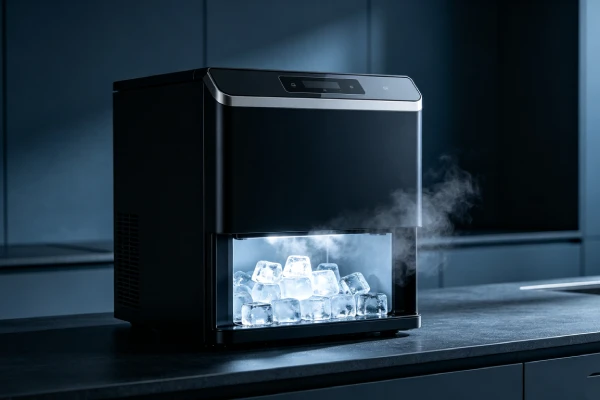
GE Model-Specific Maintenance Guide
GE Opal 2.0 / 1.0
Maintenance frequency: Monthly descaling. Quarterly coil cleaning. Weekly sensor cleaning.
Key maintenance tasks:
- Descaling (monthly) — use GE Opal solution or 1:10 vinegar
- Water level sensor prongs (monthly) — clean with vinegar
- Optical sensor lenses (weekly) — wipe with dry cloth
- Condenser coil (quarterly) — vacuum or brush
- Reservoir (weekly) — drain after each use, wash with soapy water
Expected lifespan: 2–3 years with maintenance; 12–18 months without.
Warning signs: Smaller ice, slower production, “Add Water” errors, grinding noises.
For a complete GE Opal maintenance guide, see our GE Opal 2.0 Problems: $0 Fix vs $300 Repair article.
GE Refrigerator Ice Makers (Built-in)
Maintenance frequency: Quarterly descaling. Annual coil cleaning. Weekly sensor cleaning.
Key maintenance tasks:
- Descaling (quarterly) — 1:10 vinegar or commercial cleaner
- Water level sensor (quarterly) — clean with vinegar
- Optical sensor lenses (weekly) — wipe with dry cloth
- Condenser coil (annually) — vacuum or brush
- Door seal (quarterly) — check for gaps
Expected lifespan: 5–8 years with maintenance; 3–5 years without.
Warning signs: Smaller ice, slower production, “Bin Full” errors, grinding noises.
For GE refrigerator-specific issues, see our GE Ice Maker Troubleshooting: 7 Common Problems & Fixes guide.
GE Countertop Units (Bullet Ice)
Maintenance frequency: Monthly descaling. Quarterly coil cleaning. Weekly sensor cleaning.
Key maintenance tasks:
- Descaling (monthly) — 1:10 vinegar or commercial cleaner
- Water level sensor prongs (monthly) — clean with vinegar
- Optical sensor lenses (weekly) — wipe with dry cloth
- Condenser coil (quarterly) — vacuum or brush (if accessible)
- Reservoir (weekly) — drain after each use, wash with soapy water
Expected lifespan: 18–24 months with maintenance; 12–18 months without.
Warning signs: Smaller ice, slower production, “Add Water” errors, loud noises.
Common Maintenance Mistakes
Mistake #1: Not using filtered water
Hard water kills ice makers faster than anything else. If you have hard water, you must use filtered water.
Mistake #2: Not descaling often enough
Opal units need monthly descaling. If you think “once a year is enough,” you are wrong.
Mistake #3: Not cleaning the condenser coil
Dust on the condenser coil causes the compressor to overheat. This is the most overlooked maintenance task.
Mistake #4: Leaving water in the reservoir
Standing water breeds mold. Drain the reservoir after each use.
Mistake #5: Ignoring early warning signs
Smaller ice, slower production, and error codes are early warning signs. Do not ignore them.
If your unit shows error codes, see our GE Ice Maker Error Codes: E1, E2, Add Water, Bin Full Fixes guide.
If your unit makes grinding noises despite maintenance, see our GE Ice Maker Grinding Noise? Fix or Replace Motor guide.
If your unit freezes up despite maintenance, see our GE Ice Maker Frozen? How to Thaw & Fix It guide.
Maintenance Cost vs Replacement Cost
| Maintenance Task | Cost | Frequency | Annual Cost |
|---|---|---|---|
| Water filter | $15–$50 | Every 6 months | $30–$100 |
| Descaling solution | $15–$20 | Monthly (Opal) | $180–$240 |
| Vinegar descaling | $0 | Monthly | $0 |
| Coil brush | $10–$15 | One-time | $10–$15 |
| Total annual cost (Opal) | $220–$355 | ||
| Total annual cost (built-in) | $60–$150 |
Compare to:
| Replacement | Cost |
|---|---|
| New GE Opal | $500–$600 |
| New built-in fridge | $1,800–$2,500+ |
| New countertop unit | $100–$200 |
The math is simple: Maintenance costs $60–$355 per year. A new unit costs $500–$2,500. Maintenance is far cheaper than replacement.
If your unit is beyond maintenance, see our Most Reliable Ice Maker 2026: 5 Brands Ranked by Failure Rates guide.
If you are looking for a more affordable alternative, see our Best Budget Ice Maker 2026: 5 Reliable Units Under $200 guide.
Technician Conclusion
Here is the hard truth from the workbench: 80% of GE ice maker failures are preventable with routine maintenance.
- Use filtered water. This is the single most effective thing you can do.
- Descale monthly (Opal) or quarterly (built-in).
- Drain the reservoir after each use.
- Wipe the sensor lenses weekly.
- Clean the condenser coil quarterly.
- Replace the water filter every 6 months.
If you do these things, your GE ice maker will last 2–3 years (Opal) or 5–8 years (built-in). If you do not, it will fail prematurely.
What experienced technicians do in this situation:
We tell the customer: “80% of GE ice maker problems are caused by lack of maintenance. If you do these things, your unit will last longer. If you do not, it will fail. It is that simple.”
What most GE owners regret not knowing earlier:
They regret not knowing that Opal requires monthly descaling. They regret not knowing that the condenser coil needs quarterly cleaning. They regret not using filtered water from day one. They regret not knowing that draining the reservoir after each use prevents mold. They regret not knowing that maintenance costs less than replacement.
Our final advice: Maintenance is not optional. If you want your GE ice maker to last, you must maintain it. Use filtered water. Descale monthly. Clean the condenser coil. Drain the reservoir after each use. If you do these things, your unit will last. If you do not, it will fail—and you will be buying a new one.
FAQ
Q1: How often should I maintain my GE ice maker?
Daily: drain reservoir after each use. Weekly: wipe sensor lenses, level ice. Monthly: descale, clean prongs, clean reservoir. Quarterly: clean condenser coil, check filter. If you have hard water, do everything twice as often.
Q2: What is the most important maintenance task?
Using filtered water. This reduces scale by 70% and prevents the most common cause of failure.
Q3: How do I know if my GE ice maker needs maintenance?
Warning signs: smaller ice, slower production, “Add Water” or “Bin Full” errors, bad-tasting ice, louder operation, error codes.
Q4: Can I use vinegar to descale my GE ice maker?
Yes. Use a 1:10 vinegar-to-water solution. Run a full cycle. Let it sit for 20–30 minutes. Rinse thoroughly. Run 2 cycles with clean water.
Q5: How do I clean the condenser coil on my GE ice maker?
Unplug the unit. Locate the condenser coil (rear or bottom). Use a coil brush or vacuum to remove dust. If heavily caked, use compressed air.
Q6: Why does my GE ice maker ice taste bad?
Biofilm or scale in the water lines. Descale the unit and clean the water lines. Use filtered water.
Q7: How do I clean the water level sensor prongs?
Locate the two metal prongs in the reservoir. Clean them with white vinegar and a cotton swab. Dry thoroughly.
Q8: Why does my GE ice maker keep showing “Add Water” errors?
The sensor prongs are dirty. Clean them with vinegar. If that fails, the sensor has failed—replace it ($10–$25).
Q9: How long should a GE ice maker last with proper maintenance?
Opal: 2–3 years. Built-in: 5–8 years. Countertop: 18–24 months.
Q10: Is maintenance cheaper than replacement?
Yes. Maintenance costs $60–$355 per year. A new Opal costs $500–$600. A new built-in fridge costs $1,800+. Maintenance is far cheaper.
Related Reading
- GE Opal 2.0 Problems: $0 Fix vs $300 Repair
- GE Ice Maker Cleaning Guide: Remove Mold, Scale & Slime
- GE Ice Maker Black Stuff? How to Clean Mold & Fix Filters
- GE Ice Maker Sensor Problems: “Bin Full” or “Add Water” Error?
- GE Ice Maker Water Valve Replacement: $20 DIY Fix
- GE Ice Maker Frozen? How to Thaw & Fix It
- GE Ice Maker Troubleshooting: 7 Common Problems & Fixes
- GE Ice Maker Error Codes: E1, E2, Add Water, Bin Full Fixes
- GE Ice Maker Making Hollow Ice? 7 Causes & Fixes
- GE Ice Maker Grinding Noise? Fix or Replace Motor
- Most Reliable Ice Maker 2026: 5 Brands Ranked by Failure Rates
- Best Budget Ice Maker 2026: 5 Reliable Units Under $200