
📅 Last Updated: July 17, 2026 | Cleaning procedures verified for 2026 models.
Your GE ice maker is growing mold. There is black gunk in the reservoir. Slime in the water lines. Scale on the evaporator rods. The ice tastes bad. The unit is not making ice as well as it used to.
This is the most common problem we see on GE ice makers — and it is almost always preventable.
After 14 years in the field and hundreds of GE cleaning service calls, we have seen the same failures repeat. The good news: regular cleaning prevents 80% of GE ice maker failures. The bad news: most owners do not clean their units often enough.
🔴 The Golden Rule of GE Ice Maker Cleaning
Scale, mold, and biofilm are not defects — they are maintenance failures.
- Scale (white, chalky deposits) comes from hard water. It insulates the evaporator rods and clogs the valve.
- Mold (black or green gunk) comes from standing water. It grows in the reservoir and water lines.
- Biofilm (slimy film) comes from bacteria. It attaches to the inside of tubing and is resistant to simple cleaning.
If you clean your GE ice maker monthly, you will prevent 80% of failures. If you do not clean it, the unit will fail prematurely.
🔬 Before & After: What to Expect
Before Cleaning:
- White scale on the evaporator rods (looks like chalk dust)
- Black gunk or slime in the water reservoir
- Ice is cloudy, small, or has an off-taste
- Ice production is slower than usual
After Cleaning:
- Evaporator rods are shiny with no white deposits
- Water reservoir is clear with no slime
- Ice is clear, full-sized, and tastes clean
- Ice production returns to normal speed
📋 Before You Start: What You’ll Need
| Cleaning Type | What You’ll Need | Estimated Cost |
|---|---|---|
| Descaling (scale removal) | GE Opal Descaling Solution, white vinegar (1:10), or citric acid powder | $0–$20 |
| Biofilm removal (slime) | Commercial ice machine cleaner or white vinegar | $0–$15 |
| Reservoir cleaning | Warm soapy water + soft sponge, small bottle brush | $0–$10 |
| Water line cleaning | Long pipe cleaner or compressed air | $5–$15 |
| Condenser coil cleaning | Coil brush or vacuum | $0 (already in your home) |
⏱️ Total time: 20–30 minutes
⚠️ Do NOT use bleach → It damages plastic components and leaves toxic residue.
🗓️ How Often Should You Clean Your GE Ice Maker?
| GE Model | Cleaning Frequency | Calendar Reminder Suggestion | Why |
|---|---|---|---|
| GE Opal 2.0 / 1.0 | Monthly | Set a monthly reminder on your phone (1st of the month) | Opal is extremely sensitive to scale. Monthly descaling is non-negotiable. |
| GE Refrigerator (built-in) | Quarterly | Set a reminder for the first Sunday of each quarter | Built-in units are less sensitive, but still need regular cleaning. |
| GE Countertop (bullet) | Monthly | Set a monthly reminder on your phone (15th of the month) | Countertop units have small reservoirs that grow mold quickly. |
| Hard water areas | 2x frequency | Double the frequency above | Hard water accelerates scale formation. |
If you have hard water, clean twice as often. Scale builds up faster in hard water areas.
Step-by-Step Cleaning Guide
Step 1: Unplug the Unit
Unplug the ice maker from the wall outlet. Do not attempt to clean a plugged-in unit — water and electricity do not mix.
Step 2: Remove the Water Reservoir
Remove the water reservoir from the unit. Empty any remaining water.
Step 3: Clean the Reservoir
Wash the reservoir with warm soapy water. Use a soft sponge. Do not use abrasive scrubbers — they can scratch the plastic.
If there is visible mold or slime, use a 1:10 vinegar-to-water solution. Let it sit for 10–15 minutes. Scrub with a soft brush. Rinse thoroughly.
Step 4: Clean the Water Level Sensor Prongs
Locate the two metal prongs at the bottom of the reservoir. Clean them with white vinegar and a cotton swab. Scrub until the scale is removed. Dry them thoroughly.
If your sensor errors persist after cleaning, see our GE Ice Maker Sensor Problems: “Bin Full” or “Add Water” Error? guide.
Step 5: Wipe the Optical Sensor Lenses
Locate the optical sensor lenses (on the ice chute). Wipe them with a dry cloth or rubbing alcohol. Do not use water — it can fog the lenses.
Step 6: Run a Descaling Cycle
Fill the reservoir with the descaling solution (GE Opal solution, 1:10 vinegar, or citric acid mix). Run a full cycle. Let the solution sit for 20–30 minutes.
For GE Opal 2.0: Use the one-touch descaling program. Follow the on-screen instructions.
For GE Opal 1.0: Manual descaling is required. Refer to your manual for the specific button combination.
If scale keeps returning despite descaling, see our GE Ice Maker Making Hollow Ice? 7 Causes & Fixes guide.
Step 7: Rinse Thoroughly
After the descaling cycle, empty the reservoir. Rinse it with clean water. Run 2 full cycles with clean water to flush the system.
Step 8: Clean the Condenser Coil
Unplug the unit. Locate the condenser coil (usually at the rear or bottom). Use a coil brush or vacuum to remove dust. If the coil is heavily caked, use compressed air.
Step 9: Dry Thoroughly
Dry the reservoir and all surfaces with a towel. Do not leave standing water.
Step 10: Plug Back In and Test
Plug the unit back in. Run a full cycle. Does the unit make ice? Does the ice taste clean? If yes, you are done.
If your unit freezes up after cleaning, see our GE Ice Maker Frozen? How to Thaw & Fix It guide.
If your unit shows error codes during or after cleaning, see our GE Ice Maker Error Codes: E1, E2, Add Water, Bin Full Fixes guide.
GE Model-Specific Cleaning Instructions
GE Opal 2.0
Descaling method: One-touch descaling program. Follow the on-screen instructions.
Sensor location: Water level prongs in the reservoir; optical lenses behind the ice chute.
Cleaning frequency: Monthly.
Recommended cleaner: GE Opal Descaling Solution ($15–$20) or 1:10 vinegar-to-water.
Additional notes: The Opal is extremely sensitive to scale. Do not skip monthly descaling.
For a complete GE Opal troubleshooting guide, see our GE Opal 2.0 Problems: $0 Fix vs $300 Repair article.
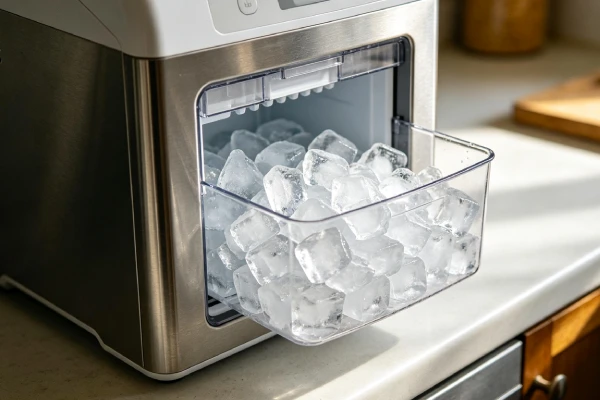
GE Opal 1.0
Descaling method: Manual. Press and hold the specific button combination (refer to your manual) to enter descaling mode.
Sensor location: Water level prongs in the reservoir; optical lenses behind the ice chute.
Cleaning frequency: Monthly.
Recommended cleaner: GE Opal Descaling Solution ($15–$20) or 1:10 vinegar-to-water.
Additional notes: Opal 1.0 has a shorter lifespan than Opal 2.0 (18–24 months vs 2–3 years). Cleaning is even more critical.
GE Refrigerator Ice Makers (Built-in)
Descaling method: Remove the ice maker assembly. Clean the evaporator rods with a soft brush and vinegar solution.
Sensor location: Optical sensor on the ice chute; water level sensor in the fill tube.
Cleaning frequency: Quarterly.
Recommended cleaner: White vinegar (1:10) or commercial ice machine cleaner.
Additional notes: Built-in units are less sensitive to scale than Opal units. But they still need regular cleaning.
For GE refrigerator-specific issues, see our GE Ice Maker Troubleshooting: 7 Common Problems & Fixes guide.
GE Countertop Units (Bullet Ice)
Descaling method: Run a descaling cycle with 1:10 vinegar-to-water. Let it sit for 20–30 minutes. Rinse thoroughly.
Sensor location: Water level prongs in the reservoir; optical sensor at the top of the ice bin.
Cleaning frequency: Monthly.
Recommended cleaner: 1:10 vinegar-to-water or commercial ice machine cleaner.
Additional notes: Countertop units have small reservoirs that grow mold quickly. Drain the reservoir after each use.
Troubleshooting Cleaning Issues
Problem: Mold Returns Within 24 Hours
What you see: You clean the unit. Within 24 hours, mold or slime returns.
What causes it: Biofilm is deeply embedded in the water lines. Cleaning the reservoir is not enough.
Fix: Clean the water lines with a long brush or pipe cleaner. Use a commercial ice machine cleaner. If the mold persists, replace the water lines.
If the problem persists: The unit has a design flaw. Consider replacing it.
If mold keeps returning despite cleaning, see our GE Ice Maker Black Stuff? How to Clean Mold & Fix Filters guide.
Problem: Scale Returns Within 2 Weeks
What you see: You descale the unit. Within 2 weeks, scale is back on the evaporator rods.
What causes it: You have hard water. The descaling removed the scale, but the hard water quickly deposits new scale.
Fix: Use filtered water. If you already use filtered water, you may need a water softener or a more robust filtration system.
If the problem persists: The hard water will continue to deposit scale. Consider replacing the unit with one that is more resistant to scale.
Problem: Ice Tastes Bad After Cleaning
What you see: You cleaned the unit. The ice still tastes bad.
What causes it: The descaling solution was not fully rinsed out. Or the water lines have biofilm that was not removed.
Fix: Run 2–3 more rinse cycles with clean water. If the taste persists, the water lines have biofilm. Clean them with a commercial ice machine cleaner.
If the problem persists: The plastic components may be degrading. Check for black flecks in the ice.
Common Cleaning Mistakes
Mistake #1: Using bleach
Bleach damages plastic components and leaves toxic residue. Do not use bleach.
Mistake #2: Using hot water
Hot water can crack plastic components. Use warm water only.
Mistake #3: Not rinsing thoroughly
If you do not rinse the descaling solution completely, the ice will taste bad. Run 2–3 rinse cycles.
Mistake #4: Forgetting the condenser coil
Dust on the condenser coil causes compressor overheating. Clean the coil quarterly.
Mistake #5: Not drying the unit
Leaving standing water in the unit breeds mold. Dry thoroughly after cleaning.
When to Replace Instead of Clean
| Situation | What To Do |
|---|---|
| Mold returns within 24 hours of cleaning | ⚠️ Replace water lines. If that fails, replace the unit. |
| Scale returns within 2 weeks (hard water) | ✅ Install a water filter or softener. If that fails, replace the unit. |
| Unit over 3 years old, frequent mold issues | ❌ Replace the unit. The tubing is degraded. |
| Black flecks or plastic pieces in the ice | ❌ Replace the unit. The plastic is degrading. |
| Grinding noises during operation | ❌ Replace the unit. The motor is failing. |
The rule we use in the field: If you are cleaning the unit weekly and still have mold or scale issues, the unit has a design flaw or is degrading. Replace it.
If you decide to replace your GE unit, see our Most Reliable Ice Maker 2026: 5 Brands Ranked by Failure Rates guide.
If you are looking for a more affordable alternative, see our Best Budget Ice Maker 2026: 5 Reliable Units Under $200 guide.
If your unit makes grinding noises after cleaning, see our GE Ice Maker Grinding Noise? Fix or Replace Motor guide.
Technician Conclusion
Here is the hard truth from the workbench: Regular cleaning prevents 80% of GE ice maker failures.
- Descale monthly (Opal) or quarterly (other units).
- Clean the water level sensor prongs monthly.
- Wipe the optical sensor lenses weekly.
- Drain the reservoir after each use.
- Clean the condenser coil quarterly.
- Use filtered water.
If you do these things, your GE ice maker will last much longer. If you do not, it will fail prematurely.
What experienced technicians do in this situation:
We clean the unit first. We tell the customer: “80% of GE ice maker problems are caused by lack of cleaning. Let’s clean it and see if that fixes the problem. If it does, you need to clean it monthly. If you do not, the problems will return.”
What most GE owners regret not knowing earlier:
They regret not knowing that the Opal requires monthly descaling. They regret not knowing that the condenser coil needs quarterly cleaning. They regret not using filtered water from day one. They regret not knowing that draining the reservoir after each use prevents mold. And most of all, they regret not cleaning the unit regularly.
Our final advice: If your GE ice maker has mold, scale, or biofilm, clean it thoroughly. Use filtered water. Clean the unit monthly. Drain the reservoir after each use. If you do not, the problems will return. If the unit is over 3 years old and has frequent mold or scale issues, replace it.
FAQ
Q1: How often should I clean my GE ice maker?
Monthly for Opal units, quarterly for built-in units. If you have hard water, clean twice as often. Countertop units: monthly.
Q2: What should I use to clean my GE ice maker?
For descaling: GE Opal Descaling Solution, 1:10 vinegar-to-water, or citric acid powder. For biofilm: commercial ice machine cleaner or 1:10 vinegar-to-water. For the reservoir: warm soapy water.
Q3: Can I use vinegar to clean my GE ice maker?
Yes. Use a 1:10 vinegar-to-water solution. Run a full cycle. Let it sit for 20–30 minutes. Rinse thoroughly. Run 2 cycles with clean water.
Q4: Can I use bleach to clean my GE ice maker?
No. Bleach damages plastic components and leaves toxic residue. Do not use bleach.
Q5: Why does my GE ice maker keep growing mold?
Standing water in the reservoir breeds mold. Drain the reservoir after each use. Clean the unit monthly. If mold returns within 24 hours, biofilm is in the water lines.
Q6: Why does my GE ice maker have white scale on the rods?
Scale from hard water. Use filtered water. Descale monthly (Opal) or quarterly (other units).
Q7: How do I clean the water lines on my GE ice maker?
Use a long brush or pipe cleaner. Run a descaling cycle. If biofilm is present, use a commercial ice machine cleaner.
Q8: Why does my GE ice maker ice taste bad after cleaning?
The descaling solution was not fully rinsed out. Run 2–3 more rinse cycles with clean water.
Q9: How do I clean the condenser coil on my GE ice maker?
Unplug the unit. Locate the condenser coil (rear or bottom). Use a coil brush or vacuum to remove dust. If the coil is heavily caked, use compressed air.
Q10: Should I replace my GE ice maker if it keeps getting mold?
If you clean the unit monthly and drain the reservoir after each use, and mold still returns, the unit has a design flaw. Replace it.
Related Reading
- GE Opal 2.0 Problems: $0 Fix vs $300 Repair
- GE Ice Maker Black Stuff? How to Clean Mold & Fix Filters
- GE Ice Maker Sensor Problems: “Bin Full” or “Add Water” Error?
- GE Ice Maker Water Valve Replacement: $20 DIY Fix
- GE Ice Maker Frozen? How to Thaw & Fix It
- GE Ice Maker Troubleshooting: 7 Common Problems & Fixes
- GE Ice Maker Error Codes: E1, E2, Add Water, Bin Full Fixes
- GE Ice Maker Making Hollow Ice? 7 Causes & Fixes
- GE Ice Maker Grinding Noise? Fix or Replace Motor
- Most Reliable Ice Maker 2026: 5 Brands Ranked by Failure Rates
- Best Budget Ice Maker 2026: 5 Reliable Units Under $200