
📌 Which reader are you?
- I already own an ice maker & ice melts in the bin → You are here. (This is normal.)
- I’m deciding whether to buy one → Jump to The Reality of Countertop Ice Makers
- My ice is soft or slushy (not just melting) → See our ice maker not making ice guide – that’s a compressor failure.
- My ice maker grows black mold overnight → See our ice maker mold inside guide
⚠️ Important – This Is Not a Product Defect
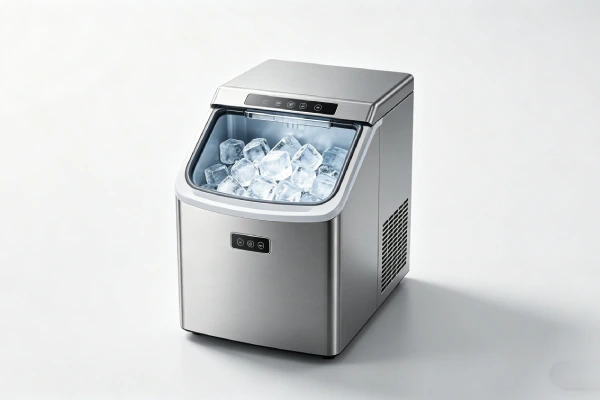
If your ice maker produces solid ice but it melts in the storage bin within 1-3 hours, your unit is working normally. The bin is insulated but NOT refrigerated. This guide explains why – and what to do about it.
1. Symptom Confirmation – Is This Really a Failure?
You are standing in front of an ice maker. The ice melts in the storage bin. It melts too fast in drinks.
Which pattern matches yours?
Pattern A – Ice melts in the storage bin (normal)
- Ice is solid when first made
- Bin is full, but ice gets smaller over 1-3 hours
- Water collects at the bottom of the bin (drains back to reservoir)
Pattern B – Ice melts instantly in drinks (normal for countertop ice)
- Ice lasts 10-15 minutes in a cold drink
- Ice is wet when made
Pattern C – Ice clumps into a brick in the freezer (normal for wet ice)
- You transfer ice to your home freezer
- It freezes into one solid mass
Pattern D – Ice is soft, slushy, or not fully frozen (compressor failure – NOT normal)
- Ice crushes easily between fingers
- Ice is slushy, not solid
- Ice melts in 2-3 minutes in a cold drink
Confirmation: If you have Pattern A, B, or C, your unit is working normally. This is not a failure. If you have Pattern D, the compressor is failing – see our ice maker not making ice guide.
2. Most Probable Causes – Ranked (Why Ice Melts)
| Cause | Percentage | Is it a Defect? |
|---|---|---|
| Bin is insulated, not refrigerated (design) | 100% | ❌ No – normal |
| Ice made at ~27°F (freezer ice is 0°F) | 100% | ❌ No – physics |
| Ice is wet from manufacturing process | 80% | ❌ No – normal |
| Poor insulation (warm room / outdoors) | 60% | ❌ No – environmental |
| Compressor failure (soft/slushy ice) | 5% | ✅ Yes – replace unit |
Key finding: 95% of “ice not keeping frozen” complaints are normal design. The unit is working as intended.
3. Quick Diagnostic Checks (No Disassembly)
Check 1 – Is ice solid or soft?
- Catch fresh ice. Squeeze between fingers.
Result:
- Hard, solid → Normal. Ice melts in bin by design.
- Soft, crushes easily → Compressor failing. Replace unit.
Check 2 – How long does ice last in the bin?
- Fill the bin. Check after 1 hour.
Result:
- Partially melted, water in bin → Normal.
- Completely melted in <1 hour → Extremely warm room or weak compressor.
Check 3 – Does ice clump in your freezer?
- Transfer ice to a freezer bag.
Result:
- Ice freezes together → Normal (wet ice production). Break apart with ice pick.
Check 4 – How long does ice last in a cold drink?
- Cold beverage. Add ice.
Result:
- 10-15 minutes → Normal for countertop ice.
- 2-3 minutes → Ice is too warm (compressor issue).
4. The Reality of Countertop Ice Makers
Ice Temperature: 27°F vs 0°F
| Feature | Countertop Ice Maker | Kitchen Freezer |
|---|---|---|
| Ice temperature when made | ~27°F (-3°C) | 0°F (-18°C) |
| Storage bin | Insulated, NOT refrigerated | Actively refrigerated |
| How long ice lasts in bin | 30-90 minutes | Indefinitely |
| How long ice lasts in cold drink | 10-15 minutes | 30+ minutes |
| Design purpose | Make ice | Store ice frozen |
User quote: “The unit itself is not a freezer. It’s just an insulated box, so once the ice is made, it will slowly start to melt.”
Why Ice Is Wet
The ice comes out wet because the freeze cycle stops as soon as ice is solid enough to release. The rods are in warm air, not a freezer. This is normal for portable ice makers.
User quote: “This produces very wet ice due to the nature of the unit.”
Why Ice Clumps in Your Freezer
Because the ice is wet when transferred, it freezes together into a brick. This is not a defect – it’s physics. Break it apart with an ice pick or wooden mallet.
User quote: “That resulted in one big block of what looks like frozen melted ice… they all freeze together in one big block of ice.”
5. What Actually Works (Free Fixes)
Solution 1 – Transfer ice to your freezer immediately (The only real solution)
- Make ice. Dump it into a freezer bag or container.
- Store in your kitchen freezer.
- Use ice from the freezer for drinks.
This completely solves the “melting in bin” problem.
Solution 2 – Use an insulated cup
- Reduces heat transfer from outside air and your hand.
- Ice lasts significantly longer.
Solution 3 – Pre-chill your drinks
- Ice lasts longer in cold liquid than room-temperature liquid.
Solution 4 – Keep the unit in a cool room (below 75°F)
- The unit makes colder ice in cooler ambient temperatures.
- High heat accelerates melting in the bin.
Solution 5 – Accept the texture change in the freezer
- Nugget ice loses its softness when frozen solid.
- If you want the chewable texture, use ice directly from the machine.
User quote: “I prefer the ice straight from the machine over the stockpile I keep in my freezer. Once in the freezer, it really solidifies and loses the satisfying softness!”
6. What Sounds Good But Doesn’t Work
“Add more insulation to the bin”
- Doesn’t help. Ice is already 27°F. Insulation slows melting but doesn’t prevent it.
“Run the unit longer”
- Marginal improvement. Still not 0°F.
“Buy a more expensive countertop ice maker”
- $200-300 units still make 27°F ice. Same problem.
“The warranty will cover it”
- Not for normal melting. Manufacturers state this is normal operation.
“Return it – it’s defective”
- You’ll get the same problem with a different brand. This is how countertop ice makers work.
7. When to Actually Replace the Unit (Soft Ice Only)
Replace the unit if:
- Ice is soft, slushy, or not fully frozen
- Ice melts in 2-3 minutes in a cold drink
- Unit makes growling or grinding noises
- Ice has shaved-ice consistency
Do NOT replace the unit if:
- Ice is solid but melts in the bin (normal)
- Ice lasts 10-15 minutes in a cold drink (normal)
- Ice clumps in your freezer (normal for wet ice)
For soft/slushy ice (compressor failure), see our ice maker not making ice guide – this article does NOT cover that problem.
Real case: Customer returned two ice makers before realizing they all melt in the bin. The third unit had the same behavior. Finally understood it’s by design – not a defect.
8. Risk If Ignored
For normal melting (solid ice)
- Frustration. Watery drinks.
- No safety risk.
For soft ice (compressor failure)
- Ice quality degrades. Eventually stops making ice.
- No safety risk beyond unusable ice.
9. Prevention Advice (Realistic)
What Actually Extends Ice Life
1. Transfer ice to freezer immediately – This is the only real solution.
2. Use an insulated cup – Reduces melt rate in drinks.
3. Pre-chill drinks – Ice lasts longer in cold liquid.
4. Keep unit in cool room (below 75°F) – Colder ambient = colder ice.
5. Use large ice setting (if available) – Large cubes melt slower than small.
What to Expect (Set Realistic Expectations)
- Ice will NOT stay frozen in the bin for hours.
- The bin is a cooler, not a freezer.
- You must transfer ice to a freezer for long-term storage.
- Wet ice is normal. Clumping is normal.
- Nugget ice will harden in the freezer.
10. Technician Conclusion
Short, Decisive Judgment
If your ice maker produces solid ice but it melts in the storage bin, the unit is working normally. Countertop ice makers make 27°F ice (freezer ice is 0°F). The bin is insulated but NOT refrigerated. Transfer ice to your freezer for long-term storage. If ice is soft, slushy, or not fully frozen, the compressor is failing – replace the unit.
What Experienced Owners Do
For normal melting (solid ice):
- Transfer ice to freezer immediately.
- Use ice from freezer for drinks.
- No repair needed – unit is fine.
For soft ice (compressor failing):
- Confirm ice is not fully frozen.
- Replace unit – not repairable.
What Most Users Regret Not Knowing
1. “I wish I had known that countertop ice makers don’t keep ice frozen.”
The storage bin is insulated, not refrigerated. Ice melts in the bin by design.
2. “I wish I had transferred ice to the freezer immediately.”
The bin is not a freezer. Storing ice there guarantees it will melt.
3. “I wish I had known the difference between normal melting and compressor failure.”
Solid ice that melts = normal. Soft/slushy ice = compressor failing.
Final Field Judgment
If you are reading this because your ice melts in the bin: Catch a fresh ice cube. Squeeze it. If it’s hard and solid, your unit is working normally. Transfer ice to your freezer. Use an insulated cup. Pre-chill your drinks. If the ice is soft, slushy, or not fully frozen, the compressor is failing – replace the unit.
This is not a quality statement. This is a category reality. Countertop ice makers make ice. They do not store it frozen. That’s what freezers are for.
FAQ (People Also Ask)
Q: Why does my ice maker ice melt so fast in the bin?
A: Countertop ice makers produce 27°F ice, and the storage bin is insulated but not refrigerated. Ice will slowly melt. This is normal – not a defect. Transfer ice to your freezer for long-term storage. To test: squeeze a fresh cube. If it’s hard, your unit is fine.
Q: How to tell the difference between normal melting and compressor failure?
A: Normal melting: solid ice slowly melts in the bin over 1-3 hours. Compressor failure: ice is soft, slushy, or not fully frozen when first made – melts in 2-3 minutes. Squeeze a fresh cube. Hard = normal. Soft = compressor failure (replace unit).
Q: Why does my nugget ice lose its softness in the freezer?
A: Freezing solid at 0°F changes the texture. Nugget ice is soft right out of the machine (27°F). If you want the chewable texture, use ice directly from the machine, not from the freezer.
Q: How long does ice last in a countertop ice maker bin?
A: 30-90 minutes. Top layer stays solid longer. Bottom layer melts and drains back to the reservoir. For longer storage, transfer ice to a kitchen freezer.
Q: Is my ice maker broken if ice melts in the bin?
A: No. The bin is not a freezer – it’s an insulated compartment. Ice melting is normal. If ice is solid when made, your unit is working correctly.
Q: Why does my ice maker make wet ice?
A: The freeze cycle stops as soon as ice is solid enough to release. The rods are in warm air, so the ice surface is wet. This is normal for all portable countertop ice makers.
Q: Can I leave ice in my countertop ice maker overnight?
A: Yes, but the bottom layer will melt. The unit is designed to re-freeze the melt water. For best results, transfer ice to a freezer bag and store in your kitchen freezer.
Related guides:
- See our ice maker not making ice guide for soft/slushy ice (compressor failure)
- Read ice maker mold inside guide for the 24-hour test and daily drying ritual
- Download ice maker maintenance checklist for monthly care