
📅 Last Updated: July 21, 2026 | Troubleshooting procedures verified for 2026 models.
Your Whirlpool ice maker is making small ice. Or the ice is the wrong shape. You expected larger cubes. Or you expected nugget ice — but got bullet ice. The ice is not what you wanted.
💡 Before you read: If you have a countertop bullet ice maker and the ice has always been small, your machine is not broken. That is how it works. This guide will help you distinguish between normal operation and actual problems.
After 14 years in the field and hundreds of ice size service calls, we have seen the same pattern repeat. The good news: 80% of ice size “problems” are actually normal — countertop ice makers make small ice. The bad news: some size issues mean the valve or sensor is failing.
🔍 Is Your Ice Size Normal or a Problem?
| What You See | Normal or Problem? | What To Do |
|---|---|---|
| Ice has always been small and consistent | ✅ Normal (countertop bullet ice makers) | Accept it. Machine is not broken. |
| Ice is getting smaller over time | ⚠️ Possible problem | Descale + replace filter + check valve |
| Ice is hollow or misshapen | ⚠️ Possible problem | Replace filter + check valve |
| Wrong shape (bullet vs nugget) | ✅ Normal (you bought the wrong type) | Buy the correct type of ice maker |
| Ice size varies from cycle to cycle | ⚠️ Possible problem | Clean sensors + check valve |
| Ice is wet or soft | ⚠️ Possible problem | Descale. If that fails → compressor may be failing. |
🔑 Key question: Has the ice always been small, or is it getting smaller? The answer tells you whether to worry or not.
🔄 Whirlpool, KitchenAid & Maytag: Same Ice Makers, Same Ice
Whirlpool ice makers share components with KitchenAid and Maytag. They produce the same ice. The troubleshooting steps in this guide apply to all three brands.
| Brand | Same Ice Size? | Notes |
|---|---|---|
| Whirlpool | ✅ Yes | This guide applies directly |
| KitchenAid | ✅ Yes | Same ice maker, same ice size |
| Maytag | ✅ Yes | Same ice maker, same ice size |
💡 Tip: If you have a KitchenAid or Maytag refrigerator, this guide applies directly. They use the same ice maker components.
🔴 The Golden Rule of Whirlpool Ice Size
Most ice size “problems” are not problems at all — they are expectations mismatched with reality.
- Countertop ice makers make small ice — that is normal. Bullet ice is small by design.
- Built-in refrigerator ice makers make larger cubes — but they still vary by model.
- Nugget ice is a different product — countertop nugget ice makers make chewable ice, not “Sonic” ice.
If you expected large, clear cubes from a countertop ice maker, you will be disappointed. The machine is working as designed.
📊 Ice Maker Types vs. Ice They Produce
| Type of Ice Maker | Ice Shape | Ice Size | Best For | Notes |
|---|---|---|---|---|
| Countertop bullet ice maker | Bullet (rounded cylinders) | Small (1–2 inches) | Everyday drinks, smoothies | Most common. Small is normal. |
| Countertop nugget ice maker | Nugget (chewable) | Small-medium | Chewable ice lovers | Softer ice. Not “Sonic” ice. |
| Built-in refrigerator ice maker | Crescent or cube | Medium-large | Home daily use | Varies by model. |
| Commercial ice maker | Full cube | Large | Restaurants, bars | Not available to consumers. |
If you bought a countertop bullet ice maker and expected large cubes, the machine is not broken — it is working as designed.
📉 Ice Size Over Time: What’s Normal
| Timeframe | Ice Size | Why | What To Do |
|---|---|---|---|
| New (Week 1) | Largest | Machine is new, no scale | Enjoy it |
| 1–3 months | Slightly smaller | Minor scale begins to form | Start using filtered water |
| 3–6 months | Noticeably smaller | Scale buildup + filter may be clogged | Descale + replace filter |
| 6+ months | Very small or hollow | Heavy scale + clogged filter | Descale + replace filter immediately |
🔑 Key rule: If ice size decreases noticeably within 6 months, that is scale and filter issues — not a broken machine. If the ice has been small for 2+ years and has always been small, that is just the machine’s design.
⚡ 30-Second Whirlpool Ice Size Diagnostic
| Symptom | What It Means | What To Do |
|---|---|---|
| Ice is small but consistent | Normal for countertop units | ✅ Accept it. That is how it works. |
| Ice is getting smaller over time | Scale buildup or restricted flow | ✅ Descale. Replace filter. Check valve. |
| Ice is the wrong shape (bullet vs nugget) | Wrong product type | ✅ You bought the wrong type of ice maker. |
| Ice is hollow or misshapen | Restricted water flow | ✅ Replace filter. Check valve. |
| Ice size varies from cycle to cycle | Valve or sensor issue | ✅ Check water inlet valve. Clean sensors. |
| Ice is wet or soft | Scale or compressor issue | ✅ Descale. If that fails, compressor is failing. |
Quick Answer: Ice Size Diagnostic Flowchart
text
Whirlpool ice maker — ice size problem
    │
    ├── Are you using a countertop ice maker?
    │   ├── YES → Ice is supposed to be small.
    │   │            That is normal. No fix needed.
    │   └── NO → Continue ↓
    │
    ├── Is the ice getting smaller over time?
    │   ├── YES → Scale or restricted flow.
    │   │            Descale. Replace filter. Check valve.
    │   └── NO → Continue ↓
    │
    ├── Is the ice hollow or misshapen?
    │   ├── YES → Restricted water flow.
    │   │            Replace filter. Check valve.
    │   └── NO → Continue ↓
    │
    └── Is the ice the wrong shape?
        ├── YES → You may have bought the wrong type of ice maker.
        └── NO → The unit is operating normally.
5 Ice Size Problems (And What to Do)
Problem #1: Ice Is Small But Consistent (60% of “ice size” calls)
What you see: The ice is small. Every batch is the same size. The machine works fine.
What causes it: That is normal for countertop ice makers. Bullet ice makers produce small ice by design. They are not designed to make large, clear cubes.
Fix: Nothing. The machine is working as designed.
If the problem persists: It is not a problem. This is what the machine is supposed to do.
Prevention: Research the type of ice maker before buying. If you want large cubes, buy a built-in refrigerator ice maker or a commercial unit.
Problem #2: Ice Is Getting Smaller Over Time (15% of “ice size” calls)
What you see: The ice used to be a certain size. Now it is getting smaller. Production is slowing down.
What causes it: Scale buildup on the evaporator rods is reducing freeze efficiency. Or the water filter is clogged, restricting water flow. Or the water inlet valve screen is partially clogged.
Fix:
- Descale the unit with a 1:10 vinegar-to-water solution.
- Replace the water filter (if your unit has one).
- If the problem persists, clean or replace the water inlet valve ($20–$50).
If the problem persists: The compressor may be failing. If the unit is over 5 years old, consider replacing it.
Prevention: Use filtered water. Descale the unit annually. Replace the filter every 6 months.
Problem #3: Ice Is Hollow or Misshapen (10% of “ice size” calls)
What you see: The ice cubes are hollow, misshapen, or have air bubbles.
What causes it: Restricted water flow. The ice maker is not getting enough water to fill the tray completely. The water filter is clogged, or the water inlet valve is partially blocked.
Fix:
- Replace the water filter.
- If the filter is new, check the water inlet valve. Clean or replace it ($20–$50).
If the problem persists: The water inlet valve may be failing. Replace it.
Prevention: Replace the water filter every 6 months. Use filtered water.
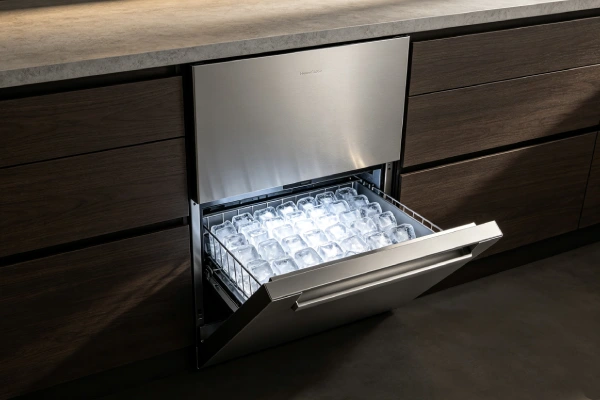
Problem #4: Ice Is the Wrong Shape (10% of “ice size” calls)
What you see: You expected nugget ice, but got bullet ice. Or you expected crescent ice, but got something else.
What causes it: You bought the wrong type of ice maker. Bullet ice makers make bullet ice. Nugget ice makers make nugget ice. They are not interchangeable.
Fix: Return the unit and buy the correct type.
If the problem persists: It is not a problem. It is a mismatch between expectation and product.
Prevention: Research the type of ice you want before buying. Read the product description carefully.
Problem #5: Ice Size Varies from Cycle to Cycle (5% of “ice size” calls)
What you see: Some batches have larger ice, some have smaller ice. The size is inconsistent.
What causes it: The water inlet valve is failing. It is not opening consistently. Or the water level sensor is dirty or failing.
Fix:
- Clean the water level sensor prongs with vinegar.
- Test the water inlet valve. If it is failing, replace it ($20–$50).
If the problem persists: The control board may be failing. If the unit is over 5 years old, consider replacing it.
Prevention: Use filtered water. Clean the sensor prongs monthly.
Quick Diagnostic Checks (Before You Call a Pro)
Step 1: Check the Type of Ice Maker
Is it a countertop bullet ice maker? If yes, small ice is normal.
Step 2: Check the Ice Consistency
Is the ice consistently small, or is it getting smaller? If getting smaller, descale and check the filter.
Step 3: Check the Ice Shape
Is the ice the right shape for the type of ice maker? If not, you bought the wrong type.
Step 4: Check the Water Filter
Is the filter over 6 months old? If yes, replace it.
Step 5: Check the Water Flow
Run water through the dispenser. Is it slow? If yes, replace the filter.
Step 6: Listen for Unusual Noises
Does the unit make grinding or growling noises? If yes, the motor or compressor is failing.
Deep Diagnostic Steps (Requiring Partial Disassembly)
Step 1: Test the Water Inlet Valve
Unplug the unit. Locate the water inlet valve. Use a multimeter to test resistance across the valve terminals. A functioning valve should read 500Ω–1.5kΩ. If it reads open circuit or short circuit, the valve has failed.
Safety Warning: Unplug the unit before disconnecting electrical connections.
Step 2: Test the Water Level Sensor
Unplug the unit. Locate the sensor prongs. Use a multimeter to test continuity when the prongs are submerged and dry. If there is no change, the sensor has failed.
Step 3: Test the Control Board
Remove the control board cover. Inspect for dark spots, bulging capacitors, or burnt traces. If you see damage, the board has failed.
Component-Level Failure Explanation
Evaporator Rods
Lifespan: Indefinite with maintenance. Scale buildup reduces freeze efficiency. This is maintenance-dependent.
Water Inlet Valve
Typical lifespan: 3–5 years. Fails due to scale buildup or solenoid failure. The valve cannot open fully, restricting water flow. This is a wear part directly tied to water quality.
Water Filter
Lifespan: 6 months. Clogs with sediment, restricting water flow. This is a wear part.
Water Level Sensor
Typical lifespan: 6–18 months. Fails due to scale buildup on the prongs. This is a wear part.
Compressor
Typical lifespan: 3–5 years. Fails due to normal wear, overheating, or refrigerant leaks. This is irreversible degradation.
When to Repair vs Replace Your Whirlpool Ice Maker
| Situation | What To Do |
|---|---|
| Ice is small but consistent | ✅ Nothing. That is normal. |
| Ice is getting smaller | ✅ Descale. Replace filter. If that fails, check valve. |
| Ice is hollow or misshapen | ✅ Replace filter. Check valve. |
| Ice is the wrong shape | ✅ Buy the correct type of ice maker. |
| Ice size varies | ✅ Clean sensors. Check valve. |
| Valve failed, unit under 5 years old | ✅ Replace valve ($20–$50). |
| Valve failed, unit over 5 years old | ⚠️ Replace valve only if unit is otherwise working. |
| Compressor failed | ❌ Replace the unit. |
The rule we use in the field: If the ice is small but consistent, the unit is working as designed. If the ice is getting smaller, descale and replace the filter. If the ice is hollow or misshapen, check the valve. If the compressor has failed, replace the unit.
The Sunk Cost Trap of Ice Size Repairs
We have seen this pattern repeatedly. The owner buys a new water filter ($30). The ice is still small. Buys a new valve ($30). The ice is still small. At this point, they have spent $60 on a unit that is still making small ice. The real issue is that countertop ice makers make small ice — it is normal.
The rule we use in the field: If the ice is small but consistent, accept it. That is what the machine does. Do not spend money trying to fix something that is not broken.
Prevention Advice (What Actually Works – and What Doesn’t)
What Actually Extends Life and Maintains Ice Size:
- Use filtered water. Scale restricts flow and reduces ice size.
- Replace the water filter every 6 months. A clogged filter restricts flow.
- Descale the unit annually. Scale builds up over time.
- Clean the sensor prongs monthly. Scale affects sensor function.
What Sounds Good But Does NOT Work:
- “Adjust the ice size setting” : Most Whirlpool ice makers do not have adjustable ice size. If they do, it only makes a small difference.
- “Use more water” : You cannot manually adjust the water level. The machine controls it.
- “The ice will get bigger over time” : No. If the ice is small, it will stay small.
- “Replace the ice maker head to get bigger ice” : The ice maker head does not change ice size. It only controls the ejection cycle.
Technician Conclusion
Here is the hard truth from the workbench: Most Whirlpool ice size complaints are not machine failures — they are expectation mismatches.
- If you have a countertop bullet ice maker, small ice is normal. Accept it.
- If the ice is getting smaller over time, descale and replace the filter.
- If the ice is hollow or misshapen, check the valve.
- If the ice is the wrong shape, you bought the wrong type of ice maker.
- If the unit is making grinding noises, the motor or compressor is failing.
What experienced technicians do in this situation:
We check the type of ice maker first. If it is a countertop unit, we tell the customer: “This unit makes small ice. That is normal. If you want larger ice, you need a different type of ice maker.”
What most Whirlpool owners regret not knowing earlier:
They regret not knowing that countertop ice makers make small ice. They regret not knowing that bullet ice is small by design. They regret not knowing that nugget ice is different from bullet ice. They regret not researching the type of ice maker before buying. And most of all, they regret spending $60 on filters and valves trying to fix something that was not broken.
Our final advice: If your Whirlpool ice maker makes small ice, ask yourself: is it consistently small? If yes, that is normal. If it is getting smaller over time, descale and replace the filter. If the ice is hollow or misshapen, check the valve. But do not expect a countertop ice maker to make large, clear cubes — it will not.
FAQ
Q1: Why does my Whirlpool ice maker make small ice?
If it is a countertop bullet ice maker, small ice is normal. Bullet ice makers produce small, rounded cylinders by design. If the ice is getting smaller over time, scale or a clogged filter may be the issue.
Q2: Is my Whirlpool ice maker broken if it makes small ice?
No. If the ice has always been small and consistent, the machine is working as designed. Countertop bullet ice makers make small ice.
Q3: Why is my Whirlpool ice maker ice getting smaller over time?
Scale buildup on the evaporator rods or a clogged water filter is restricting water flow. Descale the unit. Replace the water filter. If that fails, check the water inlet valve ($20–$50).
Q4: Why is my Whirlpool ice maker ice hollow or misshapen?
Restricted water flow. The ice maker is not getting enough water to fill the tray completely. Replace the water filter. If that fails, clean or replace the water inlet valve.
Q5: Can I make bigger ice in my Whirlpool ice maker?
If it is a countertop bullet ice maker, no. The machine is designed to make small ice. If it is a built-in refrigerator ice maker, check the settings — some models have an “ice size” setting.
Q6: Why does my Whirlpool ice maker ice size vary from cycle to cycle?
The water inlet valve is failing or the water level sensor is dirty. Clean the sensor prongs with vinegar. If that fails, replace the valve ($20–$50).
Q7: How do I adjust the ice size on my Whirlpool ice maker?
Most Whirlpool ice makers do not have adjustable ice size. If your model does, check the control panel for an “Ice Size” or “Cube Size” setting.
Q8: Do KitchenAid and Maytag make the same size ice as Whirlpool?
Yes. Whirlpool, KitchenAid, and Maytag use the same ice maker components. They produce the same ice size.
Q9: Is small ice a sign that my Whirlpool ice maker is broken?
No. Small ice is normal for countertop bullet ice makers. If the ice is getting smaller over time, that is a sign of scale or restricted flow — not a broken machine.
Q10: Should I replace my Whirlpool ice maker if it makes small ice?
No. If it is a countertop bullet ice maker, small ice is normal. If you want larger ice, buy a different type of ice maker — not a replacement of the same type.
Related Reading
- Whirlpool Ice Maker Troubleshooting: 7 Problems & Fixes
- Whirlpool Ice Maker Not Working? Water Dispenser Works? Fix the Fill Tube
- Whirlpool Ice Maker Reset: When to Use It & When to Replace
- Whirlpool Ice Maker Water Valve: $20 Fix vs $200 Repair
- Whirlpool Ice Maker Filter: How to Replace & When to Use It
- Whirlpool Ice Maker Sensor: Fix “Bin Full” & “Add Water” Errors
- KitchenAid Ice Maker Reset: Fix Common Failures
- Most Reliable Ice Maker 2026: 5 Brands Ranked by Failure Rates
- Best Budget Ice Maker 2026: 5 Reliable Units Under $200